Le magazine et marché mondial pour les passionnés de voitures classiques, par des passionnés.
Le magazine et marché mondial pour les passionnés de voitures classiques, par des passionnés.


Faites votre choix:
- Voir les voitures
-
Marque >>
-
Année >>
-
-
Catégorie >>



1925 Lanchester 40hp Skiff | Bonhams | Goodwood Revival | 19 Sept 2026
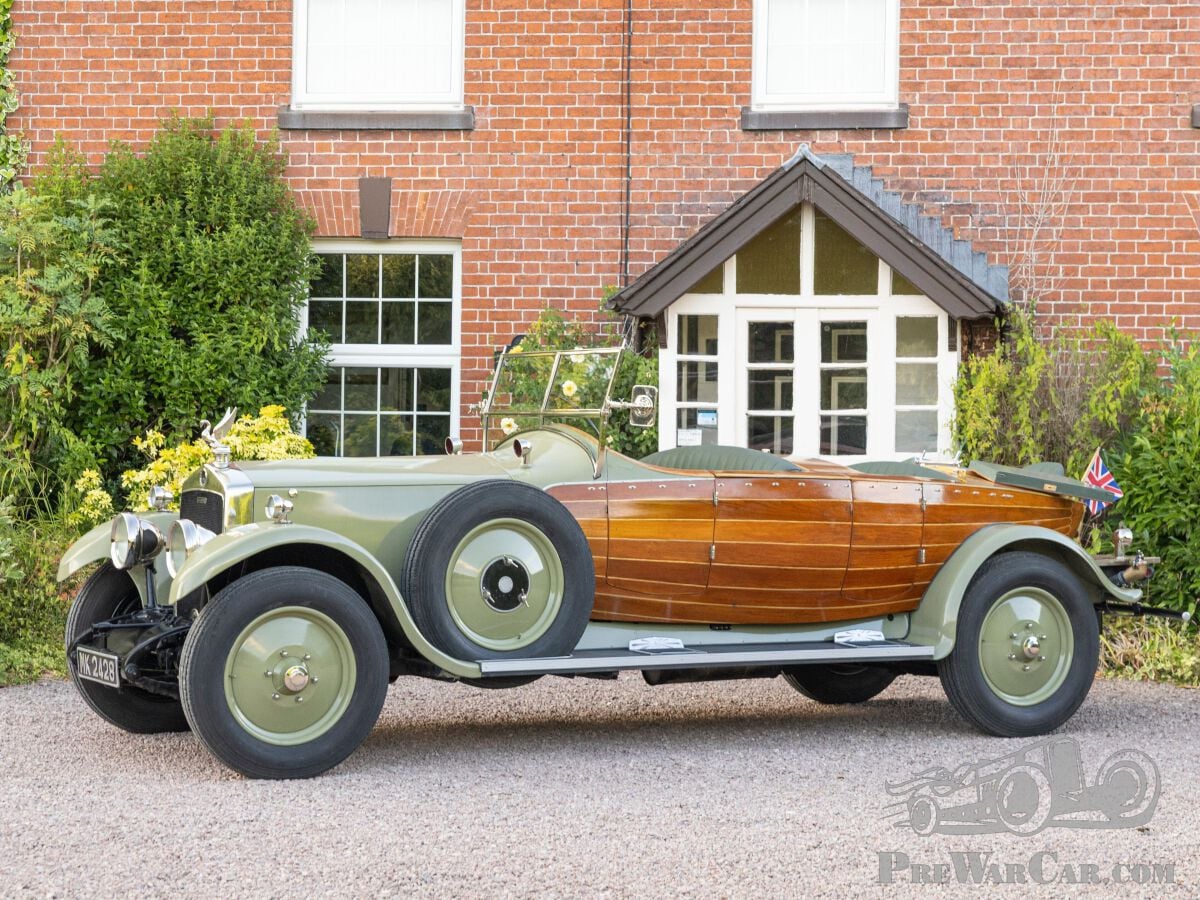

1925 Lanchester 40hp Skiff | Bonhams | Goodwood Revival | 19 Sept 2026
Registration no. MK 2428
Chassis no. 1967
Engine no. 1962
• Landmark model from one of Britain's premier makes
• Unique coachwork from a design by George Lanchester himself
• Present ownership since 2004
• Used on only three occasions since restoration
• Twice winner of the Lanchester Register Shield (2019 and 2026)
• Recently recommissioned
Lanchester – the celebrated name that is synonymous with innovation, creativity and invention. From the agile mind of Frederick Lanchester came much that is still recognised in current motor design: rack and pinion steering, the accelerator pedal, roller bearings, disc brakes, turbo-charging, power steering, and so much more.
His first motor car was built in Birmingham to his own design, with no reference to the prevalent foreign cars of the era. It undertook many road tests in 1895, thus becoming the first all-British 4-wheel motor car. His next car incredibly incorporated a chassis wholly of tubular steel, as was the body frame; it was accordingly awarded a Gold Medal for its exceptional design. His veteran cars continued to impress, showcasing his latest horizontally-opposed, twin-cylinder engines set centrally in the chassis, providing fully-balanced and vibration-free motoring.
Lanchester cars from 1904 incorporated vertical engines with twin-camshafts and overhead valves. Directly connected to the famed epicyclic gearbox, it was positioned between the front seats for equal weight distribution of the chassis. These bonnet-free designs were produced in the same theme up to World War One, with engine sizes ranging from 2.6 litres to 5 litres.
However, prototypes of a new design were seen in 1914, one that finally followed conventional thinking: a lengthy bonnet covering the new 40hp, 5.5 litre, 6-cylinder, side-valve engine. Named the Sporting 40, it was capable of 70 mph. Its stylish appearance was very well received by reviewers but just eight cars were made before the First World War halted production, as the works became heavily involved with the manufacture of armoured cars.
The first Lanchester car produced after the war was designed by George Lanchester in 1918, albeit staying true to most features set by his elder brother. It retained the feature of a long bonnet to accommodate an entirely new 6,178cc, 6-cylinder, overhead-camshaft engine. This amazing 40hp was a great technical success, being sold throughout the world to the rich and famous. The Duke and Duchess of York, later King George VI and Queen Elizabeth, enjoyed the first of their 40hp Lanchester cars, along with many other Lanchester models over the years, used for both personal and royal duties. 40hp Lanchesters were certainly not driven at stately speeds when raced at Brooklands Motor Course, winning eleven World Records and reaching a top-speed of 120mph, Parry Thomas being one of the drivers.
The 40hp was a serious competitor to the 7,428cc Rolls-Royce Silver Ghost, with the Lanchester Motor Company ensuring that its own chassis price was £50 less. The Rolls-Royce slogan of 'The Best Car in the World' was equalled by Lanchester's own: 'Pre-Eminent Among the World's Finest Cars'. Even with its smaller capacity engine, the Lanchester was deemed quicker on acceleration up to 60mph, did more miles per gallon of petrol, was simpler to maintain, and was easier to drive due to its quick-change epicyclic gearbox.
The 40hp was upgraded in 1924 to be more responsive and powerful, the engine receiving an enhanced induction system along with other improvements. It retained its cross-flow cylinder head design, with inlet and exhaust on opposite sides of the engine, along with dual ignition of magneto and coil. The epicyclic gearbox was also improved with its integral oil pump creating hydraulic pressure to allow three effective options of servo assistance to the new 4-wheel-brake layout.
Carrying unique coachwork, so redolent of 'The Roaring Twenties', 'MK 2428' is eye-catching to say the least. As an accomplished coachwork designer, George Lanchester produced a blueprint for the smaller 21hp 'Sports Model' which encompassed teak decking on a 3 or 4-seat, sloping-tail sports-tourer. This was named in one Lanchester advert as 'The little Yacht 21' and intended to 'follow in design the beautiful lines of a racing boat'. It is a scaled-up version of this design which 'MK 2428' carries and the 40hp 'skiff' does not disappoint, boasting two rows of 2/3 seats plus a single seat in the rear 'cockpit'. The larger chassis footprint of the 40hp allows for a more barrel-sided body and spacious seating, inspired by the spirit and ambience of the original.
The body is constructed to the highest standards: both the sides and decking are made of Burmese teak, in its rich and appealing colour, and are edged with English ash throughout. These two flexible woods facilitate the body's extravagant shape, with full curvature in both horizontal and vertical planes. A double-hinged, central bridge allows easy access for rear-seat passengers, as well as affording space for a concealed front hood. Another panel provides access to the full-length hood, concealing what would otherwise be a mound of unsightly hood sticks. A double-angle windscreen protects all passengers, whereas the rear cockpit has an adjustable Brooklands aero-screen. Bright nickel plating is used throughout the car, blending well with the soft, lavish interior leather. Other notable features include a full-width cupboard, rear drawer, cockpit cupboards, and spacious under-floor storage areas.
In present ownership since 2004, 'MK 2428' has only been used on three occasions since the completion of its restoration. On its inaugural run in 2019 it was voted 'Best Car', at the Lanchester Register rally, winning the Lanchester Register Shield. The second outing was just before the Covid pandemic when the car featured in a Channel 4 TV documentary entitled 'Great British Inventions' presented by actor, Sir David Jason. 'MK 2428' has been carefully stored since then due to the owner's health issues. After recommissioning (new battery and isolator; discreet flashing indicators added; 12V double sat-nav/phone charger; hidden start button; full-strength antifreeze; oils; gear-change lock) the car was honoured at the 2026 Lanchester Register touring rally by again being awarded the coveted Lanchester Register Shield.
A history file; sales documents; a set of three tonneau covers; two complete wheels (with inflated tyres); handbook; tools; and various other items are included in the sale.
Plus d'annonces dans cette vente
-
 1933 Rolls-Royce Phantom II Continental Drophead Coupé | Bonhams | Goodwood Revival | 19 Sept 2026
-
 1912 Rolls-Royce 40/50hp Silver Ghost Roi des Belges style Tourer | Bonhams | Goodwood Revival | 19 Sept 2026
-
 1936 Aston Martin 2-Litre Speed Model Competition Two-Seater | Bonhams | Goodwood Revival | 19 Sept 2026
-
 1935 Jaguar SS90 Roadster | Bonhams | Goodwood Revival | 19 Sept 2026
Plus d’annonces de ce revendeur professionnel
-
1936 Aston Martin 2-Litre Speed Model Competition Two-Seater | Bonhams | Goodwood Revival | 19 Sept 2026
-
1912 Rolls-Royce 40/50hp Silver Ghost Roi des Belges style Tourer | Bonhams | Goodwood Revival | 19 Sept 2026
-
1935 Jaguar SS90 Roadster | Bonhams | Goodwood Revival | 19 Sept 2026
-
1933 Rolls-Royce Phantom II Continental Drophead Coupé | Bonhams | Goodwood Revival | 19 Sept 2026
Annonces similaires Lanchester 40hp Skiff 1925 a vendre
 Bugatti Type 46 Coupe Superprofilée Ch. 46208. Matching numbers. Documented history.
 1923 Vauxhall Type OD 23-60 Malvern Tourer.
 1930 BUGATTI BICYCLE (STADION)
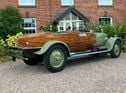 1925 Lanchester 40hp with spectacular Skiff bodywork.

Utilisateur:
Date:
19-09-2026
Location:
Goodwood, Royaume-Uni
Partager:
Facebook
LinkedIn
Twitter
WhatsApp
Email
Copy
Détails Lanchester 40hp Skiff 1925 a vendre
Année:
Marque:
Type:
40hp Skiff
Prix:
Estimation £ 90.000,- - £ 130.000,-
Identifiant de l’annonce:
914004
Lien Web:



- A.C.
- Albert
- Albion
- Alldays
- Alta
- Alvis
- Arab
- Ariel
- Armstrong Siddeley
- Arrol-Johnston
- Aston Martin
- Atalanta
- Austin
- Autovia
- BSA
- Bat
- Bean
- Beardmore
- Bedford
- Beeston
- Belsize
- Bentley
- Beverley Barnes
- British Salmson
- Briton
- Brough Superior
- Calcott
- Calthorpe
- Century
- Chater Lea
- Clyno
- Coventry-Premier
- Crossley
- Cubitt
- Dennis
- E.R.A.
- English Mechanic
- Frazer Nash
- G.N.
- G.W.K.
- Gwynne
- H.E.
- H.R.G.
- Hillman
- Humber
- Imperial
- International
- Invicta
- Jackson
- Jaguar SS
- Jensen
- Jowett
- Lagonda
- Lanchester
- Lea Francis
- Leyland
- MG
- Marendaz
- Maudslay
- Maxim
- Morgan
- Morris
- Napier
- New Carden
- Phoenix
- Premier
- Railton
- Raleigh
- Raymond Mays
- Riley
- Rolls-Royce
- Rover
- Santler
- Siddeley
- Singer
- Standard
- Star
- Straker-Squire
- Sunbeam
- Surrey
- Swift
- Talbot
- Thornycroft
- Triumph
- Trojan
- Vauxhall
- Victor
- Vulcan
- Waverley
- Wolseley (-Siddeley)
Autre(s) Britanique Voitures à vendre
Voiture Lanchester 40hp Skiff 1925 a vendre

Contacter Utilisateur