Le magazine et marché mondial pour les passionnés de voitures classiques, par des passionnés.





Les annonces; à vendre toutes voitures pre-war
Aperçu d’annonces associées à cette annonce 1937 BUGATTI TYPE 57 (5 AVAILABLE)
-

Standard Little Nine Saloon 1932 for sale
The Standard Little Nine was manufactured from 1932 to 1933. Using a straightforward side valve 1006cc engine and 3-speed gearbox, the whole vehicle whilst obviously at the lower end of the market, gave a feeling of quality not shared by most of its counterparts.This January 1932 example was kept by its previous garage proprietor owner for 24 years.. -
Standard 10/12 Special Speed Saloon 1934 for sale
Standard’s reputation was built on the simple principal that its products were made from components that were tried and tested for reliability. The Coventry based company was amongst the top 6 manufacturers in the UK before the war, and a very common sight on the roads of the period.Following the successful 9hp and 10hp models introduced in the e.. -
Morris 12/4 Saloon 1934 for sale
In late 1934 the Morris range of cars moved away from their traditional names - Isis, Oxford and Cowley, and adopted a numeric system of identification. The 4 cylinder Cowley became known as the 12/4, a model destined to be produced for only one year. So similar was it to the out-going car that it even continued to use the same chassis number seque.. -
Austin Ten Cambridge 1937 for sale
In 1932 Austin introduced the 10hp to fill the gap between the hugely popular 7hp and the rugged 12hp. It was to become a major seller for Austin and continued in volume production through the war years until 1947 when it was replaced by the new improved Austin A40.A conservative design for the time, it used a pressed steel body on a cross-braced c.. -
Austin Seven RN Saloon 1932 for sale
Introduced in 1932, the RN was a re-styled version of the saloon with a longer wheelbase (81-inches rather than 75), slightly wider track, external spare wheel and rear fuel tank to give more room in the cabin. It also had a new four-speed gearbox with synchromesh on the top three ratios from 1934.First registered in Northern Ireland in March 1932,.. -
Austin Seven Opal Two-Seat Tourer 1937 for sale
In August 1934, Sir Herbert Austin invited the press to see the new vehicles in the Austin Seven range – the Opal, Ruby and Pearl. The Opal was the basic two seater version, and early cars carried over the flat fronted radiator. These sold for £100. The charming Opel Open Road Two-seat Tourer wore the new enclosed grille and cost £8 more.Furthe.. -
Austin 18 Windsor Saloon 1938 for sale
First registered in Birmingham in late 1938, this imposing Windsor saloon is in very nice condition throughout with a beautifully preserved brown leather interior that appears to be largely original apart from the driver’s seat which has been sympathetically retrimmed at some time. The rear passenger compartment is particularly spacious with foot.. -
Alvis Speed 25 Saloon by Charlesworth 1938 for sale
In 1919 T.G.John, the man behind the Alvis car started his business making and selling industrial stationary engines to a Hillman design. Whilst not wildly successful, it did provide a base for further engineering contracts. Shortly after he was approached with an engine design featuring aluminium pistons and pressure lubrication and this was used .. -
Alvis 4.3-Litre Tourer 1936 for sale
First registered in November 1936, this particular 4.3-Litre (chassis number 13167; car number 18449) is a most intriguing car that began life as a long-wheelbase Charlesworth-bodied four-door saloon. Registered EML 461, it was supplied new by Galts of Glasgow to a Thomas Black of the same city. A few years later, however, it appears that the car w.. -
Riley Racing Special 1936 for sale
First registered in April 1936, this Riley Special was built in 1971 by the late Patrick Baker, a well known member of the Riley Register. It is based around a 1932 Riley Nine ‘Plus Ultra’ chassis with a 1934 Riley 12/4 engine and a close-ratio gearbox. The car was first raced at Silverstone in 1973 and continually competed at VSCC and hill cli..





En promo
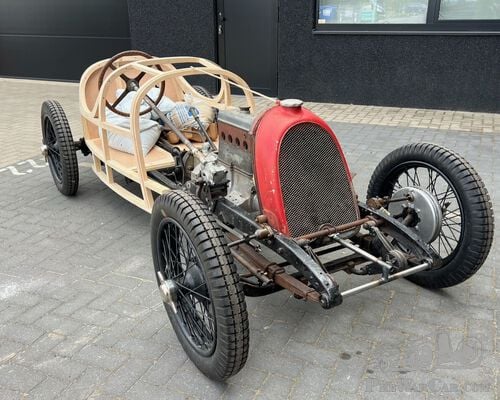
BNC 527 (Scap engine & Cozette blower) —Restoration Project
appealing restoration project based on an original 1927 BNC 527 chassis (No. 270**), retaining its matching-number front and rear axles.Orig..
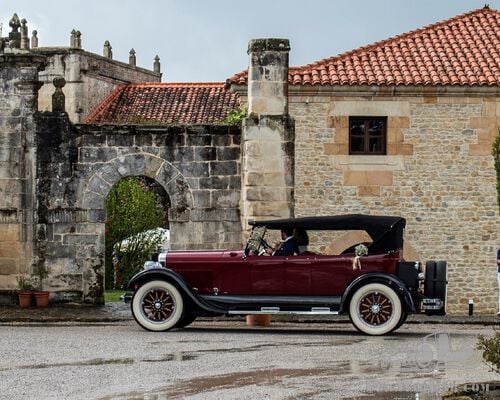
Lincoln Modèle L Sport Phaeton 1925 par Brunn
Numéro de châssis : 24576Numéro de moteur : 24576Numéro de carrosserie : 6-1036Type de carrosserie : 123Moteur : V860-d..
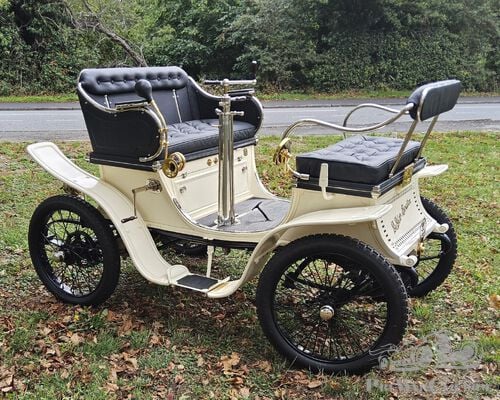
1902 De Dion Bouton Vis-a Vis 4.5 H.P. Reg No. Y123 V.C.C. Cert No. 1649
1902 De Dion Bouton Vis-à-vis 4.5 H.P.Reg. No. Y132 V.C.C. Cert No. 1649Beautifully presented and completely restored following an ex..