Le magazine et marché mondial pour les passionnés de voitures classiques, par des passionnés.
Le magazine et marché mondial pour les passionnés de voitures classiques, par des passionnés.


Filter
Faites votre choix:
- Voir les voitures
-
Marque >>
-
Catégorie >>
- Voir les motos
- Voir les pièces et plus
-
Marque de la voiture >>
-
Constructeur >>
-
Catégorie >>
- Vélos
-
Année >>
-
Pays



Dating a Sizaire Naudin (2 or 4 cyl.?)
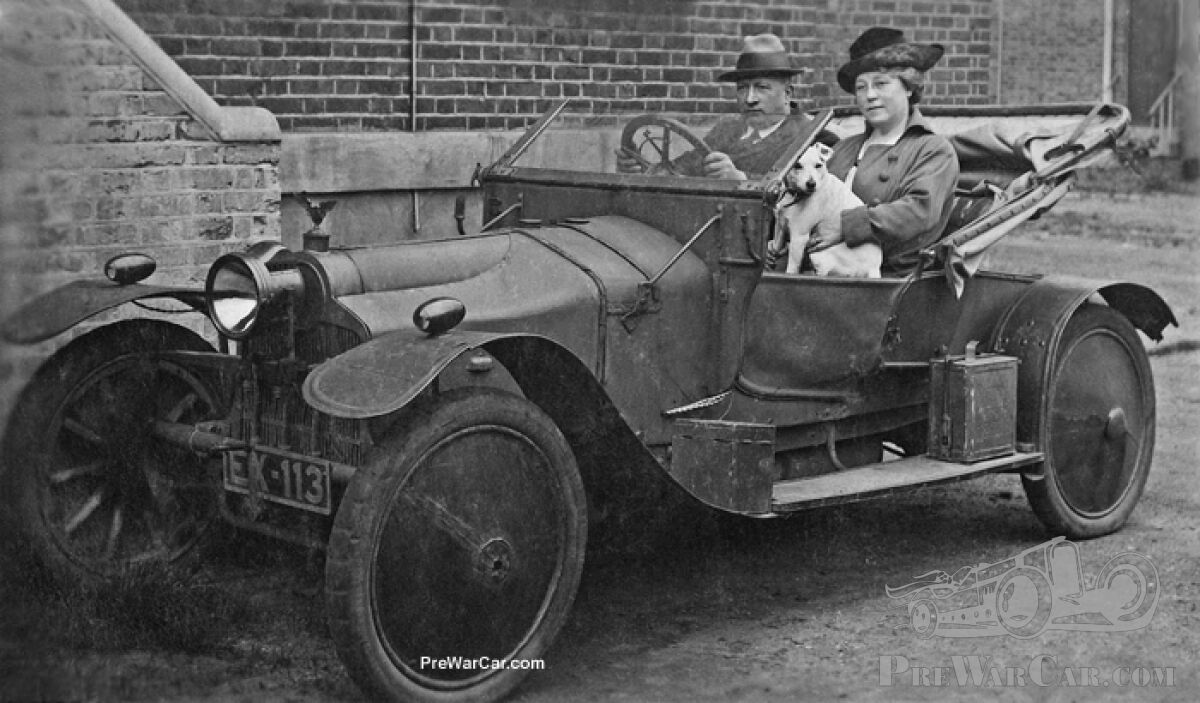
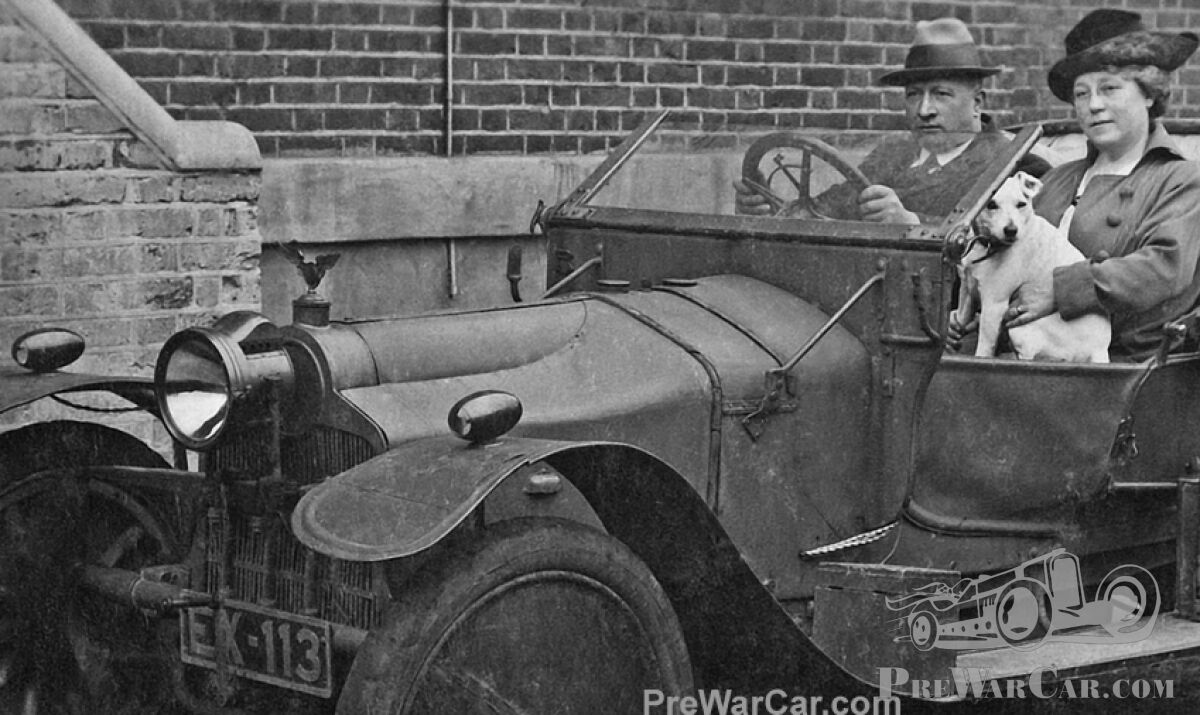


Doug Wright sent us this very nice shot of a Sizaire Naudin: "I found this old photo of what I believe to be my Grandfather's car in England, somewhere around 1911. Problem is, I can't find anyone to identify the make of car, or the year. Can you help? I believe it's a Sizaire Naudin. My Grandfather was killed in the first week of WW1 so the year is important, if that really is him (I've never seen a photo of my Grandfather)."
So maybe one of you can help. Maybe you can identify the exact background of EX113? This combination was issued from Jan. 1904 to July 1956, by Great Yarmouth County Borough Council; currently Norwich (source: Numberplates.com).
Or maybe there are other clues to give a more exact dating to the photo? The car looks well used, but apparently the position lights (no luxury on a one-light car!) have been mounted only recently, as they look brandnew. Possibly following a new chapter in road safety legislation? Can anybody tell more about the striped wiring that leads from the lower side of the bulkhead right under the firewall (or dashboard) not sure what is the right expression in this.
Update by Geoff Chennels:
Regarding “…Update by Malcolm Jeal: the car is a Sizaire-Naudin - a 12hp/cv single-cylinder, but from 1908-9.”
I’d be very interested to learn how Mr Jeal can differentiate between a single cylinder & a four cylinder Sizaire from the Prewar Car picture?
Update by Malcolm Jeal: the car is a Sizaire-Naudin - a 12hp/cv single-cylinder, but from 1908-9.
The chap who has done a calculation and makes it 1913/14 has placed it somewhat too late. EX is a Great Yarmouth registration and from the annual statistics that were published each year in The Autocar by June 30 1906 Great Yarmouth had got up to EX -67 (figures were: Jan to end-June 1904 = 16; July 1904 to end-June 1905 = 22; July 1905 to end-June 1906 = 29; so a small increase each year). 113 take 67 = 46; so the registration fits neatly with the date of the car from its appearance.
When the cars were supplied new by the English agents, Jarrott & Letts, they were fitted with two dash-mounted paraffin side-lights, and a single self-generating acetylene headlamp mounted almost at the top of the radiator height. The law then applying simply required two white lights to the front (forget the rear for now). What has happened with the pictured car is that the lighting has been up-dated to electric (the wiring is clearly visible) and that could have been done c1913-14, or post-Great War.
Publié:
mercredi juillet 20th, 2011
Facebook
LinkedIn
Twitter
WhatsApp
Email
Copy
Commentaires
Inconnu
29 Février 2016, 15:34
Inconnu
21 Juillet 2011, 12:32
At the time of the photograph, this was clearly a very old car in very well used condition. Though it is fitted with electric lights, these are certainly much later additions and acetylene may originally have been used, assuming this car to have been built in the 1912- 14 period. By 1932 British regulations required side (parking) lamps to be fitted within a small distance of the cars overall width; this ended the once popular practice of fitting them to the scuttle, and it seems to me that the very modern looking lights on the wings here may have been designed to meet these regulations. The clothes worn by the lady and gentleman appear to be from that period. The man may be described as late- middle aged and is much older than British regular soldiers serving in 1914 would normally have been.
Lire la suite
Inconnu
21 Juillet 2011, 09:45
According to the definitive work on British vehicle registrations by L H Newall, EX 270 was issued in October 1916, and EX 599 in April 1921. That is about 60 per year, so working backwards suggests a date of 1913 or 14 for the Sneezer. The book uggests that there may be more details available at the Norfolk record office.
Lire la suite
Regards from Aix-en-Provence -
France