Le magazine et marché mondial pour les passionnés de voitures classiques, par des passionnés.
Le magazine et marché mondial pour les passionnés de voitures classiques, par des passionnés.


Filter
Faites votre choix:
- Voir les voitures
-
Marque >>
-
Année >>
-
-
Catégorie >>
- Voir les motos
- Voir les pièces et plus
-
Marque de la voiture >>
-
Constructeur >>
-
Catégorie >>
- Vélos
-
Année >>
-
Pays


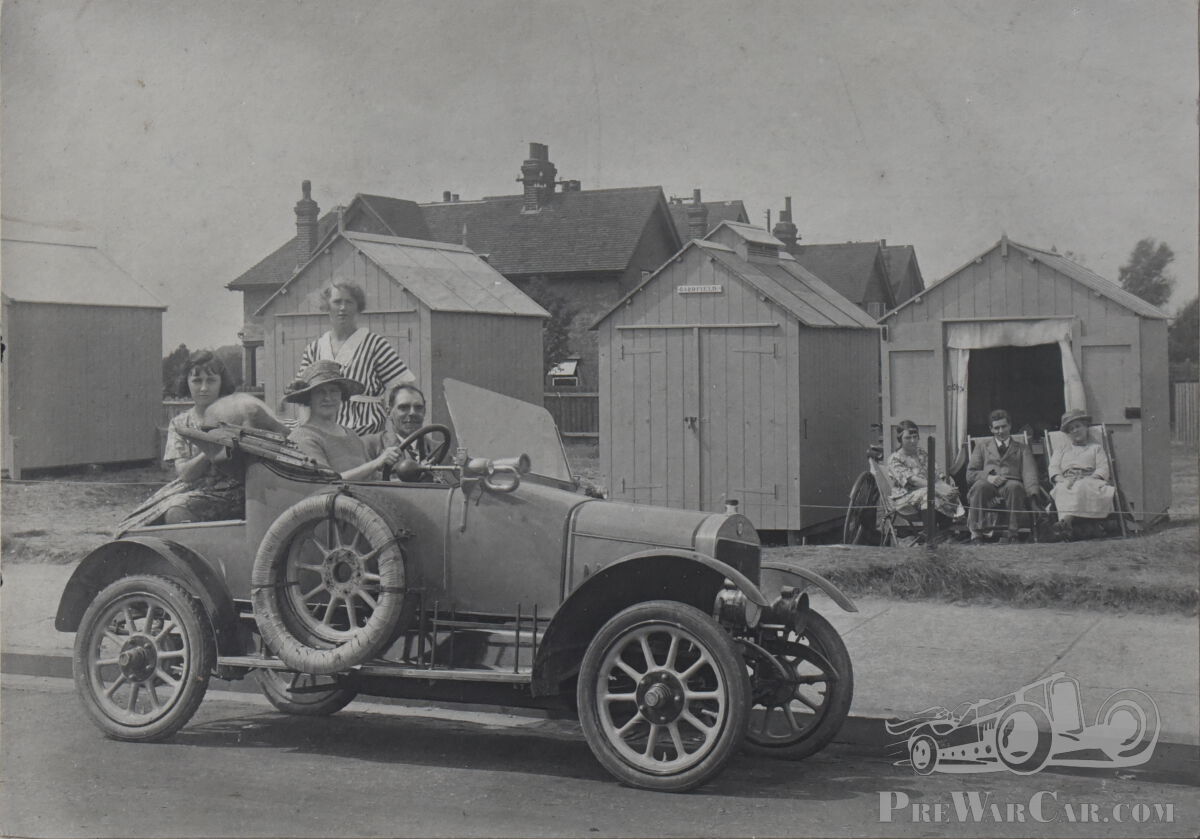
En vacances avec une Hillman: la meilleure façon de voir la mer

Maintenant que les mois les plus chauds sont arrivés, les gens ont fait leurs projets de vacances et la plupart d'entre eux rêvent de s'allonger sur la plage de Majorque ou d'un autre endroit offrant une combinaison similaire de soleil, de mer et de sable. Bien sûr, ce n'est qu'avec l'avènement des vacances à forfait bon marché dans les années 1960 que de telles excursions exotiques sont devenues possibles. Pendant les décennies qui ont précédé, la famille britannique typique se rendait en voiture ou en train dans une station balnéaire lointaine de son choix et trempait ses orteils dans les eaux vivifiantes de la Manche, de l'Atlantique ou de la mer du Nord.
Si les vacances à forfait à l'étranger ont malheureusement contribué au déclin des villes balnéaires britanniques, nombre d'entre elles restent des endroits charmants où l'on peut s'évader quelques jours de la vie trépidante. Brighton offre de nombreuses attractions en plus de ses nombreux événements automobiles historiques; le front de mer bordé de palmiers d'Eastbourne est magnifique par temps ensoleillé et Margate a un caractère unique et de charmantes boutiques d'occasion. Les automobilistes de cette photo ont choisi comme destination Felixstowe, la ville du Suffolk qui est devenue un lieu de villégiature à la mode pour les victoriens et les édouardiens, et qui était desservie par trois gares ferroviaires distinctes après 1898.
Outre une jetée construite en 1905, Felixstowe doit sa renommée à ses cabines de plage. On dit que Felixstowe a été la première ville à les installer, et elles figurent certainement en bonne place sur cette photo, dont la vedette principale est, bien sûr, la Hillman 9hp, avec à son bord trois fières dames et leur ami gentleman. La 9hp a été introduite en 1913 comme première tentative de Hillman pour une voiture légère, mais la production a été interrompue après seulement un an en raison de l'éclatement de la guerre. La production a peut-être repris brièvement après la guerre, mais les survivantes sont extrêmement rares. Nous n'en connaissons qu’une seule, qui se trouve en Australie. En existe-t-il d'autres?
La voiture a probablement été construite en 1913 ou 1914, mais nous sommes enclins à penser que la photo a été prise dans les années 1920, car elle semble avoir des phares légèrement dépareillés, ce qui n'est le cas que d'une voiture qui a un peu roulé. Nous ne savons pas exactement quelle distance ils ont parcourue pour leur voyage, et nous ne pensons pas que les filles à l'arrière eussent été ravies de passer trop de temps sur le siège exposé, mais elles ont eu une belle journée pour cela. Prendre une voiture légère d'ancetre pour se rendre à Felixstowe n'est peut-être pas l'idée que tout le monde se fait des vacances parfaites, mais nous la préférerions à trois heures de vol EasyJet pour Torremolinos.
Paroles: Zack Stiling; photographie: Collection Stiling
Publié:
vendredi juin 7th, 2024
Facebook
LinkedIn
Twitter
WhatsApp
Email
Copy
Commentaires
David Grimstead
17 Juin 2024, 00:31
Gérard Karleskind
12 Juin 2024, 23:31
En 1985 j'ai possede une voiture seblable à la photo avec historique. J'ai en ma possession beaucoup de photos. J'ai vendu la voiture in 1999. Le nouveau acquereur etant decede deux apres elle someille dans une grange depuis plus de vingt ans.
------------------------------------------------------------------------
In 1985 I owned a car like that in this historic photograph. I have in my possession many photographs. I sold the car in 1999. The new owner being deceased, it was sleeping in a barn for more than 20 years.
Lire la suite
------------------------------------------------------------------------
In 1985 I owned a car like that in this historic photograph. I have in my possession many photographs. I sold the car in 1999. The new owner being deceased, it was sleeping in a barn for more than 20 years.
Tam Large
11 Juin 2024, 01:11
I think this may be a 1920 model of Hillman. The parallels between this example and my February, 1920, 11.9hp Calcott are very striking. The distinctive curved shape of the scuttle area, the design of windscreen and even the type and position of the bulb horn and the mounts for the Lucas sidelights are pretty well identical. Hollick & Pratt made the body of my Calcott, not surprisingly as they were literally round the corner from each other, and the same was, I'd guess the case for the Coventry-made Hillman. Both cars have fork mounts for headlights too, although the Calcott has Lucas headlights matching the sidelights—all part of an off-the-shelf set sold by Lucas. The similarities continue with very similar steel artillery wheels, and the style of hubs and the central ring with five studs are also indistinguishable. It shows how much was bought in off the shelf by each maker at this date. Most illuminating. Can anyone confirm if Hollick & Pratt did bodywork for Hillman?
Lire la suite
Clive Hamilton-Gould
07 Juin 2024, 13:44
Colin Crabbe was using his Hillman on a Light Car Rally in 1977. This car was found in Hastings by Michael Burn in 1972 with a collection of other vintage cars. I have no idea where it is today.
Lire la suite
However, dickey seats were soon being installed and in April, 1914, Hillman, exasperated at “the still prevalent vice of overloading”, wrote to The Autocar magazine complaining that although the Nine’s chassis had been designed for only two-seater bodywork, purchasers were signing up for bodies with a dickey seat, even a double-dickey and then complaining it was Hillman’s fault that the car’s performance was not as per the adverts. Hillman said it was not only unfair on them and the car but on the driver’s wallet - a new set of tyres alone was £6 5s. They advised that if a third person was to travel and then for only a short distance, better to sit them on the passenger floor because, they warned, excess weight behind the back axle was likely to induce skidding.
Their protestations were evidently ignored because many second-hand 1914 two-seaters with a dickey or “provision for a dickey-seat” were advertised for sale during the Great War. Bowing to the inevitable, 1915 new cars were advertised with a double-dickey.
At its launch in 1913, the Nine had been the most expensive of the light cars (rather than cycle-cars) then appearing but testers said the price was justified by its better specification compared to the Humberette at £125, Swift at £140, Perry at £147, G.W.K. at £150, Standard at £185 and Singer at £185. The basic £200 two-seater (7ft. 9in. wheelbase and 4ft. track) had a 60 by 120mm, 1,357 c.c. engine rated 8.9 h.p., a three-speed and reverse gearbox, overhead worm-drive axle, five Sankey wheels with Dunlop deep-grooved tyres, adjustable foot pedals and steering wheel, domed wings, a hood, screen, electric side and tail lamps, two acetylene headlamps with gas generator, a horn, number plates and a full set of tools. All levers were inside the body but it lacked a speedometer. Hillman claimed it could return 35 m.p.g. at 45 m.p.h. Electric headlamps and self-starter were fitted from the end of 1915 —it had a Scott Dynamotor starter post-war.
In July, 1913, possibly still undergoing factory proving trials at the hands of Mr. H. Nelson Smith, Secretary to the Hillman Motor Company, a 9 h.p. Hillman had already visited the seaside, being a winner at Saltburn Sands Speed Trials. Smith had also done well with it at Brooklands’ April season-opening meeting, winning a 75-m.p.h. Long Handicap and winning several more light-car races during the year. He took the Class A records there in April, 1914, in a single-seater racing version and a standard Hillman Nine was awarded a gold medal in the R.A.C. Light-Car Trials that year.
A unique 2,714 c.c., 17.8 h.p., eight-cylinder Hillman was entered at the Brooklands Whitsun Meeting of May, 1914. It had a pair of four-cylinder “Nine” engines side by side in its chassis, with parallel starting handles sticking out the front. The engines had separate drive shafts connected to separate bevel drives, perhaps one on each half-shaft? Needless to say, it did not perform well due to its weight and an inability to synchronise the engines. A standard Hillman Nine was also at this meeting but, already a winner, was so heavily handicapped it won nothing.
The Hillman “Miniature Business Car” and a 5cwt. van version, respectively £200 and £195 in 1915, remained on sale to authorised purchasers during the Great War. Second-hand 1913-15 models were often for sale and a new “special 9-h.p. chassis” was advertised in July, 1916, for £185 but by then so too was a version with an 11 h.p. engine. The first post-war small Hillman, advertised from October, 1918, was visually identical to the original 1913 Nine except for its electric headlamps. It was described over the next two years having either a 10 h.p., 63 by 120mm, 1,496 c.c. engine or an 11 h.p., 65 by 120mm, 1,592 c.c. engine and available with a longer wheelbase of 8ft. 6in. In early 1919, a two-seater cost £370 but by the year-end was £435.