Le magazine et marché mondial pour les passionnés de voitures classiques, par des passionnés.
Le magazine et marché mondial pour les passionnés de voitures classiques, par des passionnés.


Filter
Faites votre choix:
- Voir les voitures
-
Marque >>
-
Année >>
-
-
Catégorie >>
- Voir les motos
- Voir les pièces et plus
-
Marque de la voiture >>
-
Constructeur >>
-
Catégorie >>
- Vélos
-
Année >>
-
Pays



Lutter contre la menace salée: la solution d’avant-guerre pour la conduite hivernale
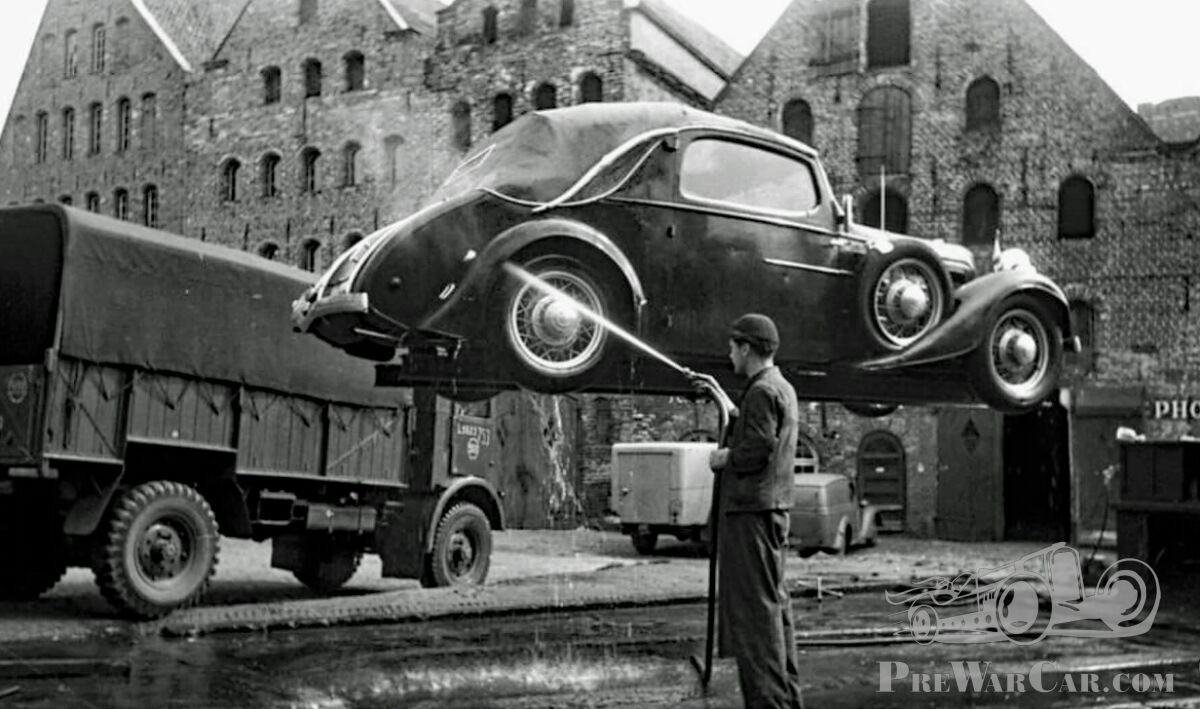

Non, ce n’est pas un trucage ! Regardez de plus près et vous verrez que la voiture ne flotte pas dans les airs, mais est en réalité sur un ascenseur avec un poteau central, caché seulement par l'homme tenant le tuyau devant elle. C’est plutôt astucieux !
La photographie a été prise dans la ville de Lübeck, au nord de l’Allemagne, à une date inconnue. Nous savons que les bâtiments en arrière-plan sont les entrepôts historiques de sel de la ville, datant des 16e au 18e siècles, à une époque où Lübeck était un acteur majeur du commerce du sel. À titre de curiosité, ces bâtiments ont été utilisés plus tard comme repère du Comte Orlok, lorsque le film d’horreur emblématique Nosferatu y a été tourné en 1922. Plusieurs bâtiments au rez-de-chaussée ont ensuite été convertis en garages. Ils existent toujours et peuvent être loués désormais pour des événements et concerts.
Quoi qu’il en soit, lorsque nous, les passionnés d’automobiles, pensons au sel, la première chose qui nous vient à l’eesprit c’est le sel répandu sur les routes en hiver. Nous frémissons tous à l’idée de conduire nos voitures sur des routes salées, alors cette photo semble tout à fait appropriée—pulvérisez-le sur cet ascenseur ingénieux !
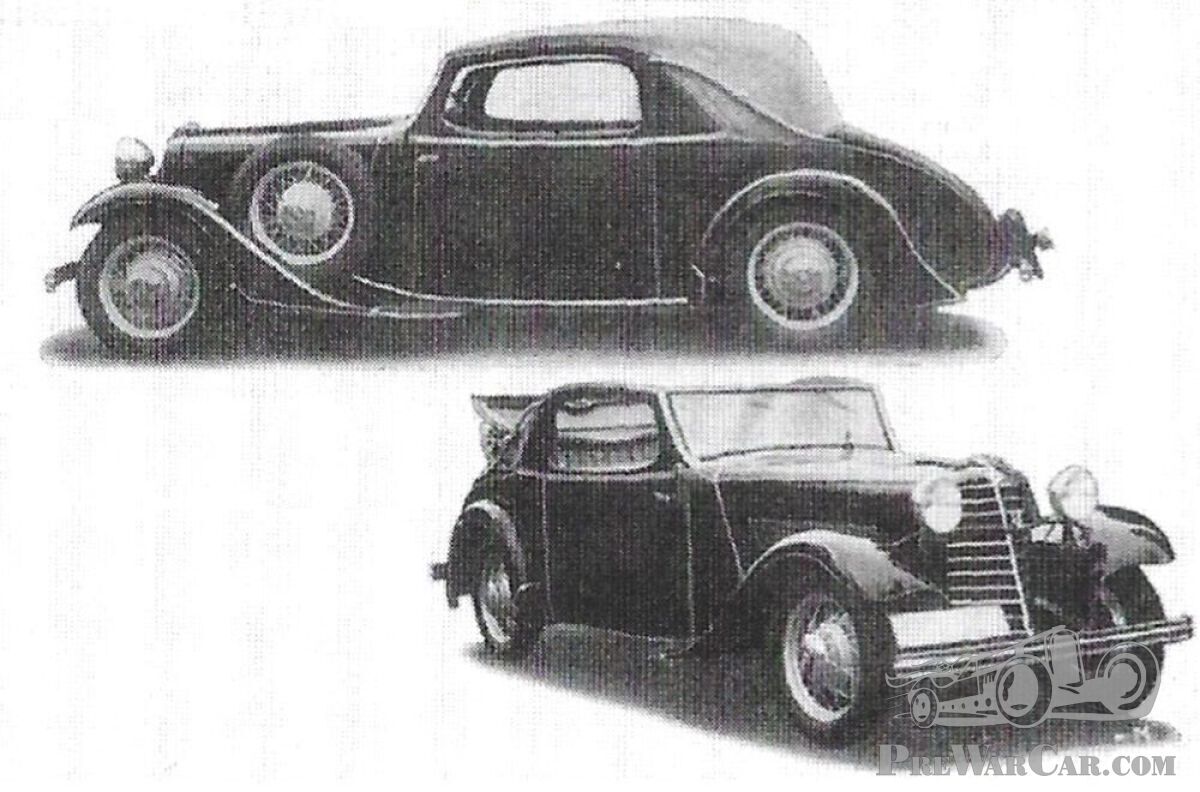
Quant à la voiture, il ne fait aucun doute qu’il s’agissse d’un produit de l’ingénierie allemande, mais de quel modèle exactement ?
Mots: Jeroen Booij
Photographie: Scheerer Photo
Publié:
lundi janvier 6th, 2025
Facebook
LinkedIn
Twitter
WhatsApp
Email
Copy
Commentaires
Gerd Klioba
08 Janvier 2025, 08:26
The car in front of the salt warehouses in Lübeck is a 1932 Ford V8 Aero-Cabriolet bodied by Ludewig.
Lire la suite
Tim Hewitt
06 Janvier 2025, 23:31
I'm not sure what the car is, but the truck is definitely a British Army Austin K5 with a GS body. They made just over 12,000 of them between 1941 and 1945.
By the way, the spare wheel on the car won't do them much good; it looks flat to me.
Lire la suite
By the way, the spare wheel on the car won't do them much good; it looks flat to me.
David Grimstead
06 Janvier 2025, 22:02
I don’t know about the car but the “elephant-in-the-parkplatz” for truck enthusiasts looks like a British Second World War-era Austin K5 4x4 army lorry, known as a “screamer” due to its noisy transfer box, not to mention its dodgy piston rings.
A number of post-war armies got surplus ones free; notably this included a Norwegian Army unit of 4,400 men, which was moved from the Harz area to Schleswig-Holstein (with Lübeck at its edge) to secure some of the British occupation zone between September, 1948, and 1953—the Russian zone started a few miles east of Lübeck.
Information about the Norwegian unit says that “a number of administrative vehicles of German origin were also allocated”—could the wing-mounted standard that Dirk Eger mentions be a Norwegian flag on the C.O.’s personal staff car?
I must add that the Danish Army got some K5s, too, and their door-printed registration numbers start as here with “L.”
Looking at the style of the two commercial vans, this must be early 1950s rather than pre-war.
Lire la suite
A number of post-war armies got surplus ones free; notably this included a Norwegian Army unit of 4,400 men, which was moved from the Harz area to Schleswig-Holstein (with Lübeck at its edge) to secure some of the British occupation zone between September, 1948, and 1953—the Russian zone started a few miles east of Lübeck.
Information about the Norwegian unit says that “a number of administrative vehicles of German origin were also allocated”—could the wing-mounted standard that Dirk Eger mentions be a Norwegian flag on the C.O.’s personal staff car?
I must add that the Danish Army got some K5s, too, and their door-printed registration numbers start as here with “L.”
Looking at the style of the two commercial vans, this must be early 1950s rather than pre-war.
Francisco Carrión
06 Janvier 2025, 19:08
They're clearly Ford V8 bumpers and wheels. I think it is a German-bodied Ford V8, a very interesting one-off car.
Lire la suite
Daniel Reuben
06 Janvier 2025, 12:38
I vote for an Audi UW220. I think the hubcaps, the shape of the wings and the impressed beltline on the upper side of the bonnet which bends down at an angle at the very front all fit the Audi. I am having a hard time recognising the rear bodywork extending beyond the wings, the landau bars/top (is it just decorative—the fabric looks supported to be operational?) and also the horizontal trim piece on the door. Could this be special coachwork?
Lire la suite
Dirk Eger
06 Janvier 2025, 11:16
It is a Horch 853, probably confiscated by the British Army in 1945. You see the standard on the front wing.
Lire la suite