Le magazine et marché mondial pour les passionnés de voitures classiques, par des passionnés.
Le magazine et marché mondial pour les passionnés de voitures classiques, par des passionnés.


Filter
Faites votre choix:
- Voir les voitures
-
Marque >>
-
Année >>
-
-
Catégorie >>
- Voir les motos
- Voir les pièces et plus
-
Marque de la voiture >>
-
Constructeur >>
-
Catégorie >>
- Vélos
-
Année >>
-
Pays



En souvenir de Dorothy Levitt


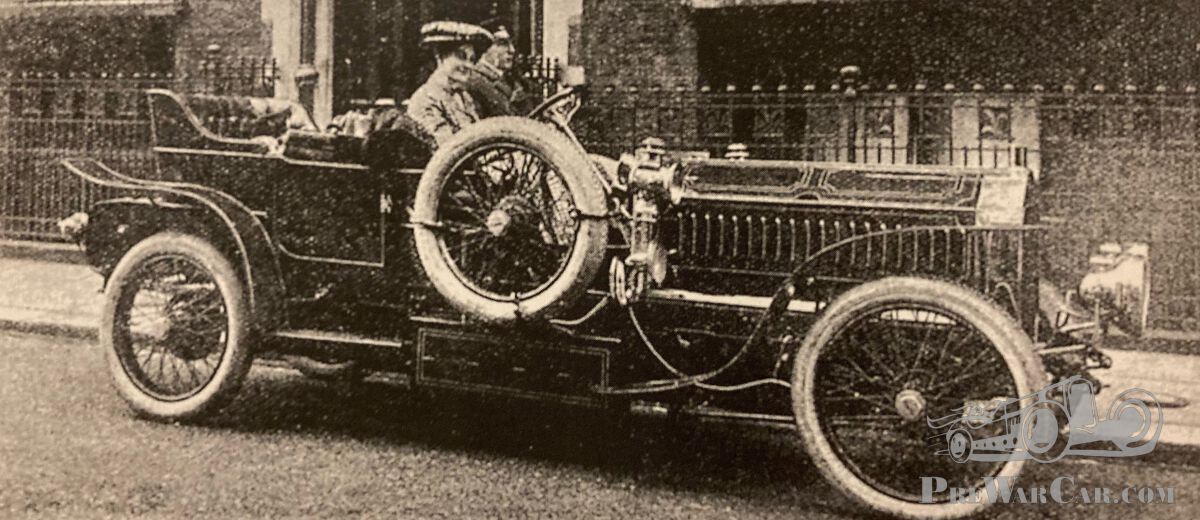


Suite à notre article de lundi concertante le nouveau Concours Levitt pour les femmes automobilistes, qui se tiendra à Hampton Court Palace le mois prochain, nous aimons porter notre attention sur Dorothy Levitt, qui a donné son nom au concours. De toutes les femmes pionnières de l'automobile du début du 20e siècle, elle fut l'une des plus audacieuses et des plus aventureuses, réalisant de nombreuses "premières" pour une femme de l'époque.
Née en 1882, elle était une jeune femme de 20 ans lorsqu'elle a appris à conduire par S.F. Edge en 1902. Ce dernier allait devenir une figure éminente et bien connue du monde de l'automobile, à propos de laquelle une nouvelle biographie de Simon Fisher est publiée par Evro cet automne. Edge avait 15 ans de plus que Levitt et ils se sont manifestement bien entendus, bien que la nature exacte de leur relation soit difficile à établir - il a certainement trouvé en cette jeune femme intrépide un outil de marketing très utile, et pour elle, c'était un homme prêt à lui permettre de poursuivre sa nouvelle passion pour la vitesse.
La première aventure de Levitt dans le sport automobile a lieu en mai 1903, alors qu'elle n'a que 21 ans. Levitt s’est inscrite à la course de fiabilité de deux jours entre Glasgow et Londres, d'une distance de 400 miles, dans une voiture Gladiator de 12 ch, dont Edge est l'agent au Royaume-Uni. Un article de journal donne une idée de l'attitude de Mlle Levitt vis-à-vis de la vitesse et de la loi : "Alors qu'elle montait une colline escarpée... trois policiers en civil, déguisés en clochards, ont surgi de derrière une haie et ont essayé d'arrêter la voiture, mais" dit Mlle Levitt, "nous allions à 37 miles à l'heure, nous les avons dépassés et avons rapidement disparu de leur vue". Ce n'était pas sa première altercation avec la police, et ce ne serait certainement pas sa dernière.
À cette époque, Edge est associé à Napier et possède un hors-bord de 40 pieds à moteur Napier nommé Napier ; Levitt ne tarde pas à participer à cette compétition. En juillet 1903, le bateau, piloté par Levitt, a remporté le premier trophée international britannique Harmsworth, organisé pour les bateaux de vitesse sur la rivière Lee, dans le comté de Cork, en Irlande. À une autre occasion, lors d'une course à Cowes sur l'île de Wight, un navire de Southampton est arrivé juste devant sa trajectoire. Dorothy a le choix : soit elle essaie de s'arrêter avant de percuter le bateau, soit elle accélère et se faufile. Elle a choisi la seconde solution et a réussi de justesse, avec quelques centimètres d'avance. De nombreuses personnes ont assisté à l'incident, dont le roi Édouard VII, qui a été impressionné par la jeune femme et a demandé à la rencontrer par la suite.
C'est ainsi que se poursuivirent les rapides années d'aventure de Dorothy Levitt au cours de certaines des années les plus passionnantes du XXe siècle. Cette année marque le centenaire de sa mort prématurée, à l'âge de 40 ans seulement, d'une overdose de drogue en 1922. Il n'y a jamais eu de verdict concluant de suicide, mais les dernières années de sa vie ont été marquées par des problèmes financiers. L'histoire fascinante de la vie de Levitt a été racontée de manière aussi détaillée que possible dans un nouveau livre de Michael Barton intitulé Fast Lady : The Extraordinary Adventures of Miss Dorothy Levitt. Le livre sera lancé le samedi 3 septembre, le même jour que le nouveau Concours Levitt à Hampton Court Palace, nommé en son honneur. Le livre est une lecture attrayante et divertissante, et est illustré par des photos d'époque poignantes. Il ne résoudra peut-être pas le mystère de sa mort, mais il met en lumière cette figure importante et pionnière des débuts du monde automobile - une source d'inspiration pour nous tous.
Publié:
vendredi août 26th, 2022
Facebook
LinkedIn
Twitter
WhatsApp
Email
Copy
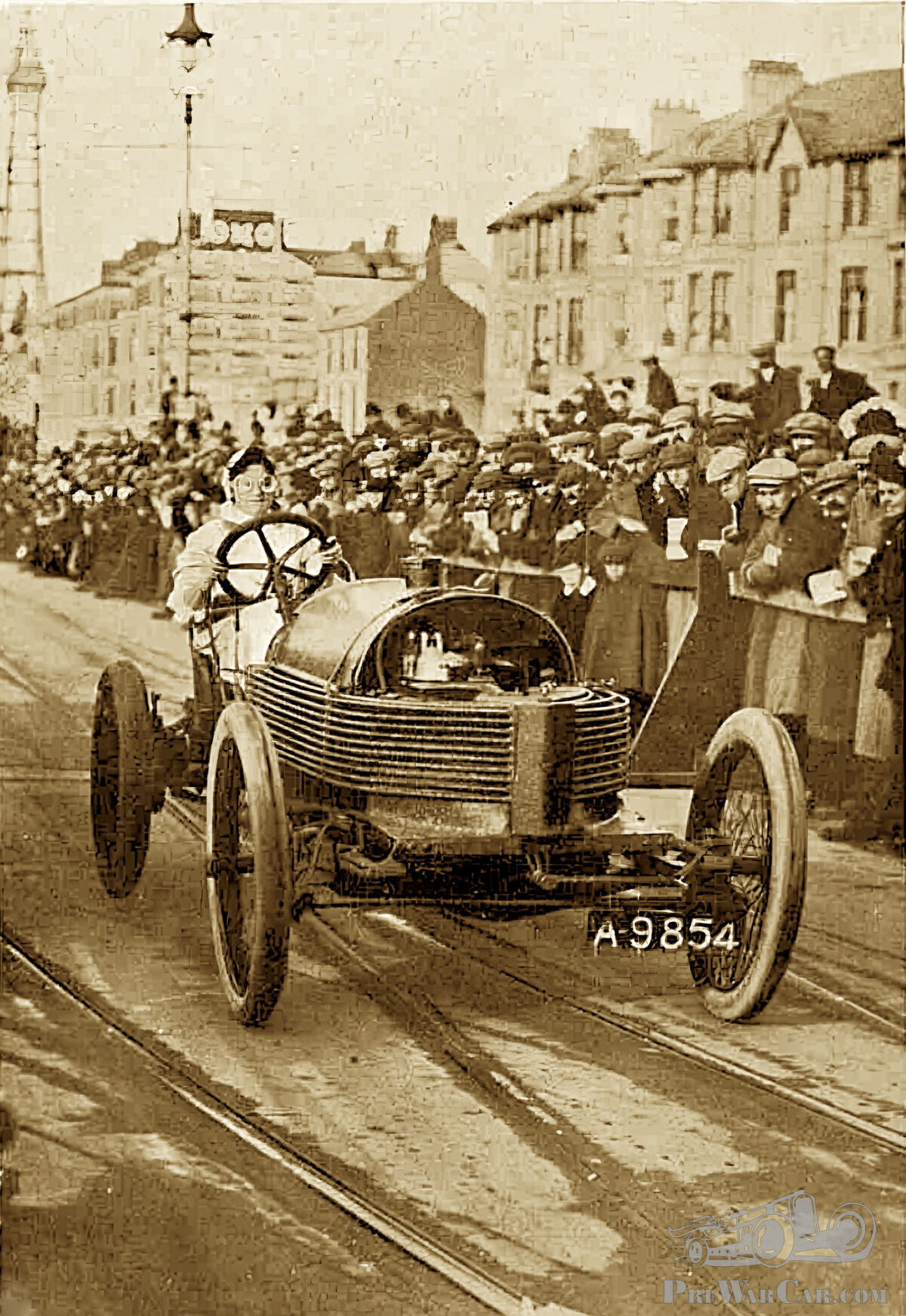
Already recognised as holding an outright water speed record in a Napier motor boat, she also previously set the World Land Speed Record for women during the Brighton Speed Trials of 1905 when she ran another Napier car at 79.75 mph. At the Blackpool Speed Trials in England, however, she smashed her own record with a timed run for the flying kilometre of 90.88 mph driving the Napier L48 on two runs along the Blackpool waterfront.
One newspaper reported: “Miss Levitt has had plenty of narrow escapes. At Blackpool… during the speed trials, two dogs, three children and finally three more dogs came onto the track and tried to cross over. Miss Levitt spoiled her trials but managed with splendid work to save the children. History does not tell what happened to the dogs.”
The story of her other lucky escape at Blackpool driving the Napier L48 also made headlines. She took off from a standing start, reaching 96 mph when the front part of the bonnet came away (it was reported that a strap broke) and the wind got under it and threw it back toward her. She brake slowly at first and then as hard a she could as it looked like the bonnet could decapitate her. She managed to stop just as the last screw came away.
When asked what she felt racing the Napier L48 at that speed she said: “Wonderful. One can hardly describe one’s sensations. There is a feeling of flying through space. I never think of the danger. That sort of thing won’t do. But I know it is omnipresent.The slightest touch of the hand and the car swerves, and swerves are usually fatal. But I am a good gambler and always willing to take the chance. In going that pace the hardest thing is to keep in the car. Half the time the wheels do not touch the ground at all, and when they do you must be prepared to take the shocking lurch or else out you will go. It is far harder work to sit in a car than to ride a galloping horse in a steeplechase. When I made the records I was in the car alone. I prefer it.”
After Blackpool in 1906, she announced to the American press that she wished to race an American to cement the title: “I am willing to race here (in the United Kingdom) or at Ormond Beach, Fla., or elsewhere in the United States. I am wild to race an American woman for the world’s championship. I must look to America to race. There is no one left in Europe with whom to compete,” she said. Dorothy Levitt never made it to Florida but she remains one of the greats of the heroic era of motor racing.
The Napier L48 which Dorothy Levitt drove to become the fastest woman in the world was commissioned by SF Edge and Montagu Napier to break speed records and to create a new category of motor car using six cylinder engines. The world-beating 915 cubic inch (15 litres) motor was placed into a chassis with an overall weight of less than 1000kg (2,204lbs) to meet current European motor racing regulations
Dorothy Levitt was not lacking in confidence to beat all comers in the USA. If she had taken the Napier L48 to Florida it would have been the third time that the first car timed at more than 100 mph on American soil had raced on the Daytona and Ormond beaches. In 1905, Arthur Macdonald, set a new speed record of 91.371mph over five miles on the beaches, then over the course of the week set a world’s record of 104.651 mph over the mile as well as 5, 10 and 20 mile speed records, and a new American record for a flying kilometre at 97.258 mph.
In 1906, however, the Napier L48 with Clifford-Earp at the wheel the car set a world record time of 1:15:40-2/5sec or 79.288 mph for 100 miles.
The revolutionary six cylinder engine from this winning Napier was installed in a new chassis in the 1970s in Australia and the resulting car will be back on the sands of Ormond and Daytona beaches for the first time in February 2024 to remember some of the greatest races in the history of auto racing. It will later be offered for sale at the Bonhams Auction, Fernandina Beach on 29 February 2024.