Le magazine et marché mondial pour les passionnés de voitures classiques, par des passionnés.
Le magazine et marché mondial pour les passionnés de voitures classiques, par des passionnés.


Filter
Faites votre choix:
- Voir les voitures
-
Marque >>
-
Année >>
-
-
Catégorie >>
- Voir les motos
- Voir les pièces et plus
-
Marque de la voiture >>
-
Constructeur >>
-
Catégorie >>
- Vélos
-
Année >>
-
Pays



Hors des sentiers battus : le moteur rotatif de Walter Macomber


Lorsque l'on parle de moteurs rotatifs aujourd'hui, on évoque généralement les moteurs Wankel, conçus par Felix Wankel et présents dans les voitures de série depuis 1964. D'ailleurs, Mazda Motors, fervent défenseur du moteur Wankel (le seul constructeur à l'utiliser encore ?), a annoncé en début d'année une voiture électrique hybride à moteur rotatif.
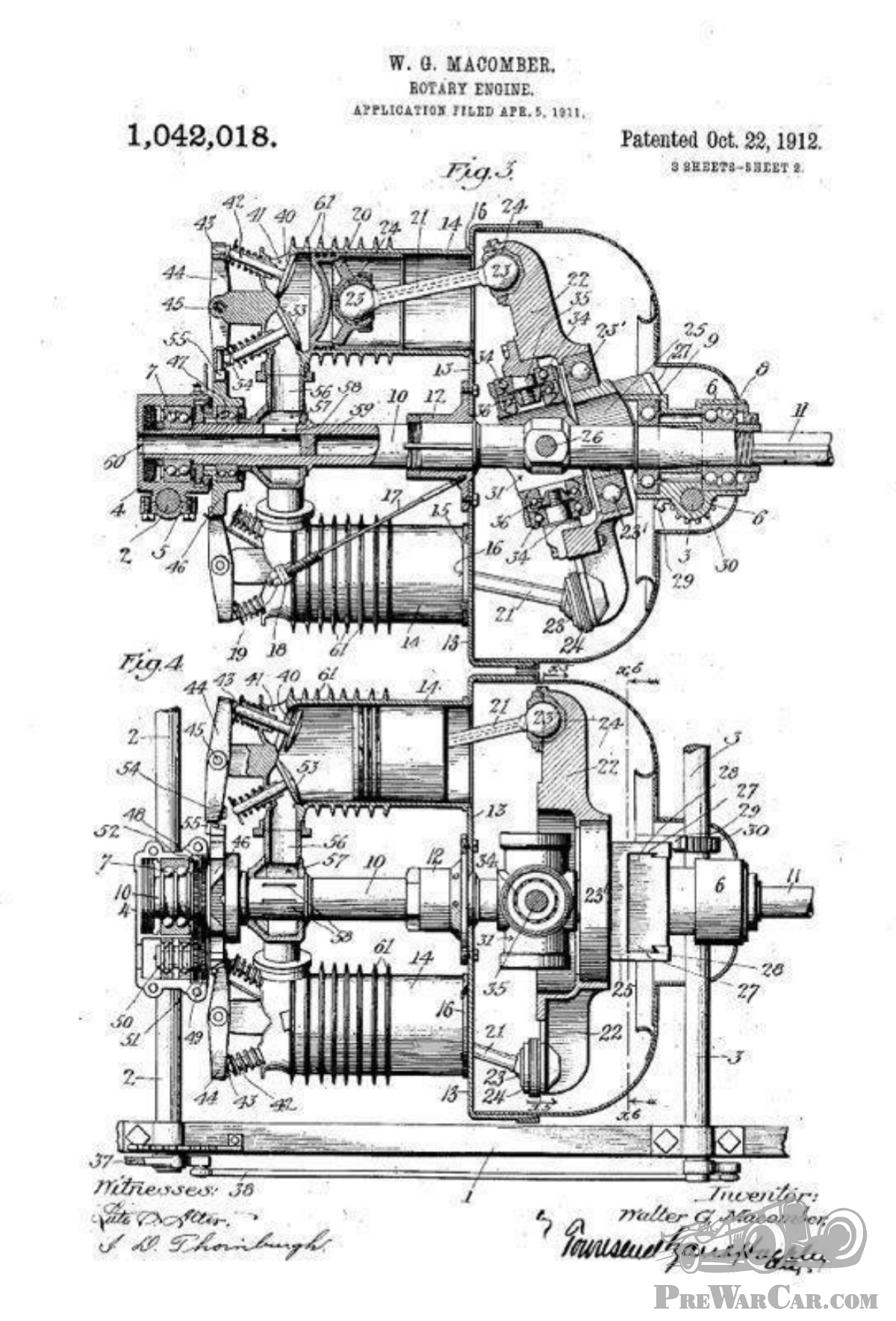
Cependant, le moteur rotatif mentionné sur le flanc de la grosse voiture que nous voyons ici est d'une toute autre nature. Walter Macomber et sa Macomber Rotary Engine Company à Los Angeles ont créé un moteur axial dès 1909. Il s'agissait d'un moteur à sept cylindres refroidi par air, construit selon un schéma axial avec un seul bloc-cylindres rotatif. Oui, le bloc avec ses sept cylindres était rotatif. Selon son créateur, le principal avantage était d'améliorer le refroidissement des cylindres grâce à un soufflage constant sans avoir recours à des ventilateurs supplémentaires. Les premières versions produisaient jusqu'à 60 ch à une vitesse de 800 à 1 400 tr/min et c'est l'un de ces moteurs qui aurait été monté dans le véhicule vu à San Diego en 1915.
Selon une source, "le Macomber Rotary a été utilisé dans de nombreux prototypes de voitures entre 1914 et 1918... Une usine située à Sandusky, dans l'Ohio, était prête à produire des voitures Eagle-Macomber en série. Macomber a même conduit une voiture Eagle-Macomber de Los Angeles à Chicago en novembre-décembre 1916 pour prouver la valeur du moteur".
Certains des moteurs rotatifs de Macomber ont également trouvé leur place dans des avions, mais il semble que l'inventeur ait eu du mal à vendre son modèle breveté. Une publicité de 1915 promettait : Le moteur rotatif "remplacera tous les autres moteurs à gaz", mais le moteur en ligne étant devenu la norme à cette époque, cela ne s'est jamais produit. Une version plus petite du moteur rotatif, datant de 1916, comportait cinq cylindres au lieu de sept, mais une fois de plus, elle n'a jamais atteint le succès escompté et, en 1918, le concepteur avait abandonné.
Nous nous demandons si des voitures dotées de ce moteur fascinant pourraient survivre aujourd'hui.
Paroles : Jeroen Booij ; photo : Cynthia Anderson (Cynthia's Hi-Desert Blog)
Publié:
lundi février 26th, 2024
Facebook
LinkedIn
Twitter
WhatsApp
Email
Copy
Commentaires
Tery Hurst
03 Mars 2024, 23:59
My father invented a rotary engine in the 1970s which he forwarded to Repco Research in Melbourne, Australia, for evaluation and they confirmed it would work but sadly his health declined and he was unable to progress any further. I still have the model which works on compressed air.
Lire la suite
E. Dean Butler
03 Mars 2024, 12:03
Don't forget the Julian, Adams-Farwell and a few other radial engine attempts. The Julian Sports Coupé was a great looking car.
Lire la suite
Ross Thornhill
27 Février 2024, 05:19
Rotary engines are only feasible with 'odd' numbers of cylinders, so three, five, seven and nine are potentially feasible—there will be an increased 'flywheel' mass and were probably 'in the day' (perhaps not now with modern electronics) throttling issues—and of course finally the potential effects of gyroscopic precession with that rather large rotating mass.
Lire la suite
Christoph Röhrs
26 Février 2024, 17:49
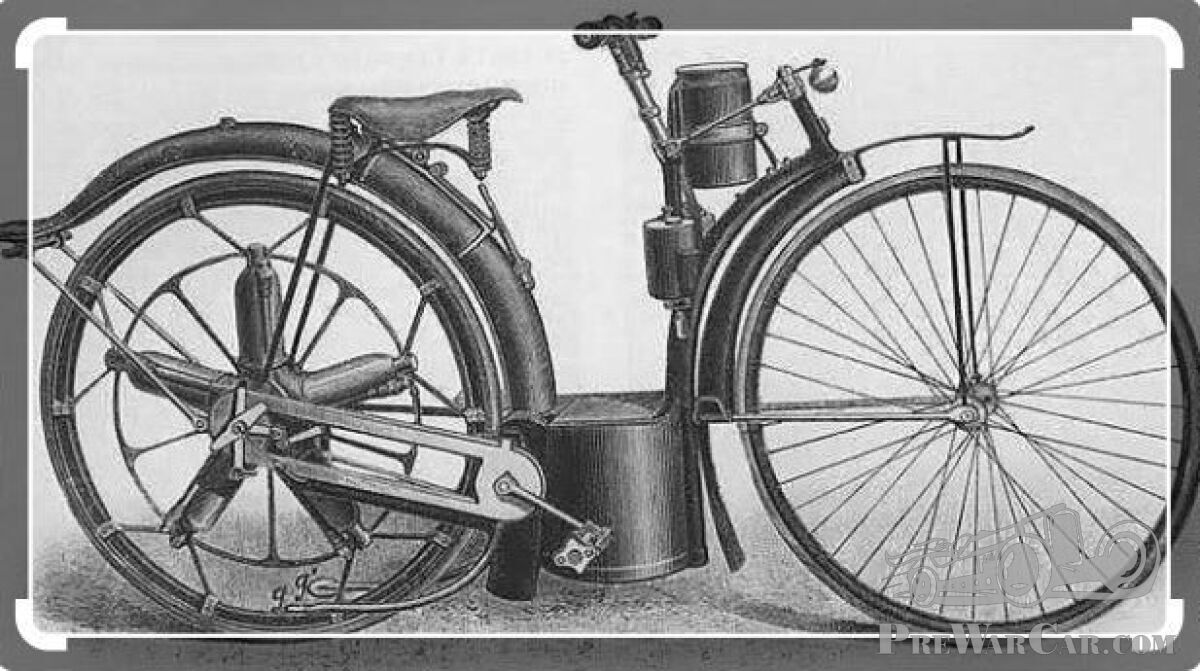
Not to be forgotten is the Megola by Fritz Cockerell with its five-cylinder engine in the front wheel!
Lire la suite
Laurent Zoller
26 Février 2024, 15:31
Hello,
Rotary engines are not to be confused with rotary piston engines. It is common to incorrectly call rotary engines 'rotary piston engines,' such as the Wankel or the Quasiturbine.
There are many precursors, including Stephen Balzer's three-cylinder in a quadricycle from 1894 and Felix Millet's five-cylinder on his motorcycle from 1893. The best known-rotary engines are the Gnome, Rhône and Clerget, which equipped the planes of the pioneers of aviation before being manufactured in very large series (tens of thousands with licensed production) to supply combat aircraft of the First World War.
Laurent Zoller
Lire la suite
Rotary engines are not to be confused with rotary piston engines. It is common to incorrectly call rotary engines 'rotary piston engines,' such as the Wankel or the Quasiturbine.
There are many precursors, including Stephen Balzer's three-cylinder in a quadricycle from 1894 and Felix Millet's five-cylinder on his motorcycle from 1893. The best known-rotary engines are the Gnome, Rhône and Clerget, which equipped the planes of the pioneers of aviation before being manufactured in very large series (tens of thousands with licensed production) to supply combat aircraft of the First World War.
Laurent Zoller
Fred Veenschoten
26 Février 2024, 14:31
Quite different from the Gnome rotary aircraft engine. This used a "swash plate" for the crankshaft which is very limited in how much thrust it can withstand.
Lire la suite
Phil Seed
26 Février 2024, 11:26
Adams-Farwell used rotary engines between 1898 and 1913. Only one car still exists, according to Automobile Quarterly.
Lire la suite
Larry Lewis
26 Février 2024, 02:25
I don't know about cars, but there are plenty of aircraft around with rotary engines, e.g. the Nieuport 17, the Fokker DR1 and Sopwiths of various types like the Pup or the Camel.
Lire la suite
Tery Hurst
04 Mars 2024, 00:05
W. O. Bentley produced the first aluminium radial engine, the BR1, during the Kaiser War and at the end of the war was given an amount of £500 from the War Ministry as a thank-you and with this money he estabilished the Bentley motor car.
Lire la suite