Le magazine et marché mondial pour les passionnés de voitures classiques, par des passionnés.
Le magazine et marché mondial pour les passionnés de voitures classiques, par des passionnés.


Filter
Faites votre choix:
- Voir les voitures
-
Marque >>
-
Année >>
-
-
Catégorie >>
- Voir les motos
- Voir les pièces et plus
-
Marque de la voiture >>
-
Constructeur >>
-
Catégorie >>
- Vélos
-
Année >>
-
Pays



"I managed to stand a £1 coin up the Raynaud’s floorboard whilst running!"


The Expert Explains…
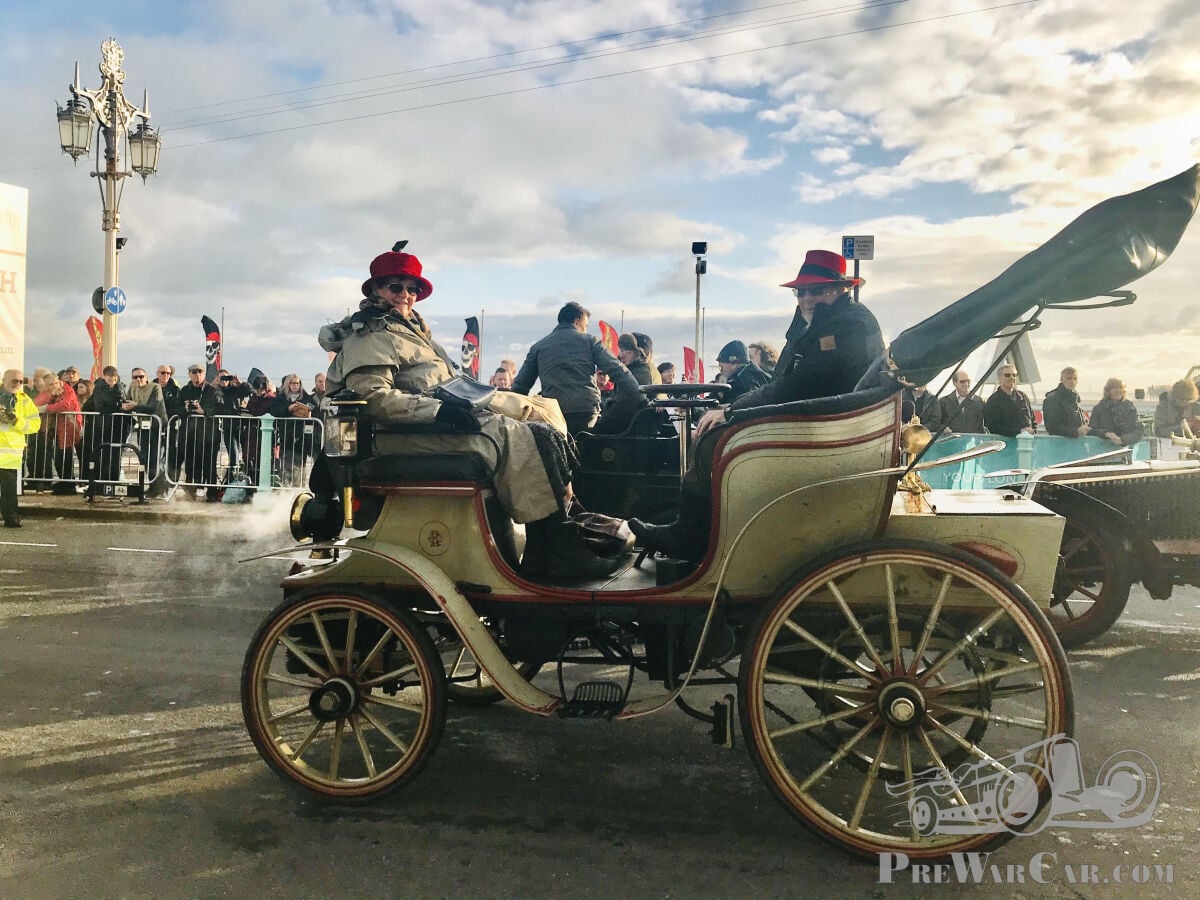
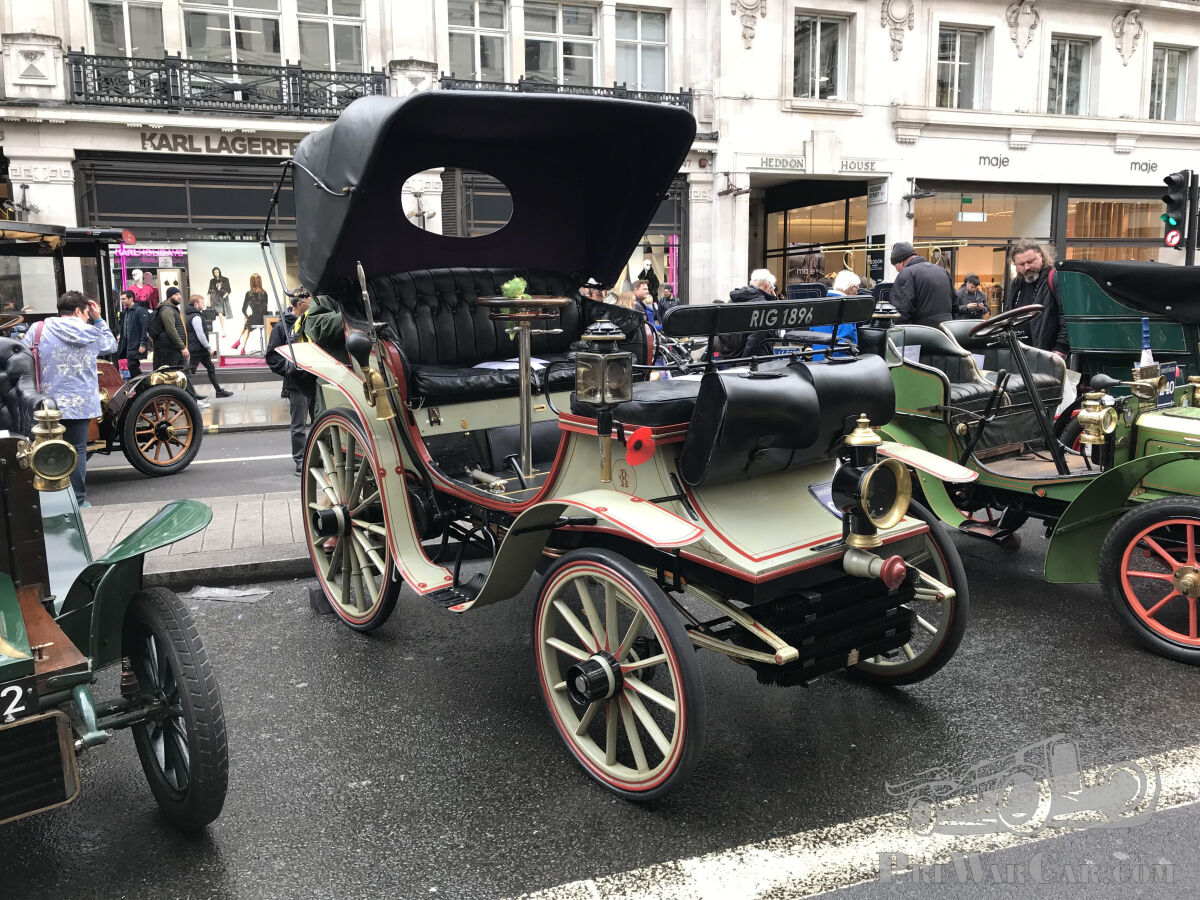
Last year during the London to Brighton Run our eyes caught this Raynaud. An imposing and grand Vis a Vis, which comfortably takes 5 people. We talked to the owner, who told us about the background of the car and the preparations they made to the car to cover longer distances with it.
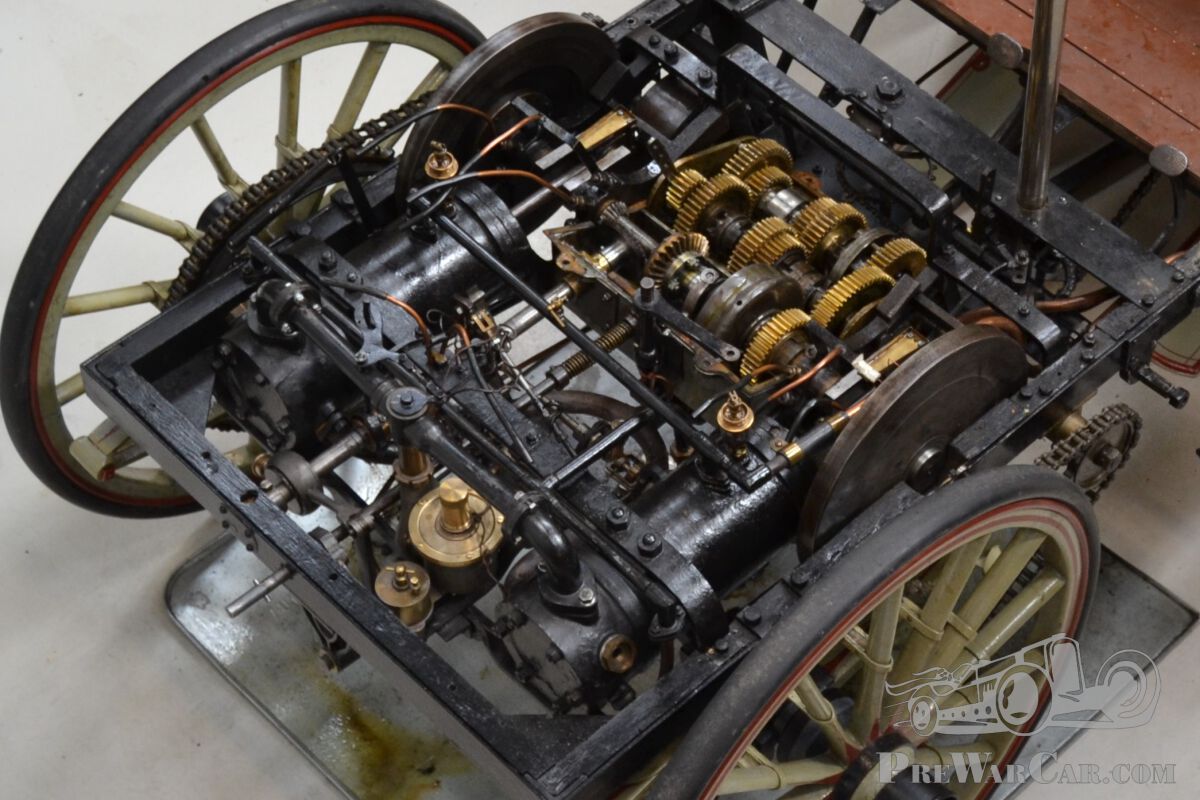
The Raynaud was built by an electrical engineer in France who we believe only built this one car. The Vis a Vis has solid tyres, a steering wheel and a four-speed gearbox controlled via a second steering wheel. It has two separate single-cylinder engines, horizontally mounted, whose crankshafts are directly coupled within a common gearbox. The entire assembly mounts in the rear of the car with each flywheel mounted outboard against the chassis side rails. Singly, the engines have a capacity of 2 litre resulting in a total capacity of 4 litre.
Jonathan Wood, an expert in the restoration and maintenance of vintage and veteran cars, who has been working on the Raynaud, explained to us how he prepared the Raynaud the famous run.
“On paper, the car appears very capable. However, we were aware that the engine design/layout was potentially flawed, as the car has a history of breaking crankshafts and has never participated in an event or rally in recent years due to its fragility.
At the outset, we set about running the car to understand the vibrations involved and plan the work required. It was immediately evident that the vibrations were severe and during the subsequent dismantling process, we realised that there was no rigidity in the mountings between the two engines and gearbox, resulting in a need for massive clearances to accommodate misalignment and flexing. The crankshaft also had evidence of numerous weld repairs and interestingly, the two engines which we had assumed were identical, were not, they differed in bore size and valve size!
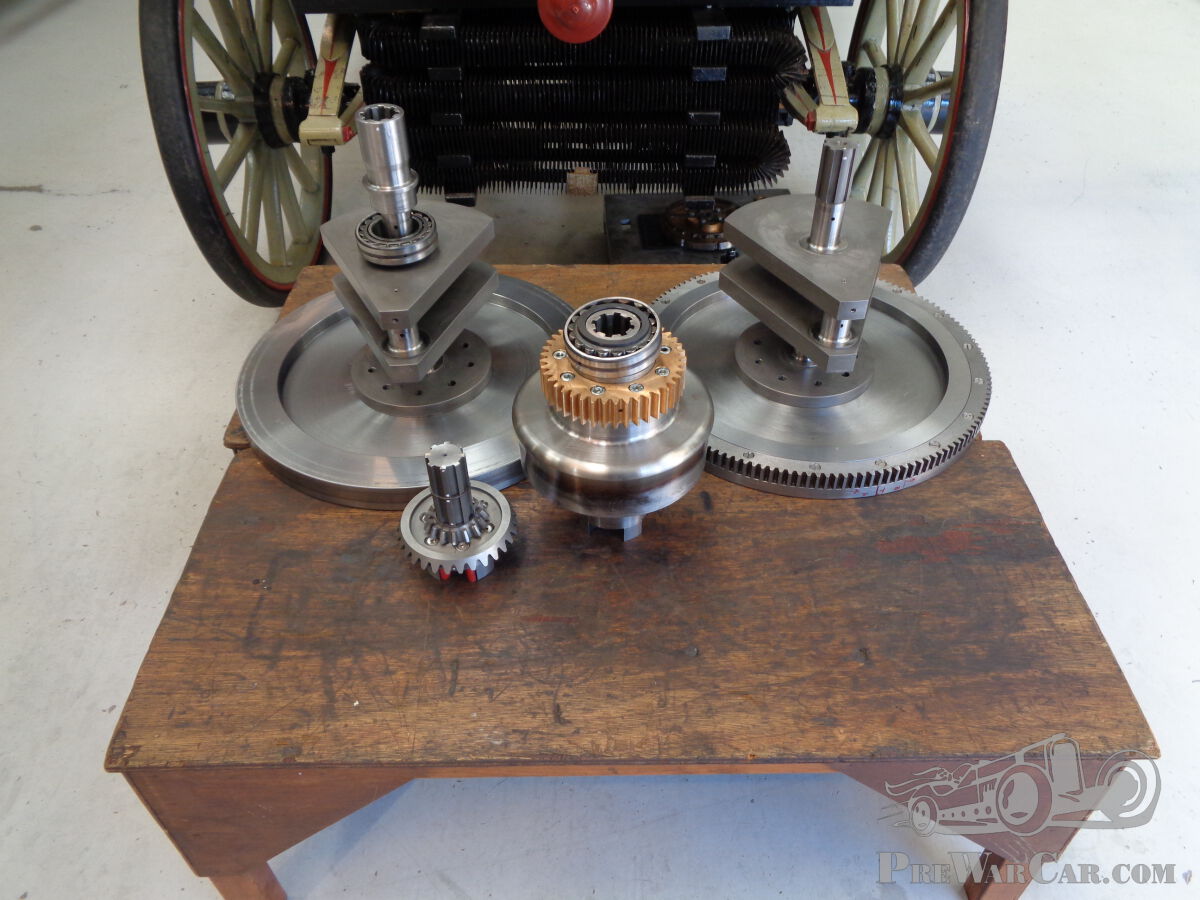
The engine overhaul commenced by matching the bore and valve sizes to ensure an even output from both units. We then concentrated on the bottom end having two clear aims. Firstly, to produce a new counterbalance crankshaft (to reduce vibration) using modern materials to increase strength.
The second was to improve the engine mounting, adding rigidity to ensure and maintain better alignment to allow more regular clearances to be used. An important consideration in the car's overhaul was to ensure the design remained true and faithful to the original. All changes had to remain sympathetic to the original design.
Due to the car's history of regularly breaking crankshafts, we opted to couple the crankshafts together using a low-grade material, splined shaft. This was an intended weak point to protect the new crankshafts. We also opted to remake the lower gearbox casing in steel, providing rigidity and positive location for the engines. The first session of road tests progressed well and following approximately 90 miles of running, without warning, the crankshaft coupling sheared. At the outset, we had concerns that the crankshaft assembly was very long (being as wide as the car) having a flywheel on each end with no support to the middle of the shaft. We, therefore, opted to introduce a centre main bearing at this stage to further add rigidity. In addition to this, we also introduced a flexible drive coupling, having what we thought was ample capability to handle the forces and stresses involved. However, this proved a mistake as the coupling only lasted a matter of minutes running, so this was replaced with a similar spline shaft as previous but maintaining the new central support bearing. Again, we continued to road test the car believing we had overcome the crankshaft weakness.
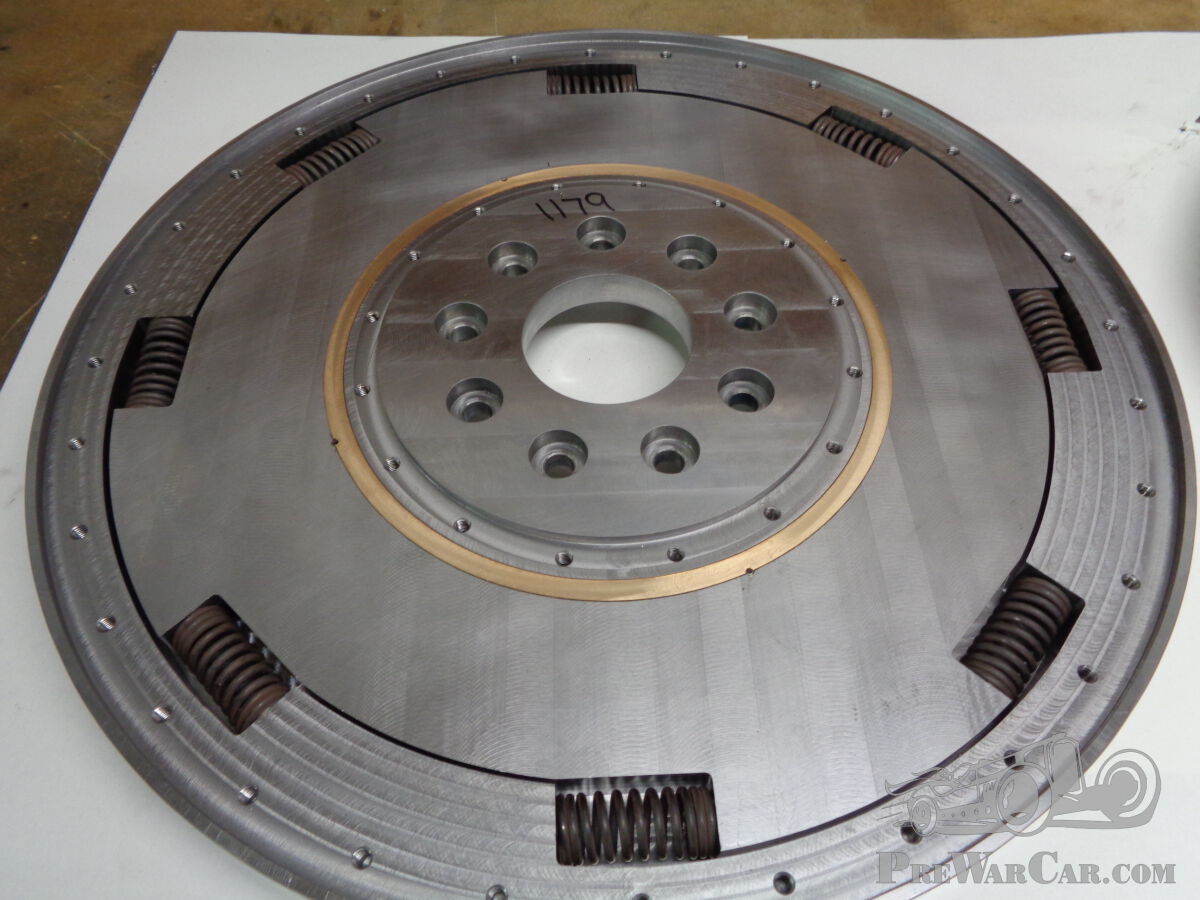
However, in 2018, on the London to Brighton Run, the crankshaft coupling shaft broke at Crawley. Having now employed all practical improvements we felt necessary, I engaged a consultant engineer for advice on how this issue could be resolved. Wishing to avoid numerous reworks we opted to employ one single modification which would overcome this issue and so we decided to consider a dual-mass flywheel conversion. We provided the engineer with weights and dimensions, of all rotating and reciprocating components, who conducted an analysis using a computer model. The conclusion being that he could reduce the crankshaft period by 30% if using a dual-mass flywheel of the same dimensions of that originally fitted to the car. We felt this was a significant improvement, so commissioned the production of the flywheels as recommended.
Following the initial engine overhaul, I was impressed with the smoothness of the engine and have struggled to understand how the vibration in the engine could cause the failures we were encountering. However, it was immediately apparent, upon running the engine, with the dual mass flywheels how much smoother this was. During an early test run with the car, I managed to stand a £1 coin up, on its end, on the car's floorboards whilst running! I also have noticed that the engine is much quicker to pick up when revved and a notable performance gain is present on the road. These were unexpected but welcomed advantages.
Last year's London to Brighton proved to be very rewarding, as not only did the Raynaud complete the run but did so with a surprisingly good turn of speed impressing both myself and the owner, Mr Holmes. It has taken a huge amount of work, commitment and brainpower to get the car into a reliable and usable condition and we are delighted to have been part of this project.”
Mr Holmes added to this that "despite the issues highlighted the achievement of M Raynaud in building this car at all in 1896 was remarkable. The car is a delight to drive and the gearbox remarkably easy to use. The only change to the gear box set up was to incorporate stops. Under the original system there were no stops and the gear wheel could be rotated continuously in either direction. It was a nightmare to keep mental track of which gear you were in and in which direction to turn the wheel. That is now behind us and subject to a certain virus we are looking forward to this year's Brighton."
We would like to thank Mr Holmes and Jonathan Wood Vintage & Thoroughbred Restorations Limited for this detailed explanation.
Publié:
mercredi mars 18th, 2020
Facebook
LinkedIn
Twitter
WhatsApp
Email
Copy
Commentaires
Graham Rankin
21 Mars 2020, 00:41
Wonderful car and story--- congratulations to all concerned. David, I can see your difficulty but, so long as nobody is trying to hide the modern modifications, where's the harm ? Here we now have a magnificent pioneering and unique example of nineteenth century engineering in action and of great interest to many people who, in the absence of the return to good working order, would probably be unaware of its existence. DMFs may be relatively new in recent automotive engineering history but were around much closer to the time in question, for instance in 1927 with AC’s clever two-part damper flywheel still in use in my 1925 six cylinder AC-engined Frazer Nash. This technology results in a sweetness of running akin to a turbine and is a real joy to experience.
Lire la suite
Jeff Lee
19 Mars 2020, 21:18
The flywheel idea is not as new as it may sound. Packard used a similar approach with their big single cylinder cars from 1899 to 1903. Spring coupling between the crankshaft, flywheel and the transmission to similarly dampen down the shock loading from a large single cylinder firing.
Lire la suite
Jos van Genugten
20 Mars 2020, 15:31
That is the other thing. I'm always surprised by how many "inventions" in this automotive world of today have already been invented in the early days. It's very hard to claim someone was the first, there always seems to be someone who invented it before that!
Lire la suite
Charles Walmsley
19 Mars 2020, 20:57
I feel Mr. Barker has a point there. Wonder what the VCC boys would say after inspecting the car?
Lire la suite
Pierre Alain
19 Mars 2020, 11:57
Good morning,
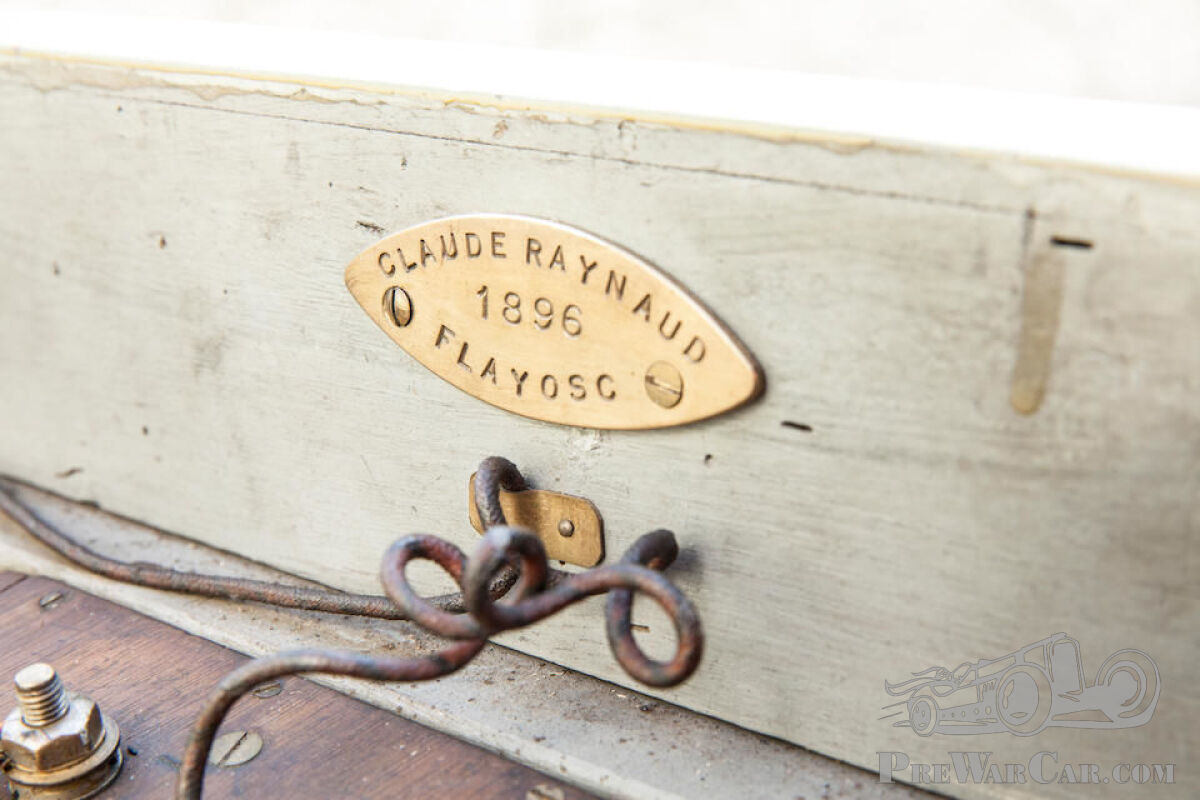
Is it not "Raynaud" instead of "Reynaud" ?
Best wishes from the coronavirus front
Pierre Alain
Lire la suite
Is it not "Raynaud" instead of "Reynaud" ?
Best wishes from the coronavirus front
Pierre Alain
David Barker
18 Mars 2020, 23:28
I agree with my friend Mike Clark, what perseverance, but I am slightly worried that such major modifications have altered the car to such an extent as to make no longer a veteran. In its original state it may not have been usable, now it is but has it not been altered to make no longer recognisable as the car it was ?
Dual mass technology? Come on!
Lire la suite
Dual mass technology? Come on!
Jos van Genugten
19 Mars 2020, 13:02
I think a veteran car as stationairy object is not interesting. It should be usable. And changing crankshafts every 100kms is not very attractive as well.
Modern technology in old cars, as long as it’s done with a sense of taste, should be used in my opinion. As long as it’s needed in the view of usablility. I am not much in favor of changes in the line of electronic ignition etc, where the original parts work just as well.
Lire la suite
Modern technology in old cars, as long as it’s done with a sense of taste, should be used in my opinion. As long as it’s needed in the view of usablility. I am not much in favor of changes in the line of electronic ignition etc, where the original parts work just as well.
Bernard Holmes
18 Mars 2020, 12:50
I should have mentioned that the current success of the Raynaud is due not only to dual mass technology but to the expertise and attention to detail of Jonathan Wood and his Team, Belcher Engineering and Fairbourne Coach Works.
Lire la suite
Mike Clark
18 Mars 2020, 11:07
What a story of perseverance - congratulationd Jonathan and what an interesting car.
Mike
Lire la suite
Mike
bill Coates
19 Mars 2020, 14:15
I agree whole-heartedly with Jos and congratulate the owner, Jonathan Wood and his team on their efforts to solve such difficult problems. As far as I can see, nothing has been done that cannot be undone and it makes this piece of motoring history much more attractive than gathering dust in an obscure corner of a museum somewhere. Well done everybody; and thanks to the pwc team for giving us the details! Bill
Lire la suite