Le magazine et marché mondial pour les passionnés de voitures classiques, par des passionnés.
Le magazine et marché mondial pour les passionnés de voitures classiques, par des passionnés.


Filter
Faites votre choix:
- Voir les voitures
-
Marque >>
-
Année >>
-
-
Catégorie >>
- Voir les motos
- Voir les pièces et plus
-
Marque de la voiture >>
-
Constructeur >>
-
Catégorie >>
- Vélos
-
Année >>
-
Pays



L’Austro-Daimler ‘Sascha’: la première voiture de course Porsche?
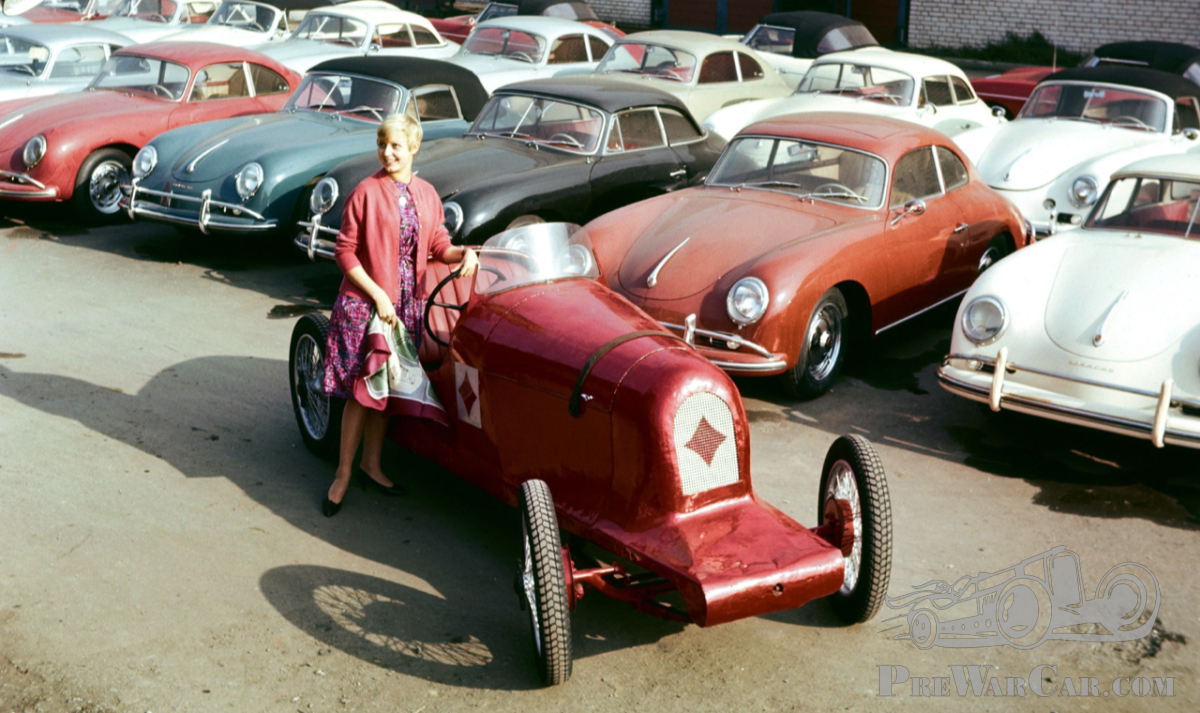

Nous voyons ici beaucoup de Porsche d’après-guerre, ce qui peut sembler surprenant pour un site consacré aux voitures d’avant-guerre. Pourtant, ne vous laissez pas distraire : la véritable star de cette image est au centre, une Austro-Daimler ADS-R de course datant de 1922, qui possède un lien direct avec les futures Porsche sportives. En effet, il s’agit de l’un des premiers designs de Ferdinand Porsche lui-même.
Porsche construisit cette voiture bien avant de produire des véhicules sous son propre nom. À l’époque, il était ingénieur en chef chez Austro-Daimler, et l’on ne sait pas si l’entreprise était immédiatement séduite par son idée d’une voiture de course légère. Porsche baptisa cette auto Sascha, en hommage à son ami Alexander Joseph Graf Kolowrat-Krakowsky, plus connu sous le nom de Sascha. Ce dernier aurait grandement encouragé Porsche à construire une petite voiture de sport et finança même le projet.
Cela signifie-t-il que la Sascha est la première voiture de sport Porsche ? Laissons ce débat aux experts, mais ce qui est sûr, c’est que son design ingénieux et minimaliste était remarquable pour l’époque. La voiture était équipée d’un moteur 4 cylindres de 1 100 cm³, avec un bloc en aluminium et des arbres à cames en tête entraînés par pignons coniques, développant environ 50 ch—des performances impressionnantes à l’époque. Austro-Daimler comprit vite son potentiel et décida d’en construire plusieurs exemplaires.
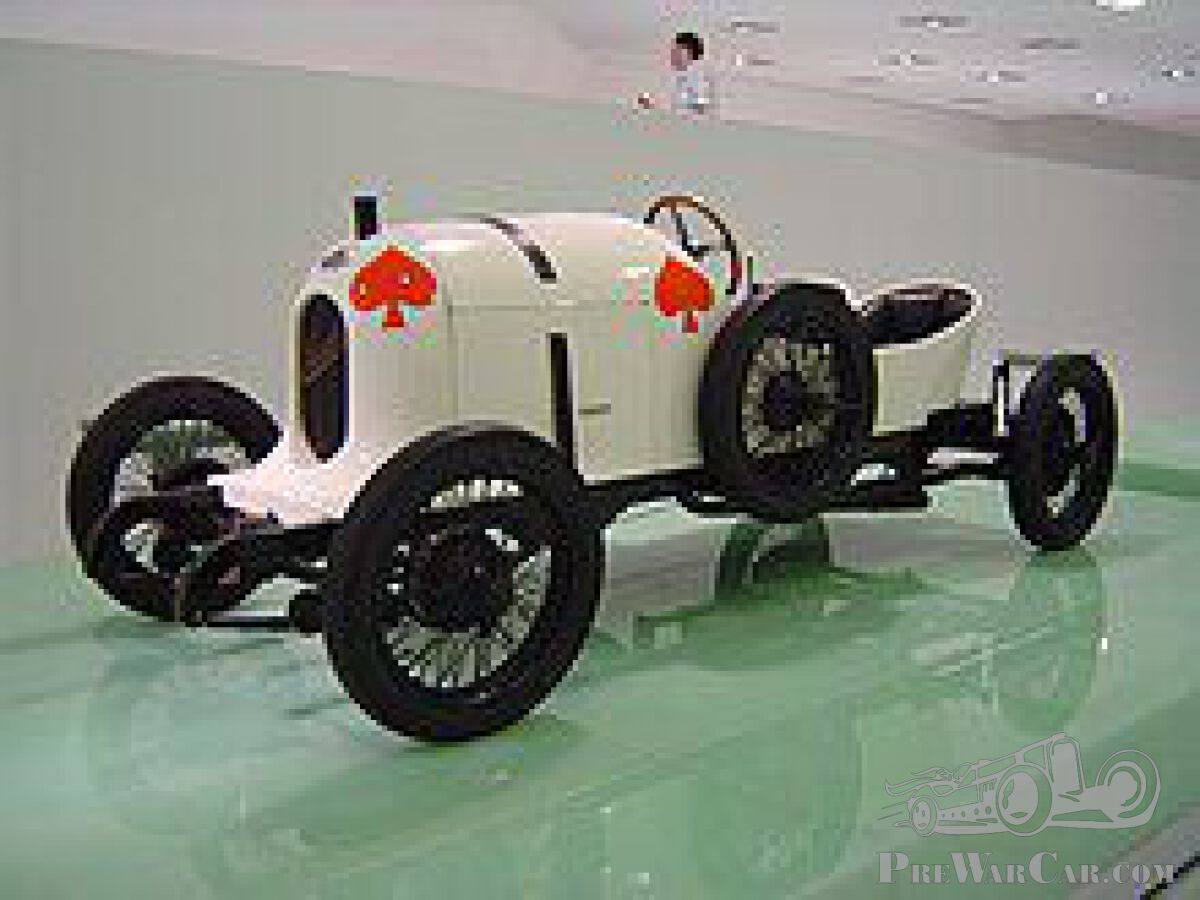
Pour la Targa Florio de 1922, quatre Sascha furent produites, dont trois furent engagées en course. Elles finirent première et deuxième de leur catégorie. D’après la légende, les voitures étaient à l’origine blanches, mais elles furent peintes en rouge avant leur voyage en train vers l’Italie pour éviter d’attirer l’attention et réduire les risques de vol. Afin de pouvoir les distinguer plus facilement à distance, des symboles de cartes à jouer furent peints sur leurs flancs : cœur, carreau, trèfle et pique.
D’autres exemplaires existent-ils encore?
Nous ne le savons pas avec certitude. Cette photo date du début des années 1960, à une époque où le musée Porsche existait déjà et où la Sascha Austro-Daimler faisait déjà partie de la collection. Elle est photographiée devant l’atelier de fabrication, aux côtés de toutes nouvelles Porsche 356.
Aujourd’hui encore, cette voiture fait partie de la collection du musée, mais elle a été restaurée et repeinte en blanc il y a quelques années. Curieusement, elle porte désormais le symbole du pique, alors qu’elle affichait auparavant un carreau, comme on le voit sur cette photo.
Texte : Jeroen Booij
Photo : Porsche Museum
Publié:
vendredi février 28th, 2025
Facebook
LinkedIn
Twitter
WhatsApp
Email
Copy
Commentaires
Thomas Billicsich
03 Mars 2025, 20:26
An original Sascha was taking part at Porsche Landpartie in 2024.
Lire la suite
Hergen Deuter
03 Mars 2025, 19:07
On porschesport.com we learn that this Sascha came to Porsche in poor condition and painted red in the 1950s, was first refurbished and repainted white by apprentices in 1975 and was completely restored for the 100th anniversary (photograph from Wikipedia). Another one (coloured red) apparently still exists in Hamburg.
Lire la suite
Erler Thomas
03 Mars 2025, 10:08
Thank you Alistair, you made my day. I might have to take my coment of it being a replica back. I think comparing the front axle on the Porsche museum piece and the auction picture, you can clearly see the crude brake drum and the brake shaft in the centre. It would be interesting to know what happened to the "Sascha" from the auction. It would be great if Porsche could decide on a restoration of that article.
Regards from Tyrol.
Lire la suite
Regards from Tyrol.
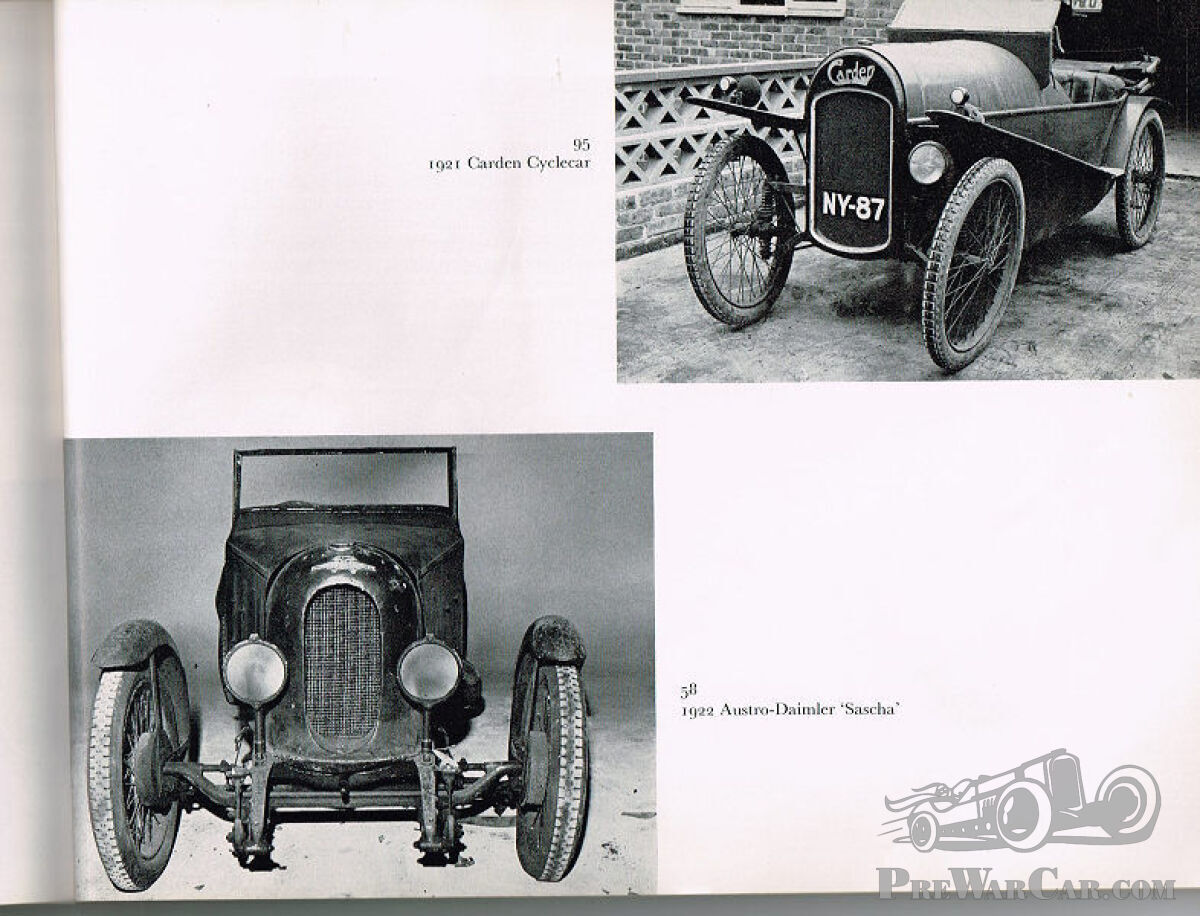


Alistair Hacking
02 Mars 2025, 21:52
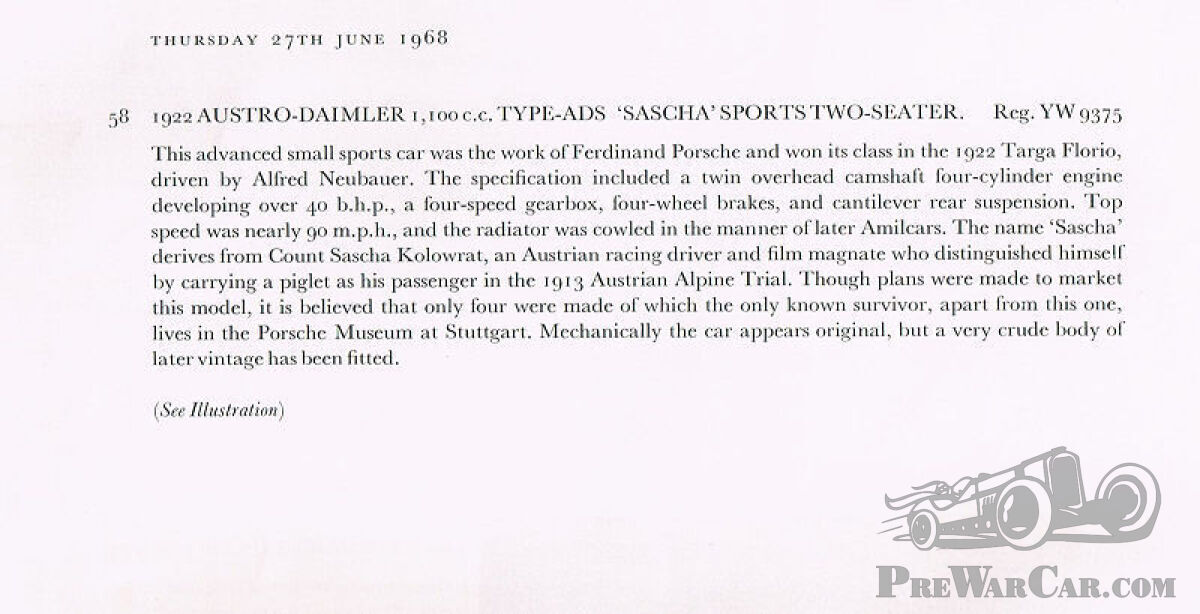
There was a Sascha sold by Sotheby's in the A. W. F. Smith sale at Cross-in-Hand, Sussex, England, in June, 1968. Surprisingly I managed to find the catalogue!
Lire la suite
Alistair Hacking
03 Mars 2025, 11:25
The Sotheby's catalogue quotes the British registration as YW 9375. YW is a London mark issued between May and July, 1928, so it is likely the Sascha arrived in Britain at that time.
Lire la suite
Lawrence S.
02 Mars 2025, 18:03
Strange that nobody mentioned that Alfred Neubauer (Mercedes's post-war team manager) drove a Sascha in the 1922 Targa Florio.
Lire la suite
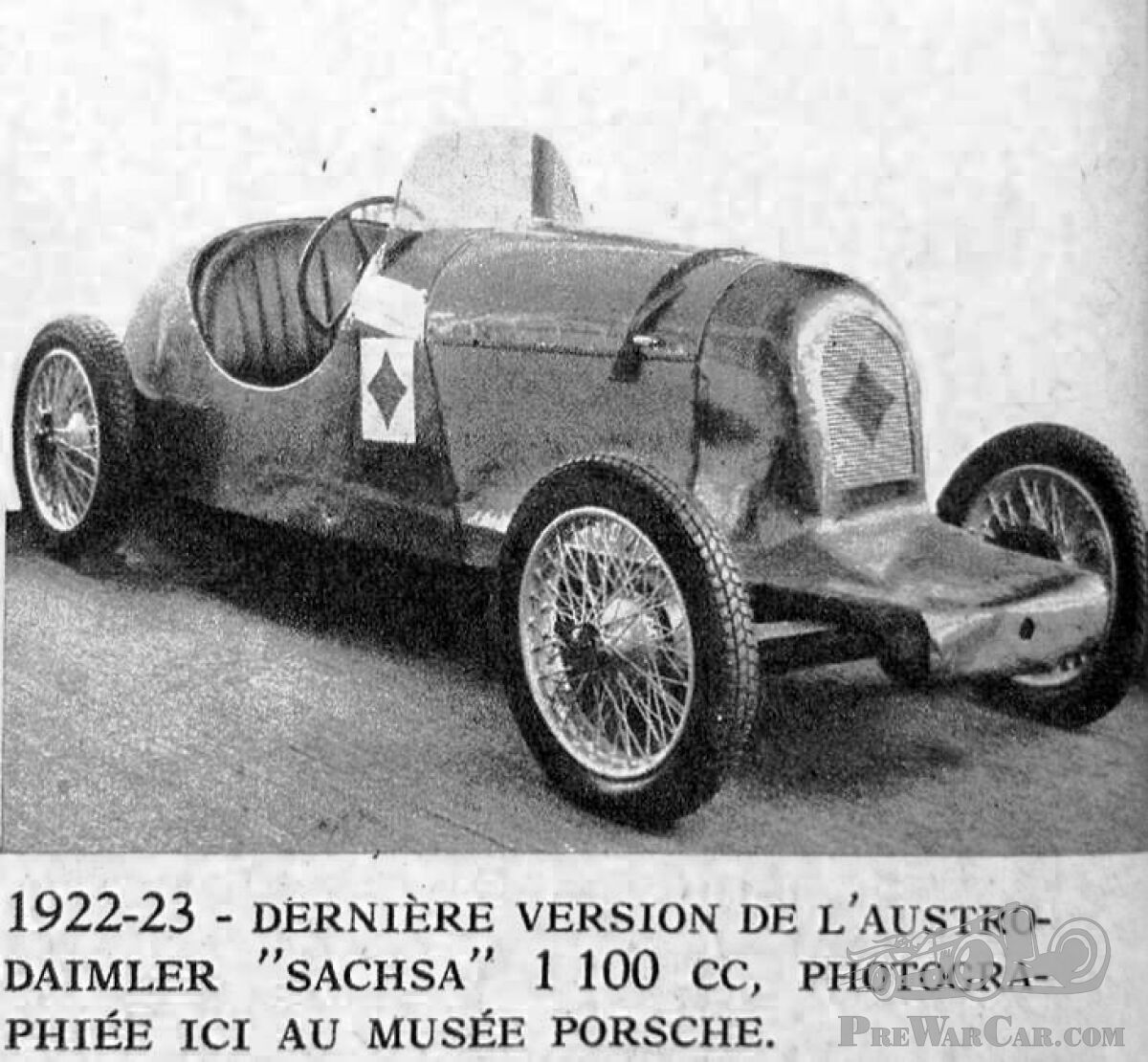
Hergen Deuter
01 Mars 2025, 20:03
According to this press photo, probably from the 1960s, it surprisingly seems to be one of the original vehicles. It was possibly repaired with simple means after front damage and must have been on display in this condition in the Porsche Museum at the time.
Lire la suite
Stanislav Kirilets
01 Mars 2025, 01:51
What is it? The automobile? Sorry, there is still one month until April 1st :-)
Lire la suite
Stig Larsson
28 Février 2025, 21:02
This is not a genuine "Sascha." Take a look in the book "Sublime Creations: Professor Ferdinand Porsche" by Karl Ludvigsen, pages 94-105, and you could see that it at least the body is a badly-made lookalike. Ferdinand Porsche's first sports car was the Prince Henry model of 1910-11, which can be seen in the same book on pages 40-59. The real car can be seen at the Austro-Daimler Museum in Mattsee.
Lire la suite

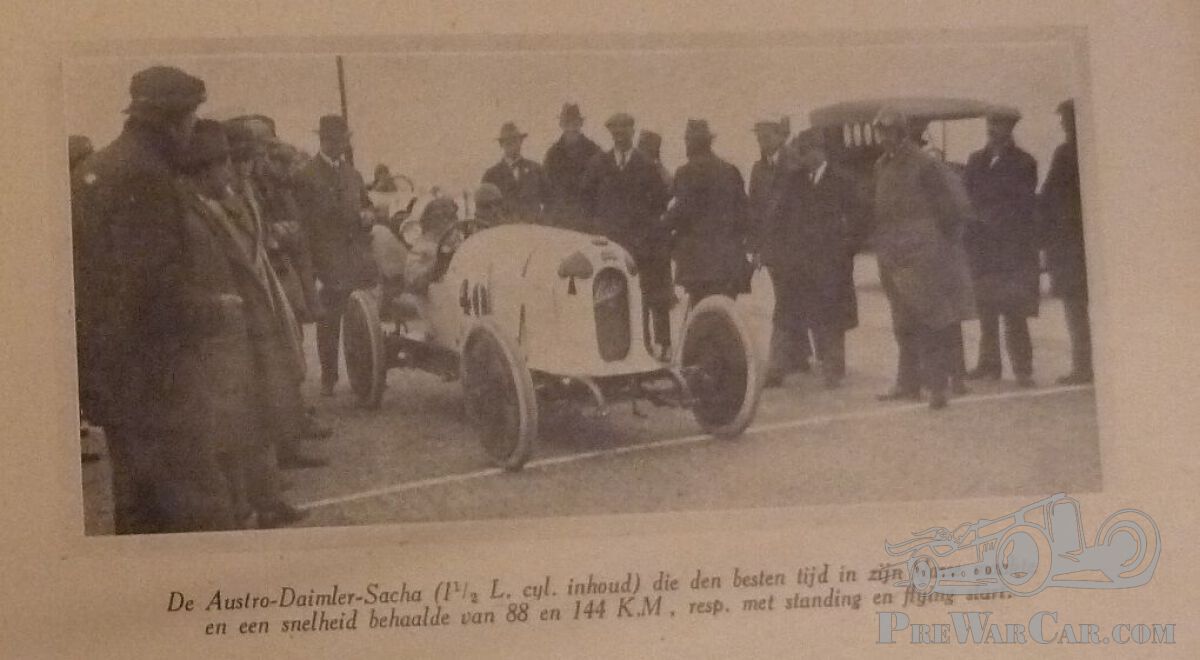
Bart
28 Février 2025, 12:51
The red one looks a different car to me. Attached is a picture of when it was white and racing at the Scheveningen Boulevard in 1922.
Lire la suite
Michael Schlenger
28 Février 2025, 12:39
Another remark: The 1,100 c.c. version mentioned in the article had a maximum output of 35 h.p., which was already quite an achievement in 1921. In 1922, a 1,500 c.c. version was introduced which produced 50 h.p. A good source in this regard is the book by Martin Pfundner, "Austro-Daimler & Steyr," 2007.
Lire la suite
Michael Schlenger
28 Février 2025, 12:14
Looks almost like a carousel car to me. The absence of a coolant filler neck says it all...
Lire la suite
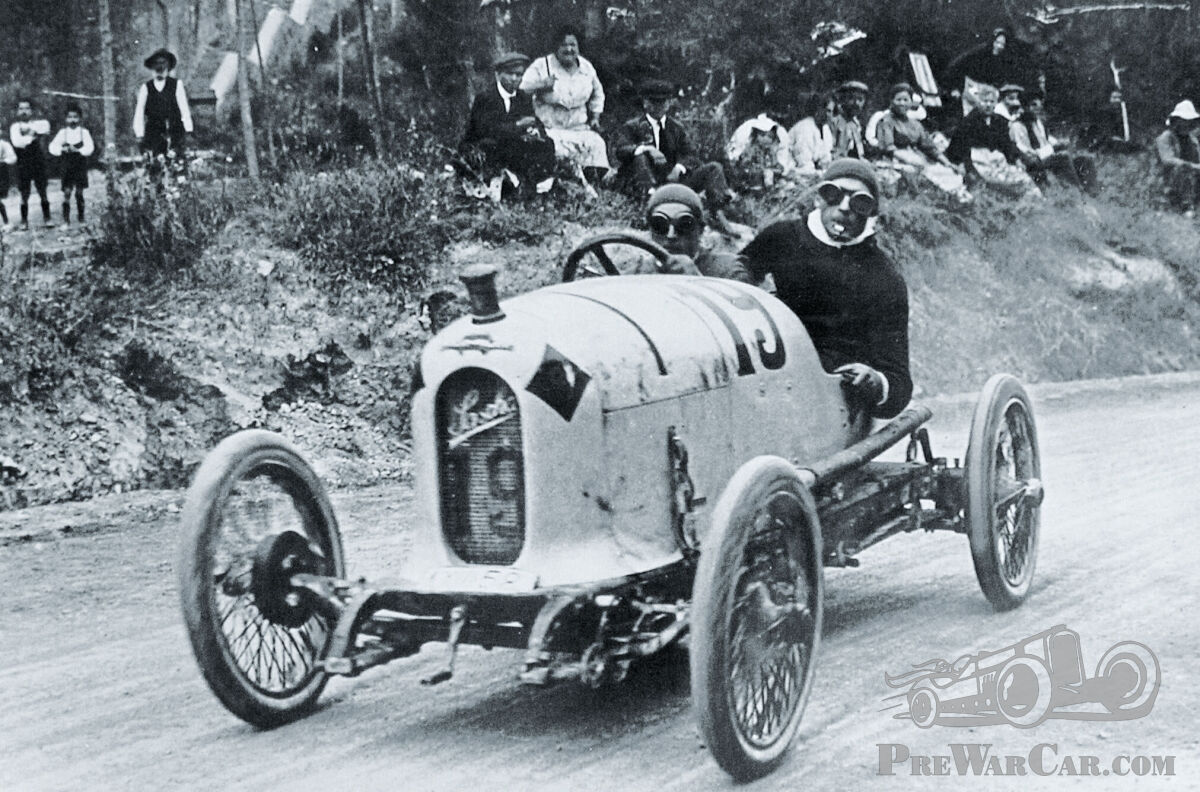
Hergen Deuter
28 Février 2025, 11:25
Apparently a mock-up was built for some reason. Here is a contemporary photo.
Lire la suite
Christoph Röhrs
28 Février 2025, 08:55
What irritates me a bit is the way the racer is steered. It looks like it has a turntable steering, which was absolutely unusual in automotive engineering from the very beginning. But it looks a little too big for a children's toy.
Lire la suite
Thomas Erler
28 Février 2025, 08:52
Well, but... I think thats a look-a-like! This is not the original ADR Sascha. The question: is it a kid's car or an early replica? It's crudely built; better have a look at the 356s.
Regards from Tyrol.
Lire la suite
Regards from Tyrol.
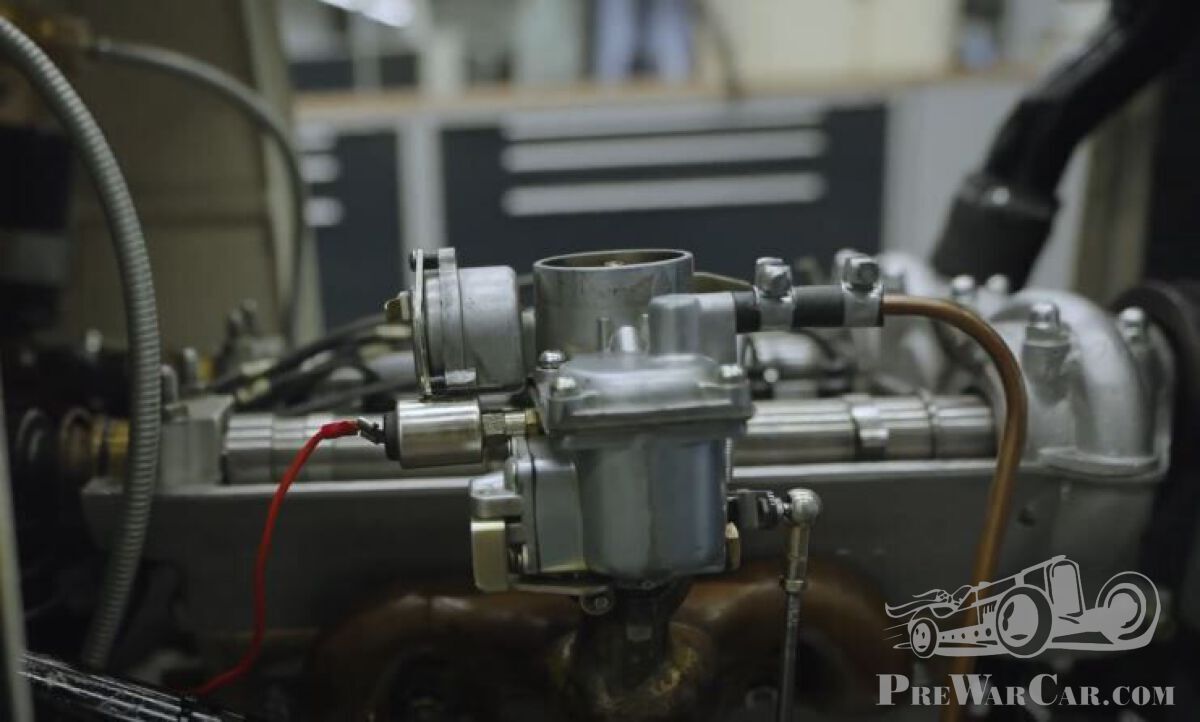
“Of course we have decided to leave the modern carburetter on it. It's easier for us to handle.”
In my opinion, this is not what the restoration of such an historic car means.