Le magazine et marché mondial pour les passionnés de voitures classiques, par des passionnés.
Le magazine et marché mondial pour les passionnés de voitures classiques, par des passionnés.


Filter
Faites votre choix:
- Voir les voitures
-
Marque >>
-
Année >>
-
-
Catégorie >>
- Voir les motos
- Voir les pièces et plus
-
Marque de la voiture >>
-
Constructeur >>
-
Catégorie >>
- Vélos
-
Année >>
-
Pays



La dame mystérieuse d’un négatif sur verre
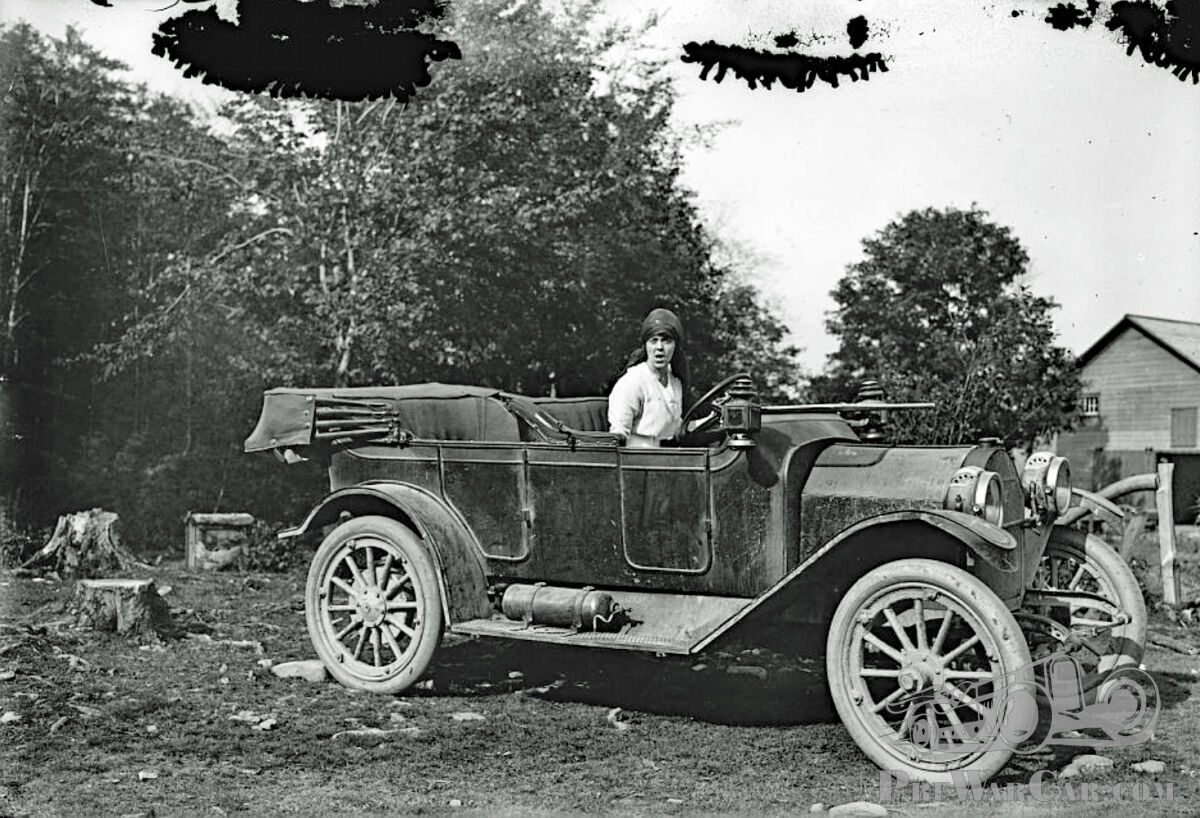

Mis à part quelques imperfections sur le bord supérieur, cette image a remarquablement bien traversé les 111 dernières années. Ce chiffre reste toutefois approximatif, car la photographie elle-même est supposée dater d’environ 1915. Et c’est à peu près tout ce que l’on sait à son sujet – hormis le fait qu’il s’agissait à l’origine d’un négatif sur verre, offert en 1947 par Herbert A. French.
Merci, monsieur, mais cela soulève tout de même plusieurs questions. Deux en particulier : qui est cette dame, et quelle est cette automobile ? S’agit-il peut-être d’une actrice, et la photo aurait-elle servi à promouvoir un film ? Ou bien n’est-ce qu’une femme posant pour le photographe, il y a bien longtemps ? Et la voiture ? Conduite à droite, certes, mais indéniablement américaine ? À part cette bouteille posée sur le marchepied, peu de détails facilitent une identification évidente – du moins pour nous…
Texte : Jeroen Booij, Image : Library of Congress
Publié:
vendredi février 27th, 2026
Facebook
LinkedIn
Twitter
WhatsApp
Email
Copy
Commentaires
Hergen Deuter
15 Mars, 20:42
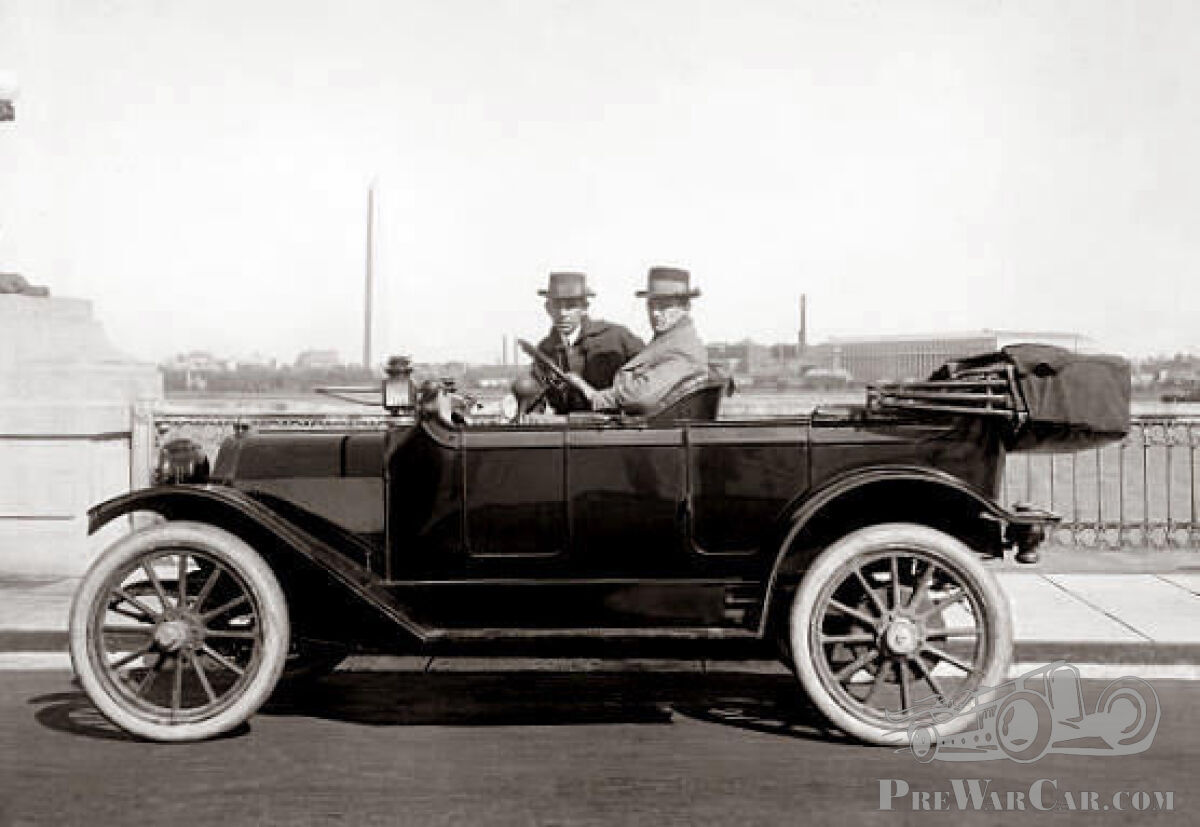
The car seems to be a Briggs-Detroiter, built from 1912 to 1917. The accompanying photo shows apparently this exact vehicle with Herbert E. French, an early press photographer from Washington, D.C. It can therefore be assumed that both very different scenes show his own car; however, the identity of the woman with the headscarf remains unclear.
Lire la suite
John Stokes
01 Mars, 22:19
Cylinder on side is a Prestolite acetylene cyinder for the head lamps, car could be Overland 1912-13. I wouldn't be too positive about that.
Lire la suite


Roger Garnett
01 Mars, 20:14
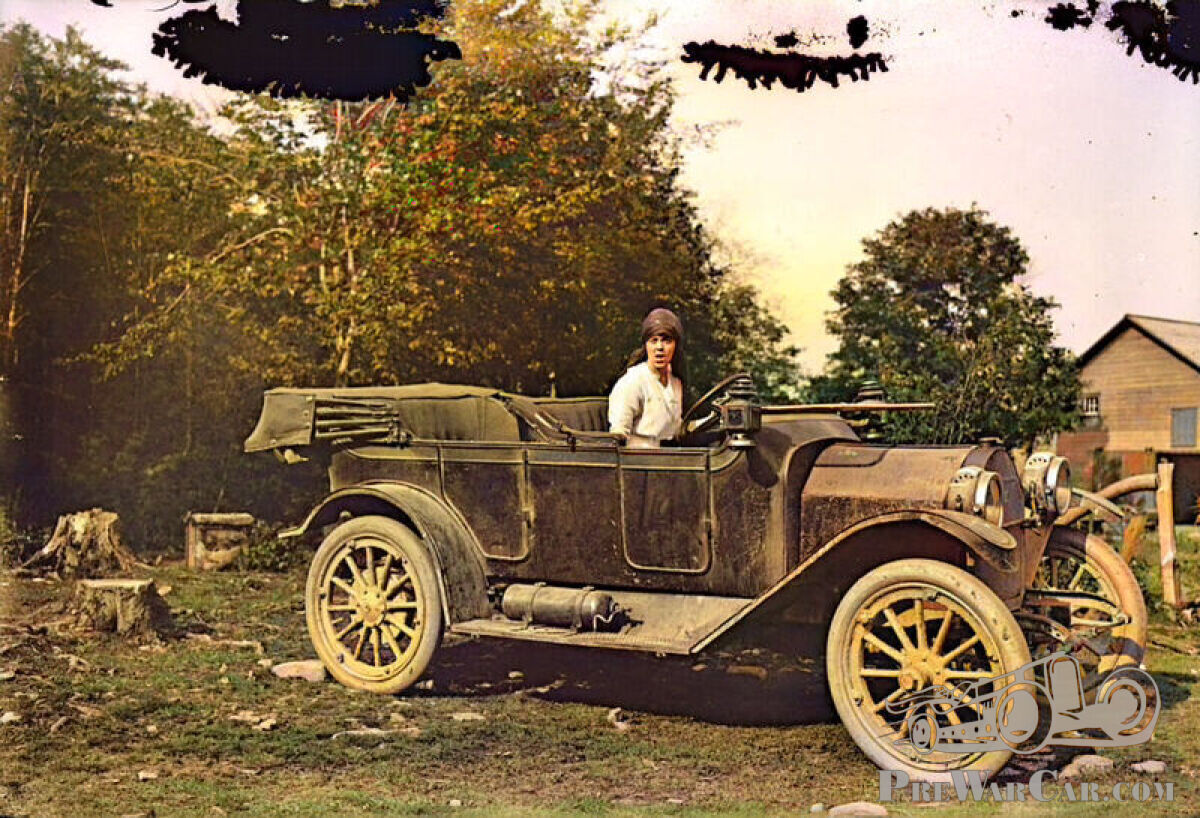
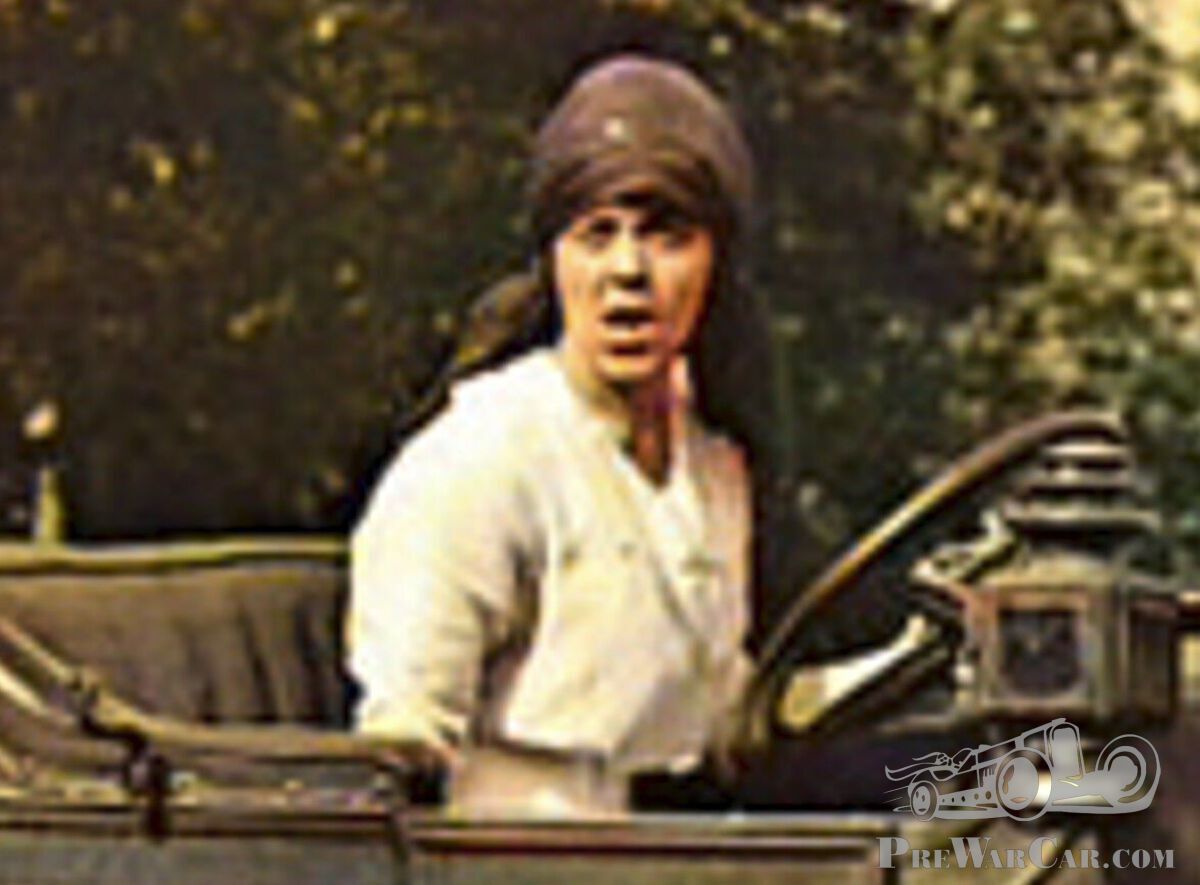
Detroiter looks like a match. And all the signs of a 1912, with acetylene & oil lights and front doors. As is often the case, colorizing this photo makes a few more details apparent. The car has been well used, showing dirt, and possibly rust on the hood - which could be from many years of use. Yet it still has white, non-treaded tires. The woman looks to have long hair, worn down, and casual clothes which seem a later style. And I can't figure what the hat is, possibly military?
Lire la suite
Peter Eglinton
01 Mars, 17:46
The headlight bodies seem to have ventilation holes. Does that mean they are not electric? Curious.
Lire la suite
John Bates
01 Mars, 12:47
I don’t know the percentage but many American cars of this era were right-hand drive. I understand that the reason was poor street lighting. Driving on the right, the driver could more easily see the side of the road.
Lire la suite
Layden Butler
28 Février, 21:36
Overland purchased their radiators from Kinwood. The fliptop oval filler was a Kinwood feature seen on other brands of cars as well.
Lire la suite
Ariejan Bos
28 Février, 10:10
After a better look the lady seems to be sitting on the left hand side of the front bench, holding the steering wheel. So the final conclusion must be, that the photo has been correctly printed!
Lire la suite
Ariejan Bos
27 Février, 22:05
The photo indeed must be mirrored, which is more often the case with prints of glass negatives. The Detroiter was produced with left hand drive from the beginning (i.e. 1912)
Lire la suite
Christoph Röhrs
27 Février, 13:39
Is it really a right-hand drive vehicle, or was the photo simply reversed?
Lire la suite
Ariejan Bos
27 Février, 10:36
Overland was not the only make having this rad filler type. Besides several details just don’t match with Overland: radiator shape, body and wheel hubs among other things. So not an Overland, but a 1912 Detroiter.
Lire la suite
Don Larkin
27 Février, 03:39
I would suggest a model 59 Overland. The water cap on the rad is definitely Overland.
Lire la suite