Le magazine et marché mondial pour les passionnés de voitures classiques, par des passionnés.
Le magazine et marché mondial pour les passionnés de voitures classiques, par des passionnés.


Filter
Faites votre choix:
- Voir les voitures
-
Marque >>
-
Année >>
-
-
Catégorie >>
- Voir les motos
- Voir les pièces et plus
-
Marque de la voiture >>
-
Constructeur >>
-
Catégorie >>
- Vélos
-
Année >>
-
Pays



Matt Coles : L'avenir des voitures d'avant-guerre
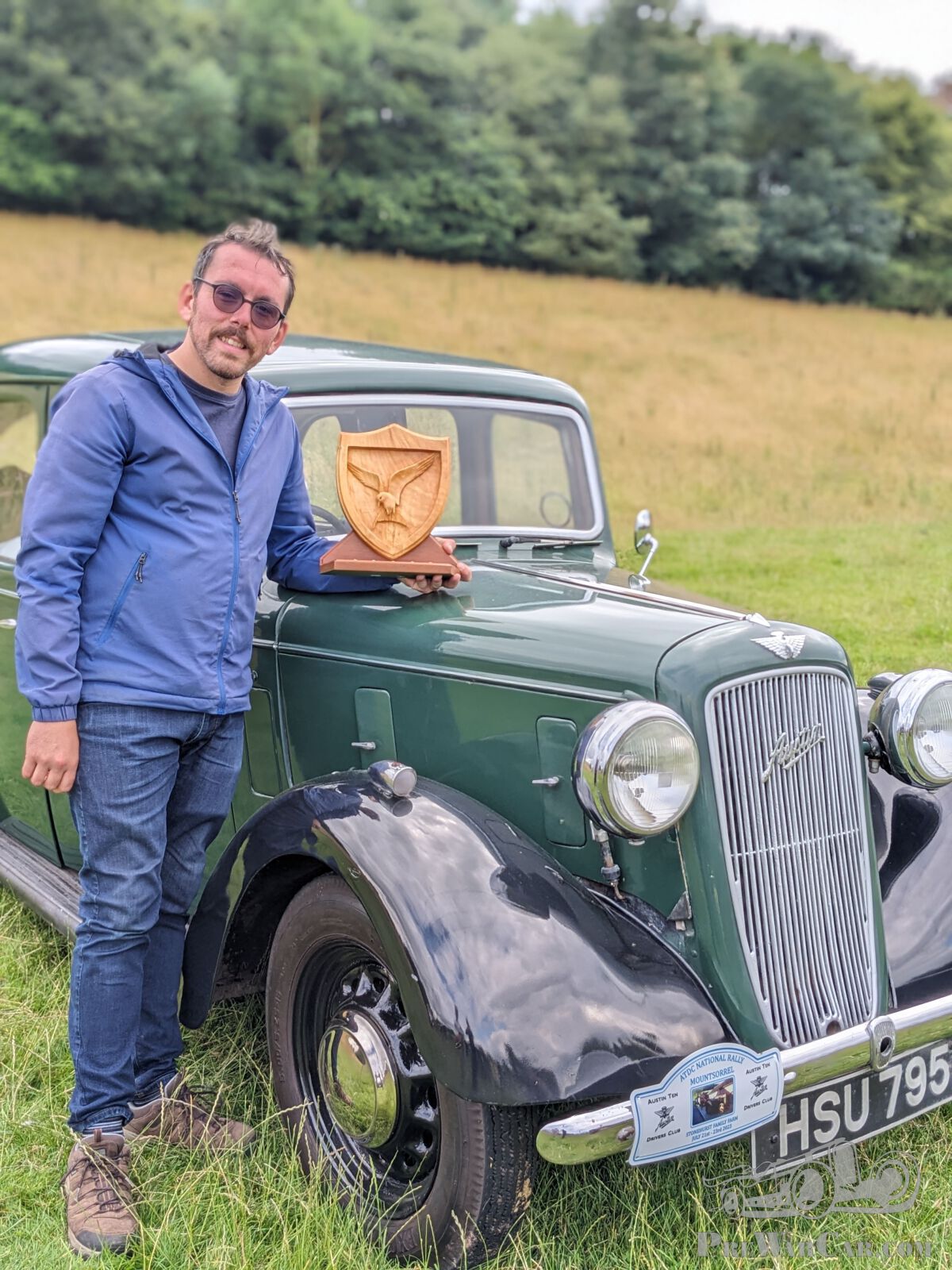

La question de savoir comment, en tant que passionnés, nous devons attirer les jeunes vers notre hobby est une question qui revient souvent. Pour en discuter, le plus utile est sans doute d'entendre les jeunes passionnés eux-mêmes. Nous avons donc le plaisir de vous présenter Matt Coles, responsable de la publicité du Austin Ten Drivers' Club, qui nous a fait part de ses réflexions sur le sujet.
En tant que trentenaire, je fais partie des jeunes propriétaires de voitures d'avant-guerre. Si vous avez assisté récemment à un salon de l'automobile, vous aurez remarqué que la jeune génération s'intéresse à des véhicules que certains considèrent encore comme modernes, tels que les hot hatches des années 1980, 1990 ou même 2000. Comment remédier à cette situation, comment encourager la prochaine génération de propriétaires de voitures d'avant-guerre avant que l'enthousiasme et les compétences nécessaires pour maintenir ces voitures sur la route ne s'éteignent complètement ?
L'un des problèmes est l'accessibilité. La plupart des personnes qui possèdent une voiture d'avant-guerre le font soit parce qu'un membre de leur famille proche en possédait une, soit parce qu'elles en avaient une elles-mêmes en tant que "vieux tacot" lorsqu'elles ont passé leur premier permis de conduire. Le fait d'avoir eu des parents qui en possédaient une ou d'en avoir possédé une à l'époque où elle était un "vieux tacot" de 25 ans vieillit légèrement les propriétaires actuels de ces véhicules - je vous laisse faire le calcul !
Il existe des clubs, des groupes et des initiatives qui tentent d'encourager la possession de véhicules d'avant-guerre, tels que le Vintage Sports-Car Club, le StarterMotor Group et le Classic Car Loan Project. Ils ont tous leurs mérites, mais il reste encore quelques problèmes à résoudre.
Le VSCC est un excellent moyen d'intéresser les jeunes aux voitures anciennes - ils semblent prendre beaucoup de plaisir à participer à des rallyes, etc. et s'amuser est la clé pour encourager les jeunes à posséder une voiture. Mais qu'en est-il des voitures plus "piétonnes", sans pedigree de course, comme l'Austin Ten Cambridge 1938 que je possède. Comment encourager la possession de ces véhicules ?
Le groupe StarterMotor et le Classic Car Loan Scheme méritent d'être salués pour leurs efforts ; ils contribuent grandement à assurer un avenir à nos véhicules vieillissants. Le problème que je vois ici est que nous arrivons à un moment où le nombre de personnes qui ne sont plus en mesure de pratiquer notre hobby en raison de l'âge ou de la maladie, ou qui ne sont peut-être même plus là pour participer, dépasse de loin le nombre de ceux qui entrent dans le hobby. Encore une fois, les efforts déployés par ces organisations doivent être félicités, mais il y a des limites à ce qu'elles peuvent faire. Alors, qu'adviendra-t-il des véhicules laissés sans gardien ?
L'augmentation du coût de la vie et l'aspect pratique d'un véhicule d'avant-guerre posent également problème. Il y a bien sûr des personnes qui utilisent leur voiture tous les jours mais, en général, ces voitures sont réservées aux grands jours et aux vacances. En revanche, un véhicule provenant d'un garage d'après-guerre, un classique des années 50 ou 60, pourrait être utilisé pour les trajets quotidiens et pourrait se maintenir assez bien dans le trafic moderne et tolérer les quelques trajets sur l'autoroute. Il serait difficile pour quelqu'un qui paie un loyer, des factures et qui économise en vue d'un prêt hypothécaire pour sa propre propriété, de justifier la dépense d'une deuxième voiture qui ne serait utilisée que le week-end.
Quelle est donc la solution ? Y en a-t-il une ? D'après ma propre expérience, il y a de l'espoir. Comme certains de mes amis, j'ai commencé avec une voiture d'après-guerre et, de manière anecdotique, il me semble que ceux qui ont goûté à cette époque de la conduite veulent ensuite essayer quelque chose d'un peu plus ancien. Ce sont ces personnes que nous devons essayer d'encourager, d'attirer dans le monde de l'automobile d'avant-guerre. Je recommande aux clubs d'avant-guerre d'ouvrir leurs manifestations aux propriétaires de voitures d'après-guerre, en les invitant à découvrir quelque chose d'un peu plus ancien, pour voir si cela suscite leur intérêt. Laissez ces propriétaires de voitures d'après-guerre s'asseoir dans votre voiture, et peut-être même faire un tour (si l'assurance le permet) - ils sont déjà familiarisés avec les voitures plus anciennes et sauront comment les traiter. Si vous donnez à une personne le virus de la voiture d'avant-guerre, c'est une personne de plus qui pourra acheter un véhicule qui, autrement, languirait dans un garage jusqu'à ce qu'il soit bon pour la ferraille.
Dans le cadre de mon travail au sein du comité du Austin Ten Drivers' Club, je m'efforce d'encourager les jeunes membres à s'intéresser à notre hobby et à notre club. Si vous avez des idées et des suggestions sur la manière dont nous pouvons y parvenir, ou si vous êtes un représentant d'un autre club de voitures d'avant-guerre qui souhaiterait discuter plus avant de cette question et peut-être aider à la résoudre, n'hésitez pas à me contacter à l'adresse suivante [email protected]
Publié:
lundi mars 4th, 2024
Facebook
LinkedIn
Twitter
WhatsApp
Email
Copy
Commentaires
Chris Pickering
11 Mars 2024, 13:38
Keith K.
10 Mars 2024, 19:47
I agree wholeheartedly with Jarod and Sjoerd. I have three Edwardian motor cars and hope my grandchildren will cherish them. I give rides to others every chance I can, in hopes a seed will be planted, or a memory of some old geezer in an ancient car that gave a child a ride. Prices have gone nuts, in my opinion. I sure can't afford some I'd like to have, but then again, where to put another car?! What concerns me much more though is more and more regulation against ancient motor cars and vehicles. I fear it will get to the point where anybody driving one will be labelled. Even car museums are hurting, maybe due to lack of interest, and maybe because cars are getting to be "politically incorrect". Then add in the possibiilty of not being able to get correct fuel. Alcohol additives are a big problem. On one drive, when that was all that was available, my 1912 car vapour-locked in the middle of a busy intersection, closing down the road in four directions for a few minutes. I needed help pushing it out of the way. I have never been cursed at with so many filthy words by so many in my life! On the other hand, when things run well, it's always thumbs up! Anyway, time will tell. But in the meantime, share, give rides, let a child sit in your car, toot the horn, take a photo.
Lire la suite
Sjoerd van de Wal
05 Mars 2024, 09:34
Interesting thought, however, one thing that’s briefly mentioned in the article are the costs. I often hear older owners talking about the “greying” of the hobby and young people not interested. Could it be that these same owners have a significant influence on this issue?
They bought there cars in a much cheaper age, lovingly maintained and/or restored them and enjoyed them. We come at a moment in time they are not able to drive and maintain there cars anymore and decide to sell them.
When you look at adverts you see prices that are too high nowadays to be afforded by young people at the start of there career, starting families and buying a house. Of course you want a good price for your beloved car, but if you worry about young people not being able to continue maintaining and owning these cars, why wouldn’t you get more realistic and adjust the price to make it an interesting option and above all, affordable and a justified expense. You’ve had your fun, you’ve bought the car significantly cheaper and isn’t it a nice thought that your car is still being enjoyed by a new generation that can bring the love to yet another generation?
I’m one of those people that entered the hobby in his late 20s. and am lucky to own two pre-1945 cars and enjoy these with the family. I bought my Morris Eight for a good price and restored it in the past few years. My kids (eight and ten) witnessed the process and enjoy the drives very much; already there are memories created for the rest of their life.
Maybe a little seed is already planted for there future classic car ownership, who knows, but all thanks to a former owner that granted me his project (and my first) for a reasonable price.
Give it a thought, it might be a part of the future of our great hobby.
Lire la suite
They bought there cars in a much cheaper age, lovingly maintained and/or restored them and enjoyed them. We come at a moment in time they are not able to drive and maintain there cars anymore and decide to sell them.
When you look at adverts you see prices that are too high nowadays to be afforded by young people at the start of there career, starting families and buying a house. Of course you want a good price for your beloved car, but if you worry about young people not being able to continue maintaining and owning these cars, why wouldn’t you get more realistic and adjust the price to make it an interesting option and above all, affordable and a justified expense. You’ve had your fun, you’ve bought the car significantly cheaper and isn’t it a nice thought that your car is still being enjoyed by a new generation that can bring the love to yet another generation?
I’m one of those people that entered the hobby in his late 20s. and am lucky to own two pre-1945 cars and enjoy these with the family. I bought my Morris Eight for a good price and restored it in the past few years. My kids (eight and ten) witnessed the process and enjoy the drives very much; already there are memories created for the rest of their life.
Maybe a little seed is already planted for there future classic car ownership, who knows, but all thanks to a former owner that granted me his project (and my first) for a reasonable price.
Give it a thought, it might be a part of the future of our great hobby.
Jarrod
04 Mars 2024, 12:09
As a younger enthusiast of prewar vehicles (although not yet an owner), I appreciate the acknowledgment of this issue. While I'm not overly optimistic about finding a definitive "solution," I believe the hobby won't completely fade away. Instead, it's crucial for enthusiasts to recognize that the community will continue to dwindle, and the value of these classic cars may decline.
However, I see a silver lining in this situation. As vehicle prices drop, ownership becomes more attainable for a broader range of enthusiasts, potentially attracting a new generation to the hobby. This phenomenon isn't unfamiliar to me; having worked with antiques, I've witnessed a similar trend. Older collectors and dealers often lamented decreasing values without considering the positive outcome: accessibility to a new demographic of enthusiasts.
Personally, as someone who dreams of owning an early motor car but currently cannot afford it, the prospect of falling prices is encouraging. It presents an opportunity for me and others in similar situations to eventually acquire our desired vehicles. While this shift may be bittersweet for current owners, I believe it's a blessing in disguise that will sustain the hobby in the long run.
Lire la suite
However, I see a silver lining in this situation. As vehicle prices drop, ownership becomes more attainable for a broader range of enthusiasts, potentially attracting a new generation to the hobby. This phenomenon isn't unfamiliar to me; having worked with antiques, I've witnessed a similar trend. Older collectors and dealers often lamented decreasing values without considering the positive outcome: accessibility to a new demographic of enthusiasts.
Personally, as someone who dreams of owning an early motor car but currently cannot afford it, the prospect of falling prices is encouraging. It presents an opportunity for me and others in similar situations to eventually acquire our desired vehicles. While this shift may be bittersweet for current owners, I believe it's a blessing in disguise that will sustain the hobby in the long run.
Granted, competition cars have an inherent advantage here, but I think anything that shows these cars as living, breathing machines rather than static exhibits helps. It's about getting the chance to sit in a car, have a ride in one or at least watch them drive past on the road. It's not reasonable to expect any kid to get into cars by looking at them from the other side of the cordon at a museum or a car show.
Once that spark is ignited, it's about making vintage car ownership more attainable. Prices seem to be coming down, and I think this can only be a good thing for younger people looking to get into old cars. Perhaps we also need to be a little less precious with them. Our grandparents' generation would buy an Austin Seven for £10 and teach themselves to look after it; if something went wrong with that DIY maintenance they'd buy a replacement engine or gearbox for £5 and chalk it down to experience. These days, the cars are expensive assets, so novice mechanics are understandably a bit wary about damaging them. And it can get very expensive very quickly if you're paying someone else to do the work.
We need to be aware that soon a lot of young drivers might not have any experience of combustion engines or manual gearboxes, let alone cable brakes or Autovac systems. We need a massive push on basic skills, and we need to acknowledge that it's totally unreasonable to expect kids coming through today to acquire these skills in their day-to-day lives. If we want future generations to know how to adjust a carburetter or what the difference is between coil and magneto ignition, we need to make an effort to pass that knowledge on.
Lastly, it needs to be sociable. I finally took the plunge on vintage cars after meeting some people who were closer to my own age (in fact, quite a bit younger than I am...) who were already involved. Social media is a powerful tool here too. We need young enthusiasts to show that they're going out, having fun and actively using these cars. There are a handful of people like Jonas Lach of Jonny's Garage and Ben and Al of Selecting Neutral who are already doing this and I think it helps to make the hobby more relatable.