Le magazine et marché mondial pour les passionnés de voitures classiques, par des passionnés.
Le magazine et marché mondial pour les passionnés de voitures classiques, par des passionnés.


Filter
Faites votre choix:
- Voir les voitures
-
Marque >>
-
Année >>
-
-
Catégorie >>
- Voir les motos
- Voir les pièces et plus
-
Marque de la voiture >>
-
Constructeur >>
-
Catégorie >>
- Vélos
-
Année >>
-
Pays



Poser dans la Harvester High-Wheeler


Les noms des marques automobiles sont souvent des acronymes. Parfois, ils font référence au lieu ou à la région d'où les marques sont originaires, et parfois le nom se résume à celui du fondateur. Il existe cependant quelques marques qui portent le nom de ce qu'elles sont censées être. La Volkswagen en est l'exemple le plus connu, mais n'oublions pas l'International Harvester.
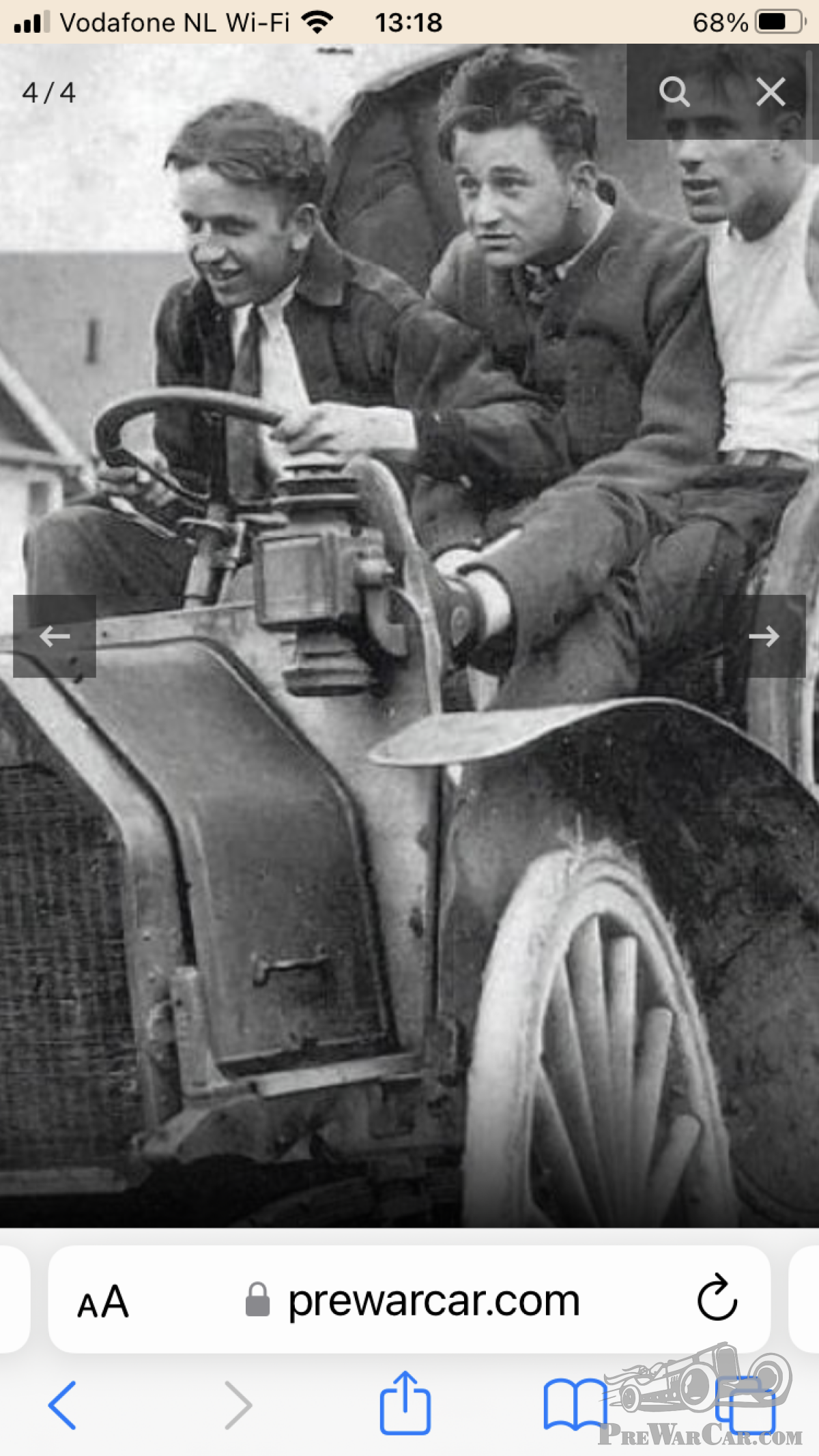
Le produit fantastique de l'International Harvester Corporation que l'on voit ici était officiellement connu sous le nom d'Auto Wagon ou Auto Buggy et plus tard sous celui de Motor Truck, mais il est plus largement connu sous le nom de High-Wheeler, et la raison de ce surnom est évidente. Contrairement à la majorité des véhicules d'IHC, celui-là n'était pas spécifiquement destiné aux travaux agricoles. Avec sa garde au sol impressionnante grâce à ses énormes roues en bois, il était bien adapté à la conduite dans les champs, mais il pouvait également transporter une famille d'agriculteurs à l'église le dimanche grâce à son moteur bicylindre refroidi par air et monté sous la carrosserie. Il était également considéré comme une voiture.
En 1917, la production s'est arrêtée après 10 années de succès. Grâce à la plaque d'immatriculation clairement visible sur celui-nous pouvons voir que la photo a probablement été prise en 1924.
Paroles: Jeroen Booij
Publié:
jeudi août 24th, 2023
Facebook
LinkedIn
Twitter
WhatsApp
Email
Copy
Commentaires
Graham Clayton
20 Janvier 2024, 04:57
High-wheelers were manufactured in the decade prior to the start of the Great War. As asphalt roads became more prevalent, their use quickly declined. Some of the major high-wheeler manufacturers in the United States apart from IH were ABC, De Schaum, Holsman, Kiblinger, McIntyre and Schacht.
Lire la suite


Jürgen Klein
27 Août 2023, 17:25
This is my brochure of a car similar to the International High-Wheeler, built in 1921 in Kiel, Germany. We don`t know if there was more than one car produced or maybe a handful, and maybe with an engine built by themselves.
Lire la suite
Steve Diggins
27 Août 2023, 01:51
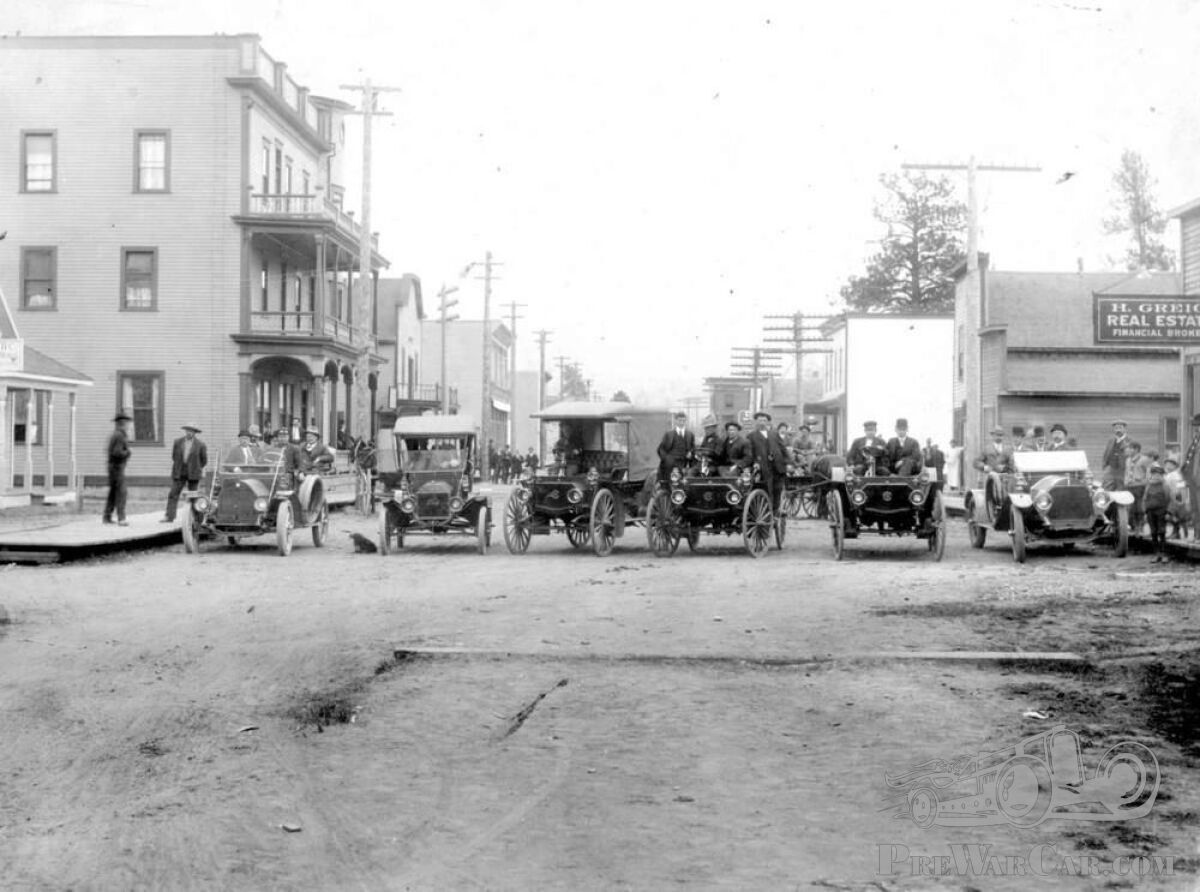
Here is a photo of three air-cooled IHC high-wheelers taken around 1912 in the small town of Merritt, BC. I think the car to the right could be a Napier, but I'm not too sure.
Lire la suite
Les Six Troenes
26 Août 2023, 13:15
The foot on the firewall/dashboard looks like its wearing a Converse Chuck Taylor All Stars. These have stayed the same since 1922. Cars have evolved quite a bit since then…
Lire la suite
Steve Diggins
26 Août 2023, 04:41
When the rural dirt roads tuned to mud in the rainy season the high-wheelers were pretty good at cutting through it. They were also good in the snow, cutting through it to grab some traction on something below. Swollen creeks crossing the roads were less of a problem. They could handle the deep stuff which most cars could not.
Lire la suite
Edwin Hayslip
24 Août 2023, 16:17
IH made air-cooled and water-cooled high-wheelers at the same time. I suggest this is a water-cooled example, not an air-cooled example as suggested above.
Lire la suite
Larry Lewis
24 Août 2023, 05:23
I would think that after having fun with this old truck, these three blokes would be relaxing with a cold beer. Or two.
Lire la suite
Peter Fitzgerald
24 Août 2023, 03:58
What a fantastic photograph.
Unfortunately, probably not long before it was crashed in a field!
Lire la suite
Unfortunately, probably not long before it was crashed in a field!