Le magazine et marché mondial pour les passionnés de voitures classiques, par des passionnés.
Le magazine et marché mondial pour les passionnés de voitures classiques, par des passionnés.


Filter
Faites votre choix:
- Voir les voitures
-
Marque >>
-
Année >>
-
-
Catégorie >>
- Voir les motos
- Voir les pièces et plus
-
Marque de la voiture >>
-
Constructeur >>
-
Catégorie >>
- Vélos
-
Année >>
-
Pays



PreWarCar Workshop: getting spares for your car.
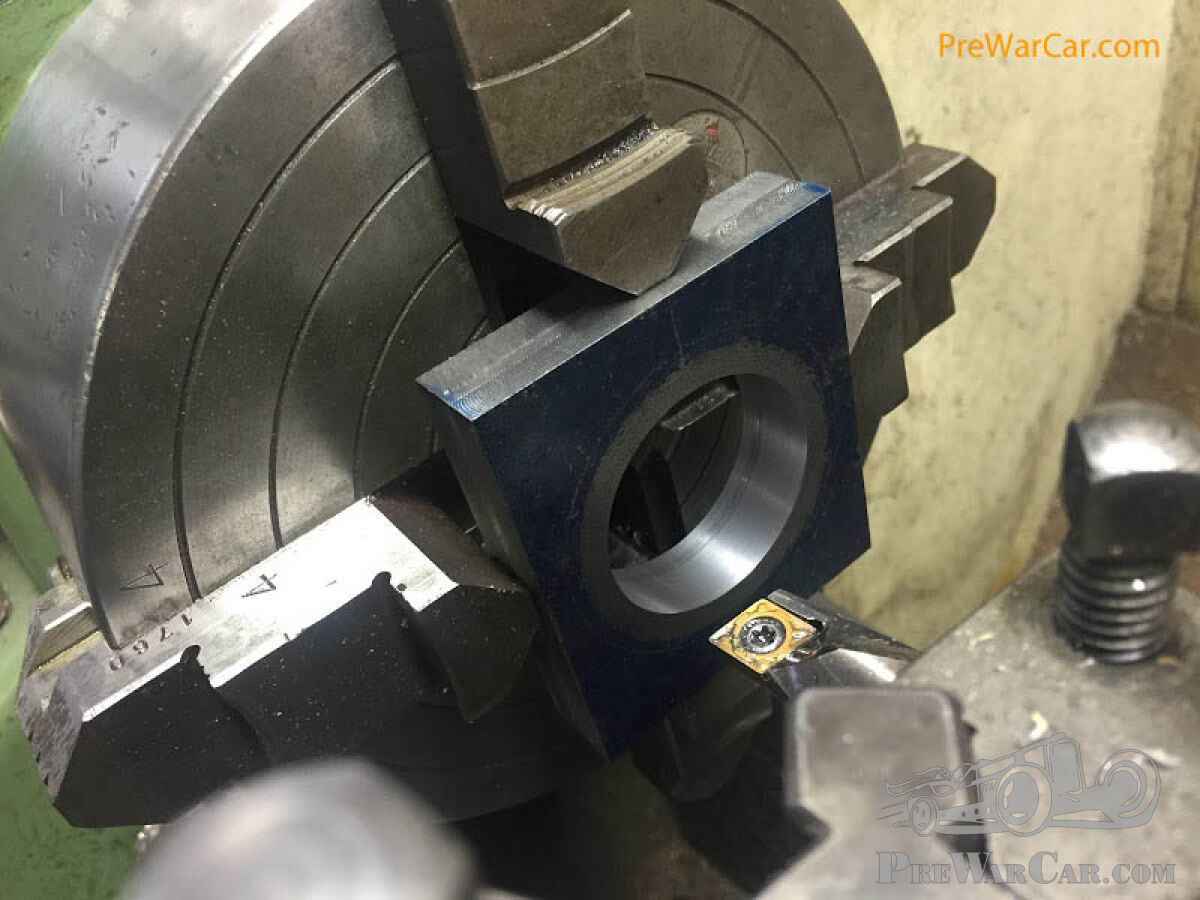
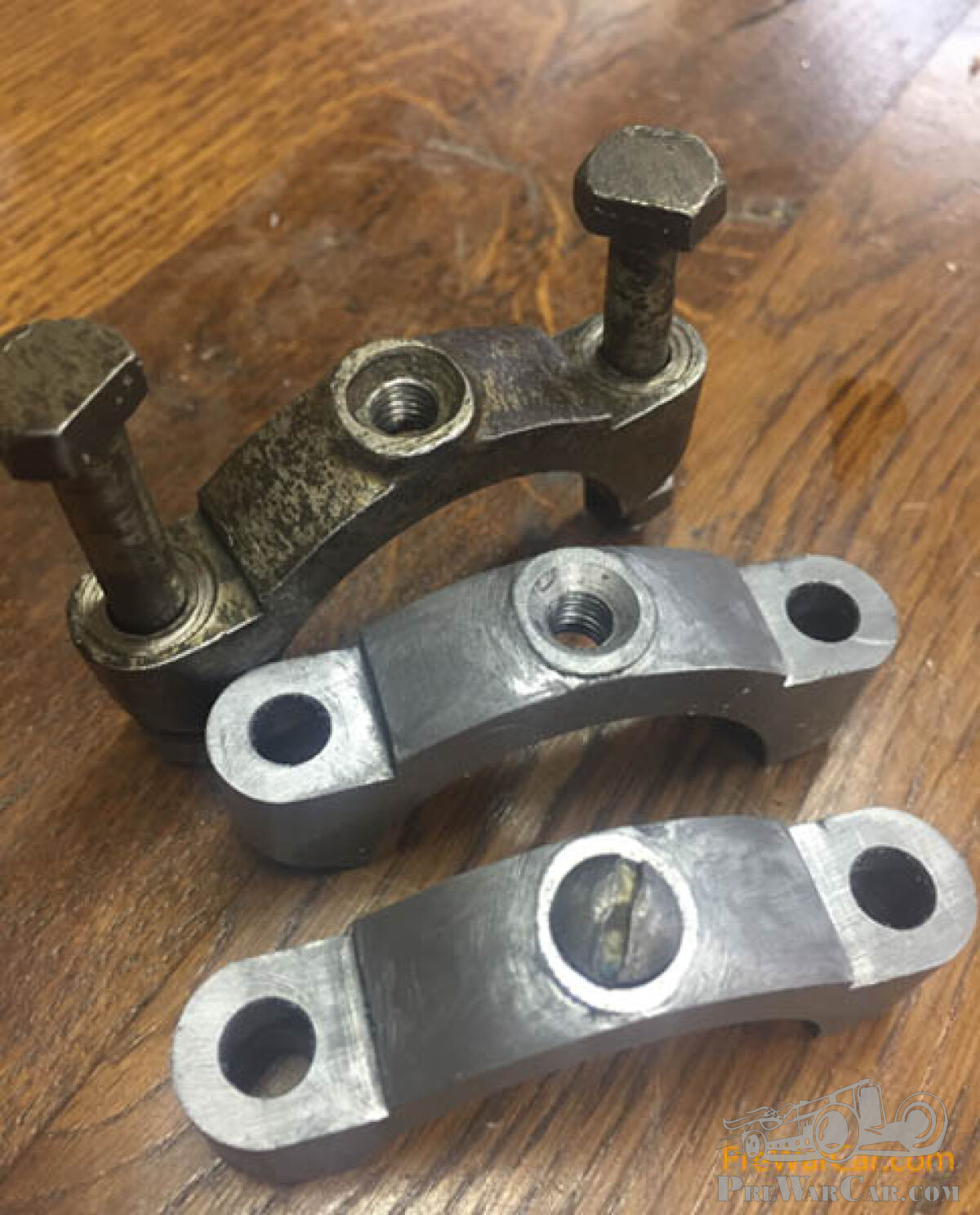
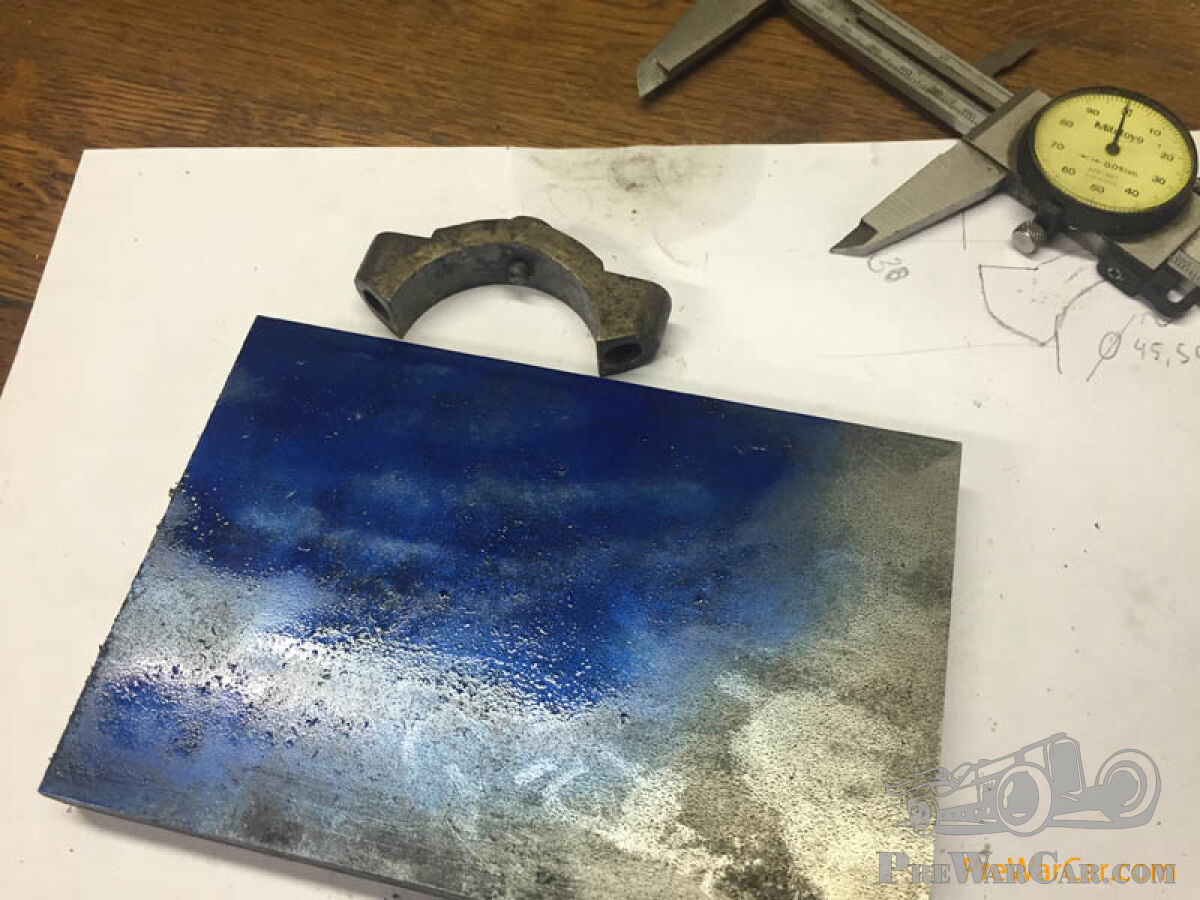
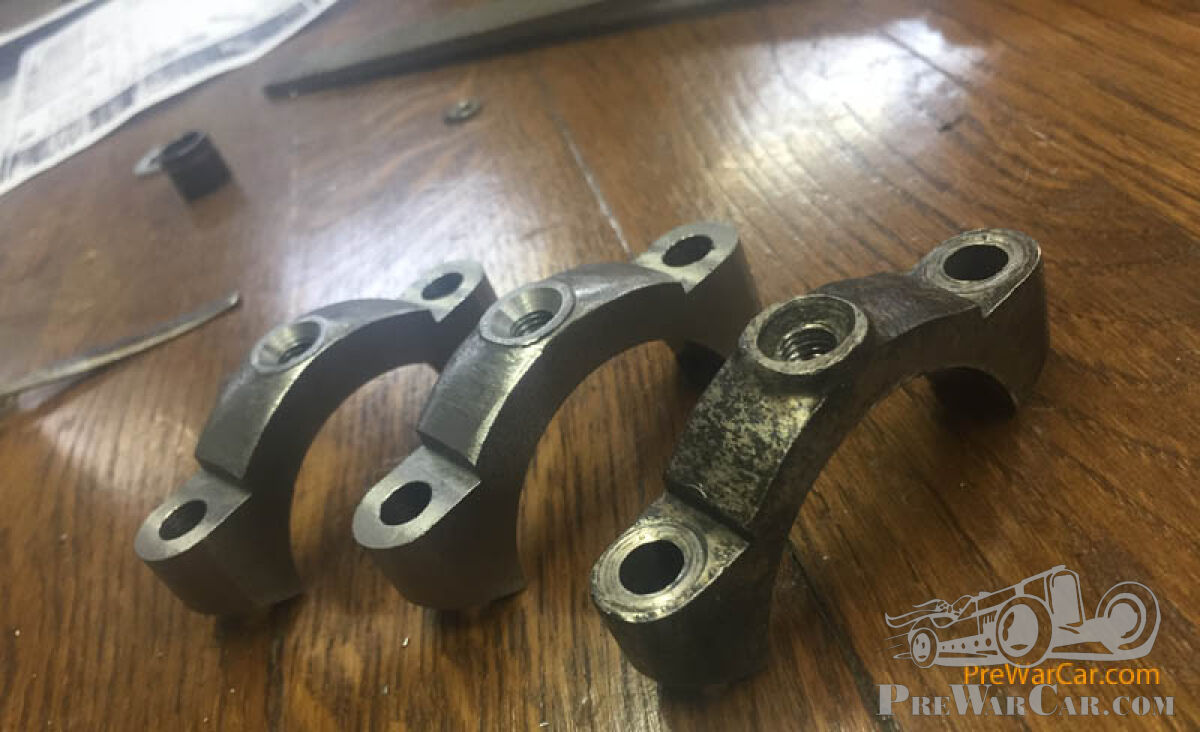


One of the most important sections of our beloved hobby is finding spare parts for one's vehicle. Things will break from time to time. And finding spares is not always easy. Sometimes parts are relatively easy to reproduce by machining in the home shop. Simple lathe and mill work can give you most bolts, pins, supports etc.
When your broken part is a casting, it gets a little more complicated. Brass and aluminum are easily casted in the home shop, cast iron is (although not impossible) a little more challenging.
Starting with this article, we like to show you repair projects under the name "Prewarcar Workshop". This week, we like to show you a mounting bracket for a friction shock absorber.
In this case we chose to reproduce a cast part by machining it and patinate the part by hand to make sure it gets an original look.
The project starts with a square block of steel. It's machined in several steps to a fully machined part. Then the elbow grease is applied and after a couple hours of hand filing the part is shaped like the original with all the machining marks removed. Now it just needs a little sanding for paint and it's done.
For a full photo album with descriptions of the machining of this part, click here.
(Work performed and article written by Jos van Genugten)
If you want to share your projects for the 'PWC Workshop', let us know!
Publié:
lundi mars 28th, 2016
Facebook
LinkedIn
Twitter
WhatsApp
Email
Copy
Commentaires
Peter
01 Avril 2016, 06:25
On Cast iron parts that are broken/cracked or damaged even if broken sections are missing , see wwwcastironwelding.co.uk where we can repair all of the mentioned.
Lire la suite
Inconnu
31 Mars 2016, 15:01
To the ignorant(not intended as sarcasm), there is a major difference between a (friction) spring dampener and a shock absorber, rooted in "lateral stability", which will not be found in modern era print, as the pundits are well aware. I thank Corky Coker(Coker Tire) for the pedantive(?) differentiation above, You Tube video of the "1911 Marmon Wasp" lent to his shop by the Indianapollis Museum. This site is rapidly deteriorating, in my opinion, because of "the editing".
Lire la suite
Inconnu
31 Mars 2016, 14:37
What a very good idea editor. Love workshop foto's and good ideas how to learn these skills ;-)
Lire la suite
Inconnu
31 Mars 2016, 08:54
Just like to add on "When your broken part is a casting, it gets a little more complicated"
Please see our website where this problem is not so complicated.
Thanks. www.castironwelding.co.uk
Lire la suite
Please see our website where this problem is not so complicated.
Thanks. www.castironwelding.co.uk
Inconnu
30 Mars 2016, 23:42
"Your part being made has been called a mounting bracket for a "friction shock absorber" which is not correct. If you refer to the vertically mounted winged hinge that is variably resistant dependent upon tension, that hinge is called a (friction) "spring dampener", which is IMPORTANT to differentiate since traditional shocks are sometimes mated with spring dampeners for added stability, as with some 1930's-1940's motorcycles."
The Austin made friction dampers fitted to the Austin Seven from 1924 were described as 'Shock Absorbers' in the List of Spare Parts. The previously fitted dampers provided by Hartford were also called Shock Absorbers in the literature.
Tony.
Lire la suite
The Austin made friction dampers fitted to the Austin Seven from 1924 were described as 'Shock Absorbers' in the List of Spare Parts. The previously fitted dampers provided by Hartford were also called Shock Absorbers in the literature.
Tony.
Inconnu
30 Mars 2016, 21:45
Brilliant idea. Everyone should learn these skills.
Ignore the pedants. Your magazine goes from strenght to strength.
Lire la suite
Ignore the pedants. Your magazine goes from strenght to strength.
Inconnu
30 Mars 2016, 17:09
I'm retired and as a lathe and mill apprentice, these articles will help me to construct parts I need for my veteran motorcycles. Very good idea indeed, old fellow!
Lire la suite
Inconnu
29 Mars 2016, 20:16
Thats a very good idea! Make it as simple as possible to help us learn und get experience.
Thomas from Austria
Lire la suite
Thomas from Austria
Inconnu
29 Mars 2016, 16:07
Your part being made has been called a mounting bracket for a "friction shock absorber" which is not correct. If you refer to the vertically mounted winged hinge that is variably resistant dependent upon tension, that hinge is called a (friction) "spring dampener", which is IMPORTANT to differentiate since traditional shocks are sometimes mated with spring dampeners for added stability, as with some 1930's-1940's motorcycles.
Lire la suite
Inconnu
29 Mars 2016, 12:11
What a fantastic idea. Now PWC is even more perfect :)
Lire la suite
Inconnu
29 Mars 2016, 06:29
Hello, that's a very good idea I love articles like this.
Many thanks.
Christian.
Lire la suite
Many thanks.
Christian.
Gunn & Co.
27 Mars 2016, 10:05
Good idea chaps, for a PWC Workshop. Lots of artisans out there keeping old stuff on the road.
Lire la suite