Le magazine et marché mondial pour les passionnés de voitures classiques, par des passionnés.
Le magazine et marché mondial pour les passionnés de voitures classiques, par des passionnés.


Filter
Faites votre choix:
- Voir les voitures
-
Marque >>
-
Année >>
-
-
Catégorie >>
- Voir les motos
- Voir les pièces et plus
-
Marque de la voiture >>
-
Constructeur >>
-
Catégorie >>
- Vélos
-
Année >>
-
Pays



Quatre soldats, une grange française et la Peugeot qui n'existait pas...


Les merveilles de la photographie nous ont apporté, de temps à autre, des images semblant relever du domaine du mythe. Depuis près de 100 ans, le monde reçoit des photos de choses dont on pense qu'elles n'existent pas, principalement parce qu'il n'y a pas de preuves convaincantes de leur existence, comme le monstre du Loch Ness et le Bigfoot. Il s'agit bien sûr de canulars imaginés par des plaisantins, des publicitaires et des maniaques, mais la voiture que l'on voit sur cette photo est bien réelle. Toutefois, sans cette photo, nous ne saurions pas qu'elle a existé.
Tout d'abord, quelques mots sur la photo: elle nous vient d'un Français qui nous dit qu'elle a été prise à Orléans, probablement le 27 janvier 1916. Les quatre hommes sont tous des soldats français, et celui qui se trouve à l'arrière était le frère de l'arrière-grand-père de notre correspondant.
La voiture elle-même est une Peugeot Type 147 40hp tourer, un modèle qui, nous dit-on, n'a été produit que pendant la guerre de 1914-1918. Apparemment, d'après ce que l'on nous a dit, elle ne figure dans aucun catalogue Peugeot de l'époque. Il semble qu'il n'existe pas de voitures de ce type aujourd'hui, mais ce qui est surprenant, c'est que nous ne trouvons même pas de photographies d'époque de cette voiture sur l'internet, ni rien de similaire, à l'exception d'une photo de profil de mauvaise qualité qui peut-être a été imprimée comme publicité dans un journal. On nous dit qu'une photo de la même voiture avec un soldat différent figure dans le livre de Claude Rouxel, Ghota de l'automobile Française, mais nous ne l'avons pas vue de nos propres yeux.
Prenons le temps de nous en imprégner, car c'est une chose magnifique à tenir. C'est une bête énorme, et le moteur doit être d'une taille prodigieuse - peut-être six ou sept litres, nous pensons. L'énorme radiateur en forme de veau n'est pas habituel sur les Peugeot de l'époque, et il a dû donner à la voiture une présence plutôt dominatrice sur la route. Mais surtout, nous sommes frappés par ces curieux carénages sur les ailes qui abritent vraisemblablement les feux latéraux. Nous nous demandons à quoi ils peuvent bien servir.
C'est vraiment une photo pleine de mystères. Que pouvez-vous nous dire sur cette magnifique Peugeot de 40 ch, disparue depuis longtemps?
Paroles: Zack Stiling; photographie: Niepceron
Publié:
lundi juillet 3rd, 2023
Facebook
LinkedIn
Twitter
WhatsApp
Email
Copy
Commentaires


William Mundt
09 Juillet 2023, 15:47
This Gallic beast must have struck fear in the heart of its contemporary Mercedes!
Lire la suite


Jean-Pierre Record
09 Juillet 2023, 13:34
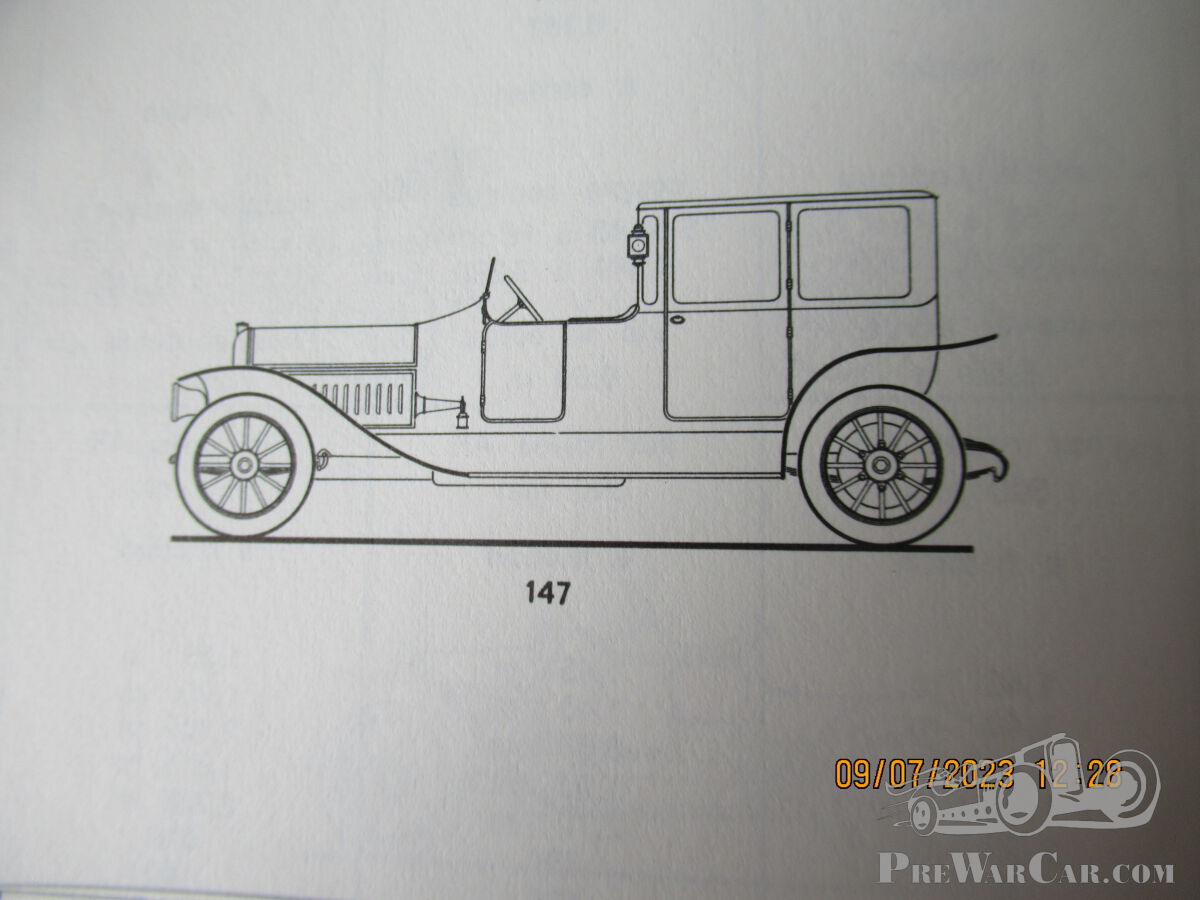
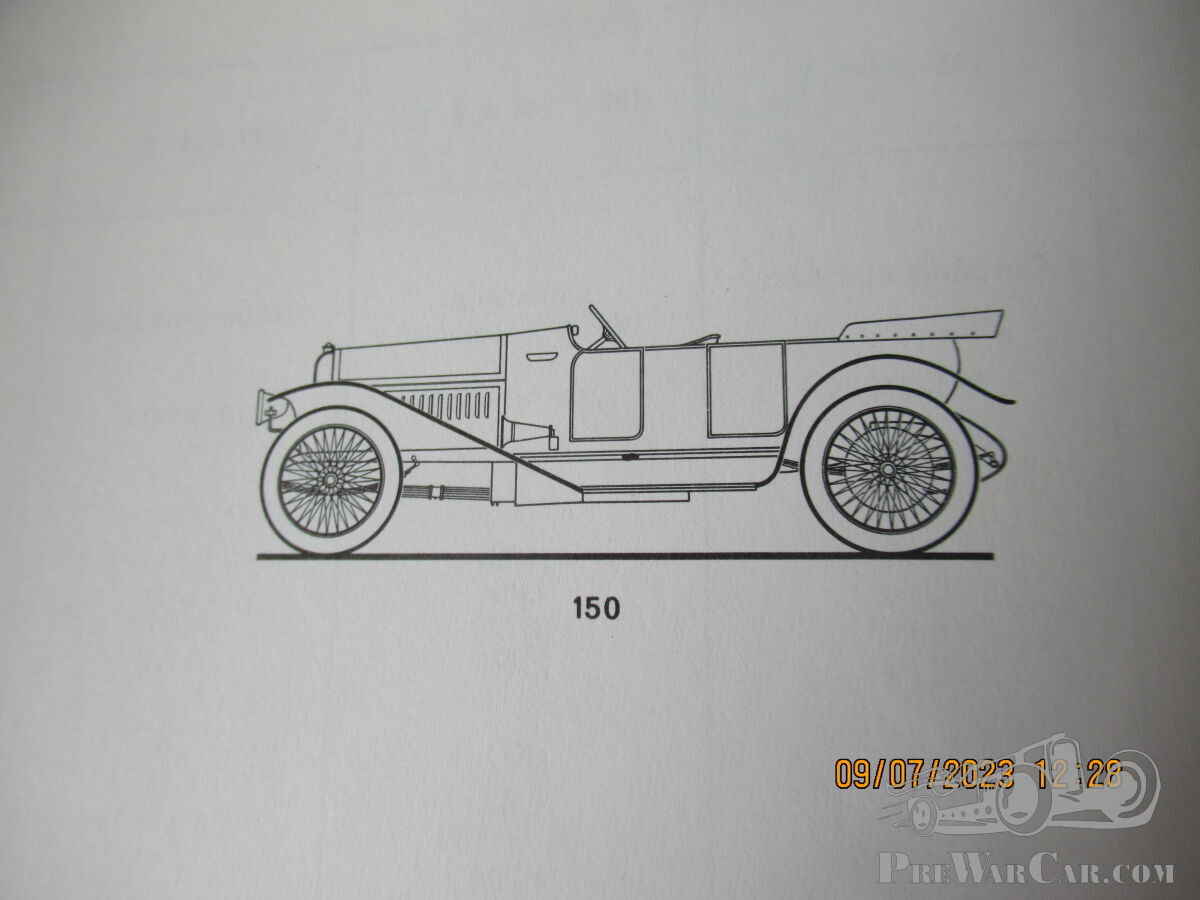
Well, I, like Laurent, think it could be a 147-147S or 150-150S made in Peugeot's Lille factory, but with at least a radiator grille seemingly shared with a contemporary Benz or Daimler-Mercedes.
According to the book "La production Peugeot 1889 à 1928", the 147-147S was made in 1913 and 1914 and powered by the enormous four-cylinder, 40 hp, 7½-litre, was a maximum speed of 79 to 85 km/h (49 to 53 mph) with coupé limousine bodywork, with a total production of only 45 cars. The 150-150S was made in 1914 in the same factory with the same engine, and with torpédo and sport bodies it achieved an astonishing maximum speed from 122 to 129 km/h (76 to 80 mph) depending on the rear axle ratio; it had a production run of only 49 vehicles.
Lire la suite
According to the book "La production Peugeot 1889 à 1928", the 147-147S was made in 1913 and 1914 and powered by the enormous four-cylinder, 40 hp, 7½-litre, was a maximum speed of 79 to 85 km/h (49 to 53 mph) with coupé limousine bodywork, with a total production of only 45 cars. The 150-150S was made in 1914 in the same factory with the same engine, and with torpédo and sport bodies it achieved an astonishing maximum speed from 122 to 129 km/h (76 to 80 mph) depending on the rear axle ratio; it had a production run of only 49 vehicles.
Laurent Friry
08 Juillet 2023, 11:45
Ariejan is really an expert and I can only agree with him.
I am the co-author of the book mentioned by Zack and when Claude Rouxel and I worked on the Ghota de l’automobile française, we were very intrigued by this car and only knew that it was a Peugeot.
Since, I have found other pictures of the same car.
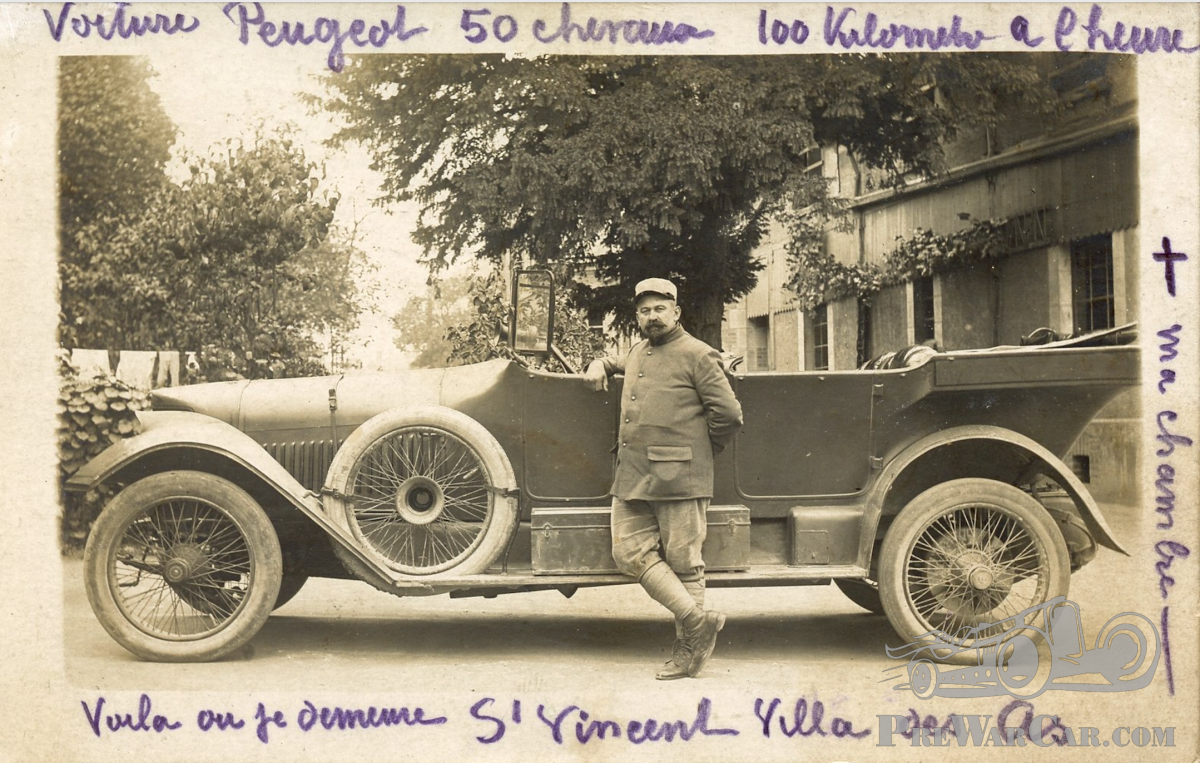
One of them is giving further details as it is a postcard, and the sender, a certain Victor, wrote: Car Peugeot 50 HP, 100 km/h. Here is where I live: St Vincent, villa des As. My bedroom (X).
Looking at the pre-WWI Peugeot production record, it could be a Type 147 or 150, both equipped with a very large four-cylinder engine of 7½-litre capacity.
The body is definitely of German origin, which makes me think that this car was a "prise de guerre", taken from the enemy, and then effected as a staff car.
Lire la suite
I am the co-author of the book mentioned by Zack and when Claude Rouxel and I worked on the Ghota de l’automobile française, we were very intrigued by this car and only knew that it was a Peugeot.
Since, I have found other pictures of the same car.
One of them is giving further details as it is a postcard, and the sender, a certain Victor, wrote: Car Peugeot 50 HP, 100 km/h. Here is where I live: St Vincent, villa des As. My bedroom (X).
Looking at the pre-WWI Peugeot production record, it could be a Type 147 or 150, both equipped with a very large four-cylinder engine of 7½-litre capacity.
The body is definitely of German origin, which makes me think that this car was a "prise de guerre", taken from the enemy, and then effected as a staff car.
Thomas Ulrich
09 Juillet 2023, 12:39
Hallo,
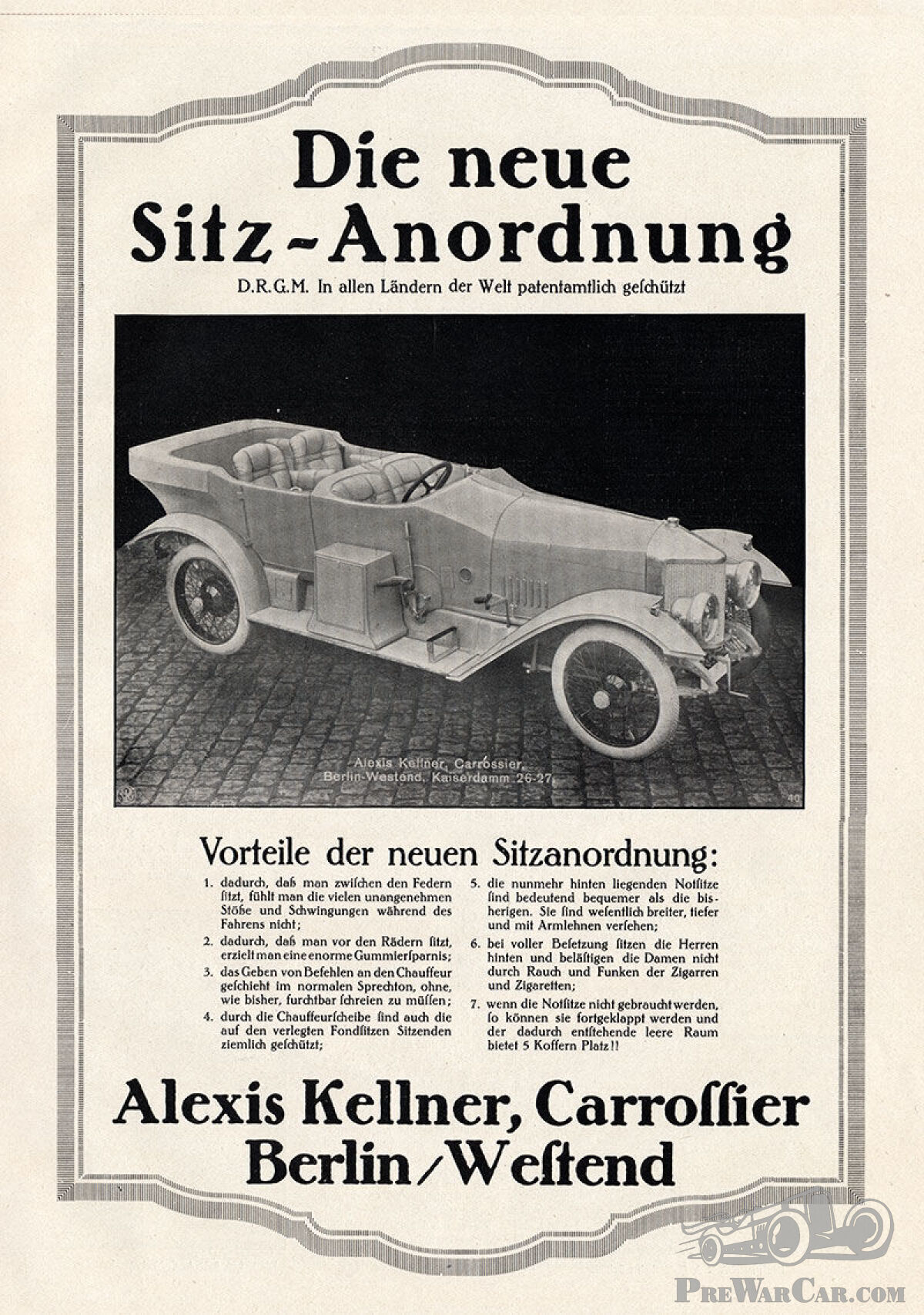
I think Laurent is right. It is definitely German and it has an Alexis Kellner body. Alexis Kellner had a patent on the sidelights included at the front wings before the Kaiser War. I know that Alexis Kellner fitted several French cars with his bodies.
Lire la suite
I think Laurent is right. It is definitely German and it has an Alexis Kellner body. Alexis Kellner had a patent on the sidelights included at the front wings before the Kaiser War. I know that Alexis Kellner fitted several French cars with his bodies.


Luc Ryckaert
03 Juillet 2023, 11:33
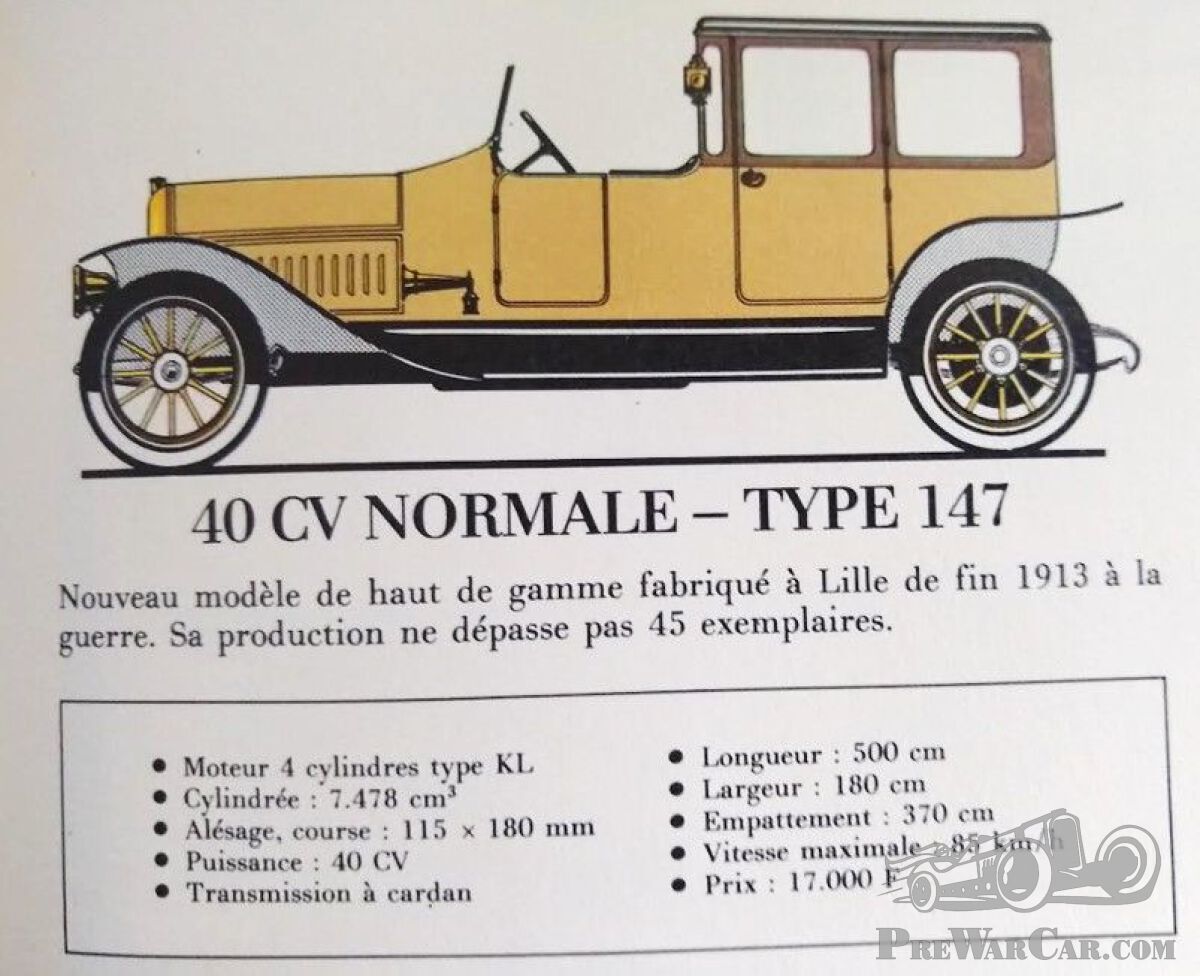
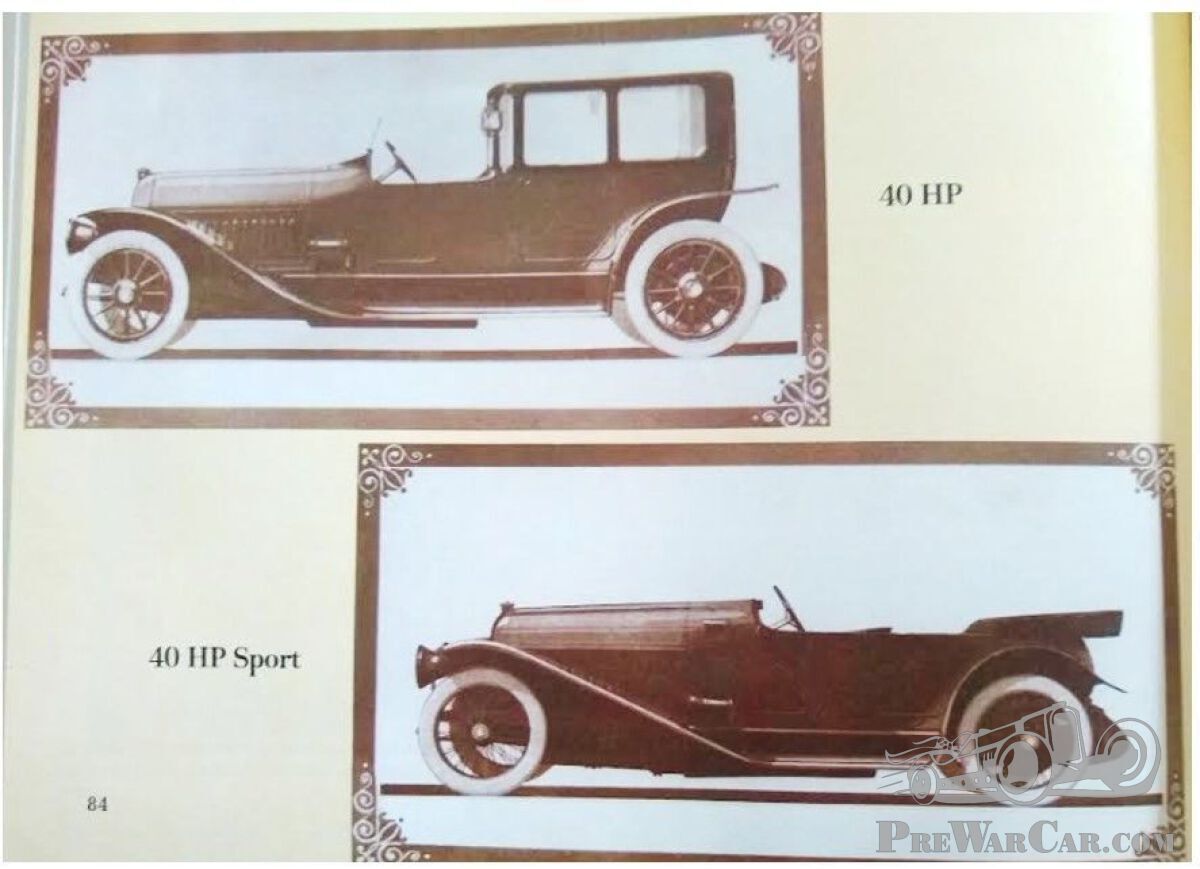
Hello. This is what I found in "Toutes les Peugeot" by René Bellu (1980). The pictures of the 40 HP and 40 HP Sport come from the 1914 Peugeot catalogue. Kind regards, Luc Ryckaert.
Lire la suite
Niepceron
03 Juillet 2023, 16:21
Hello Luc,
Thank you for this but I think it’s not the same car: a front bulkhead and the radiator…
Lire la suite
Thank you for this but I think it’s not the same car: a front bulkhead and the radiator…
Ariejan Bos
03 Juillet 2023, 11:28
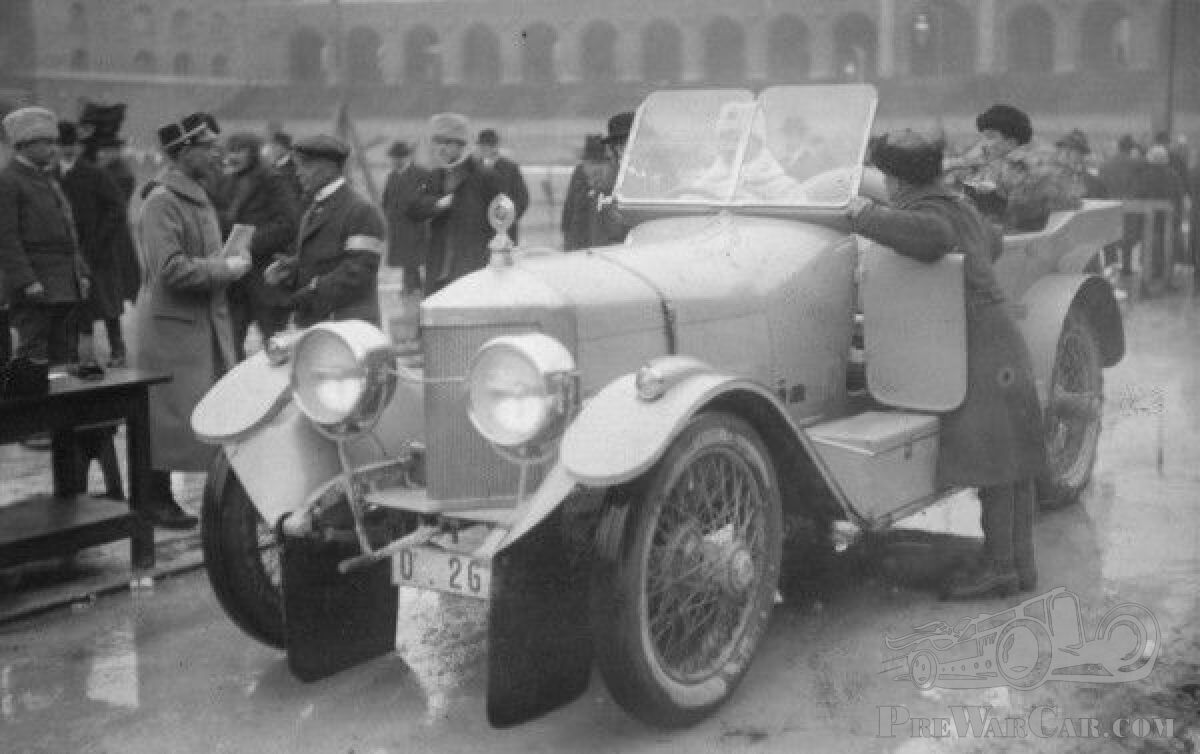
Although I have several photos of this model, based on the curiously mounted manually operated siren at the window side, it's my opinion that the car was a one-off. According to the information written on the different postcards, the Peugeot would be a 45hp or 50hp model capable of more than 100 km/h (62 mph), which was used as an instruction vehicle. The body is described as a "carrosserie boche", the derogatory name hinting at the German origin. It resembles very much the Alexis Kellner type of body of shortly before the Great War with its pointed radiator and mudguards. A well known example of this style is the better known 1914 Minerva. This type of mudguard lights was shown for the first time at the 1913 Bruxelles Show.
Lire la suite
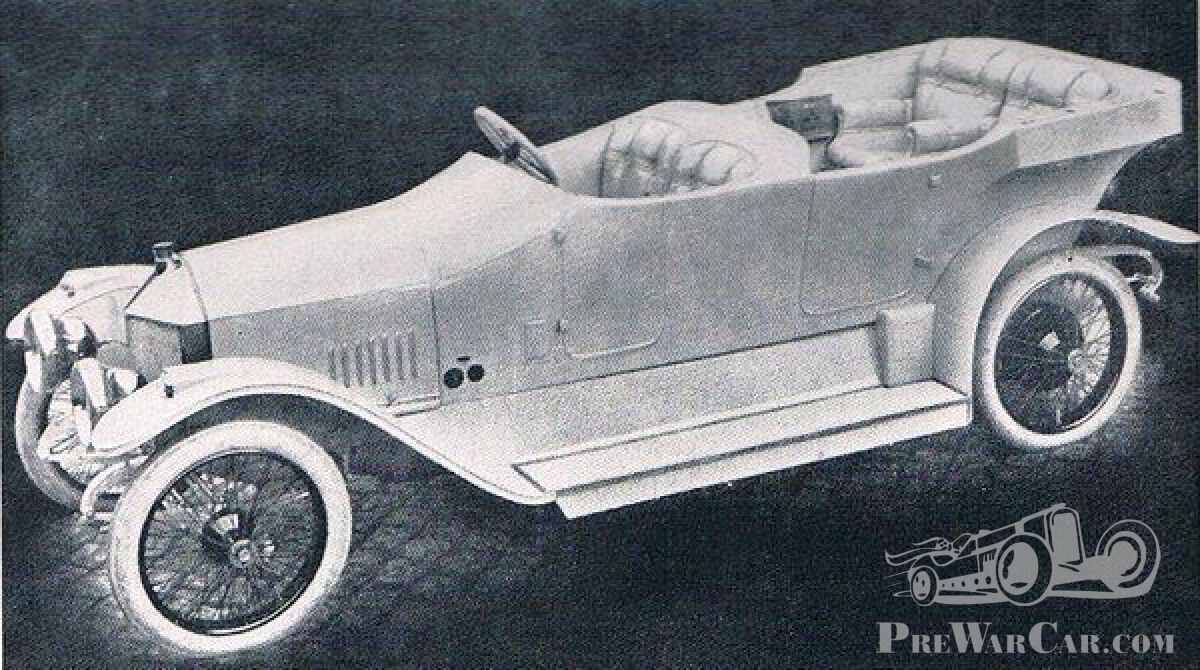
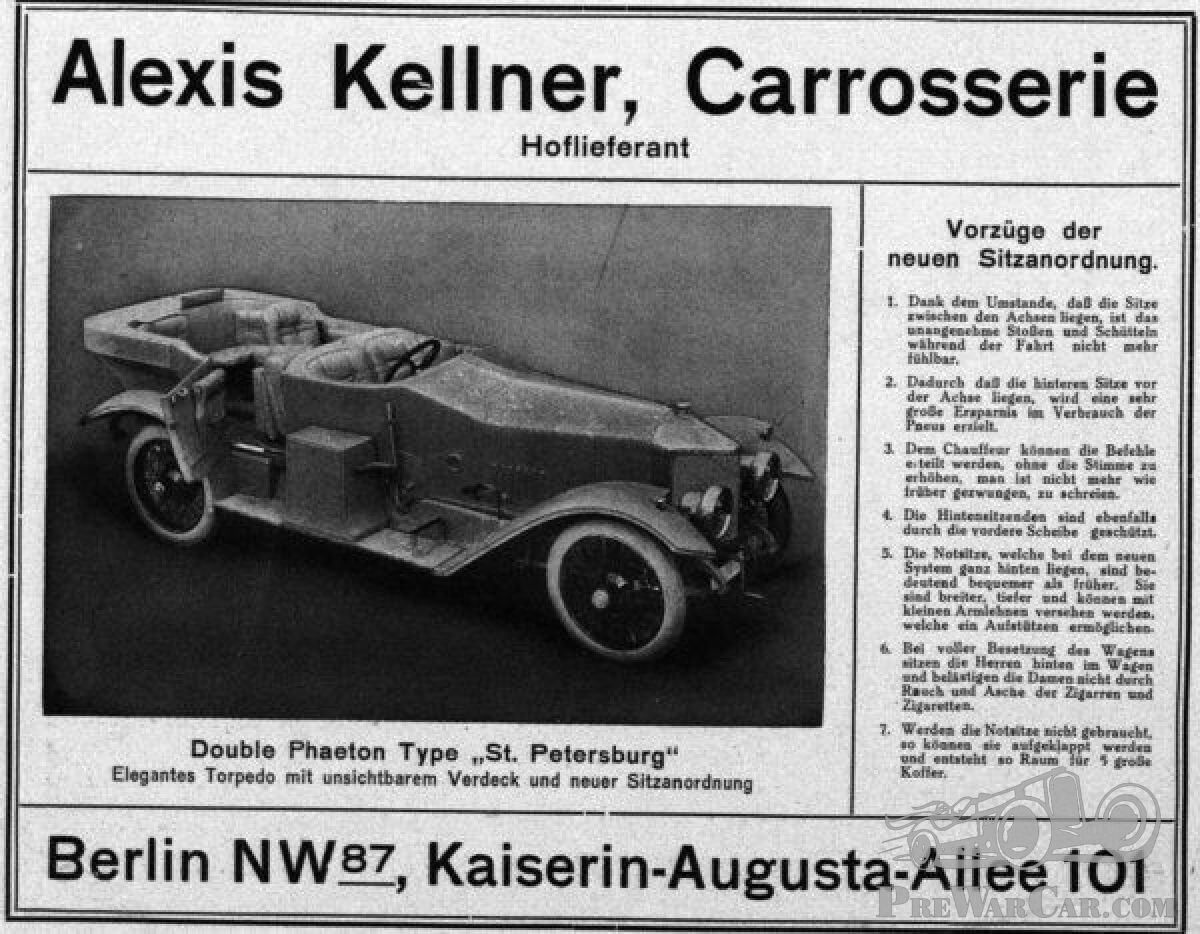
This bodywork by Alexis Kellner is of "St. Petersburg" type (photo 1).
It was mounted on several cars of different marques, German, Belgian and French.
The Kellner Minerva is indeed well-known, as Arejian reminds us. It even participated in a concours d'élégance in 1915 in Spain.
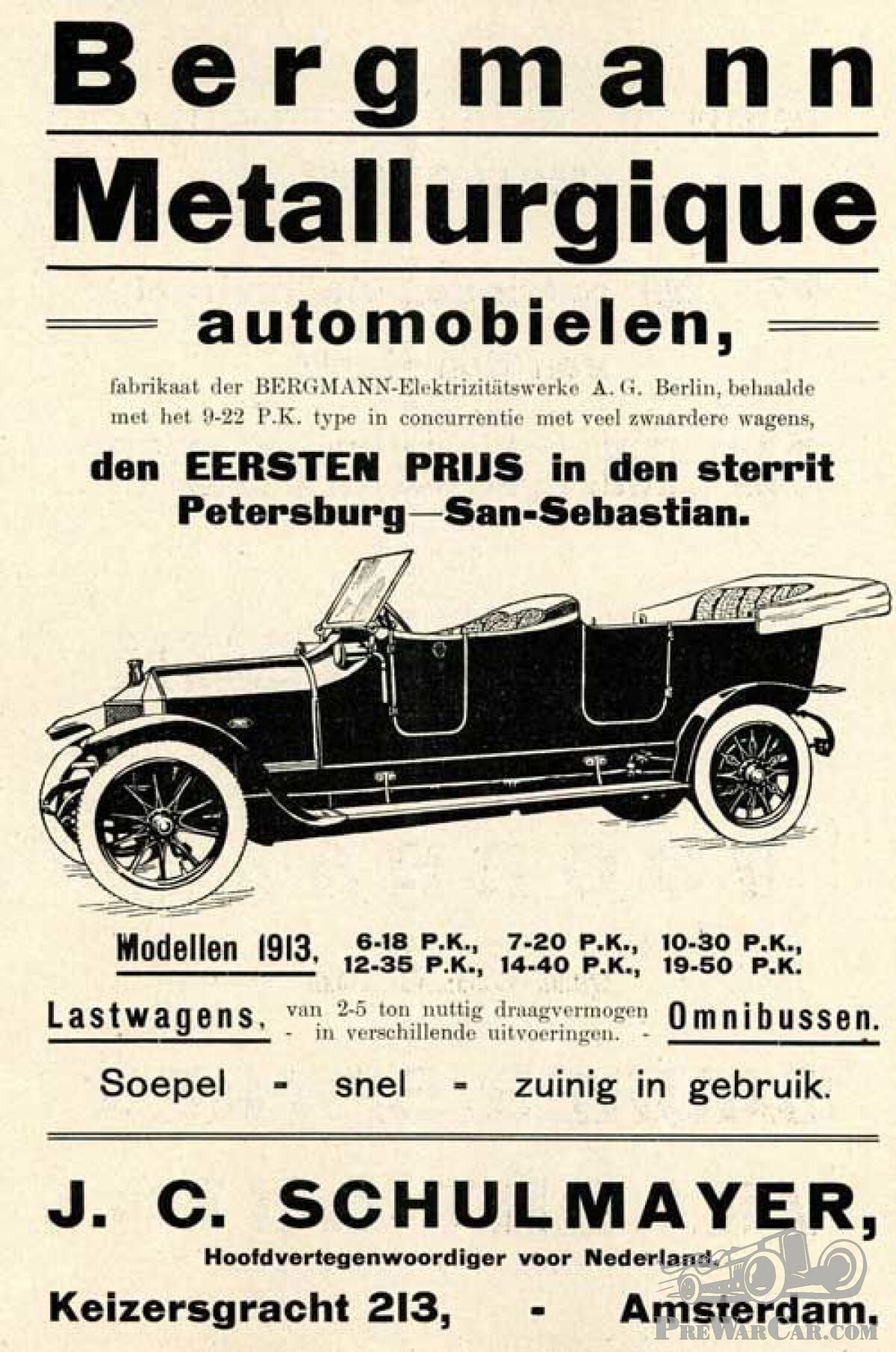
This bodywork is also found in Germany on a Bergmann Métallurgique chassis. (photo 2 and 3). Prince Georg of Saxony owned one.
The German vehicle could have six different engines: 6-18, 7-20, 10-30, 12-35, 14-40 or 19-50.
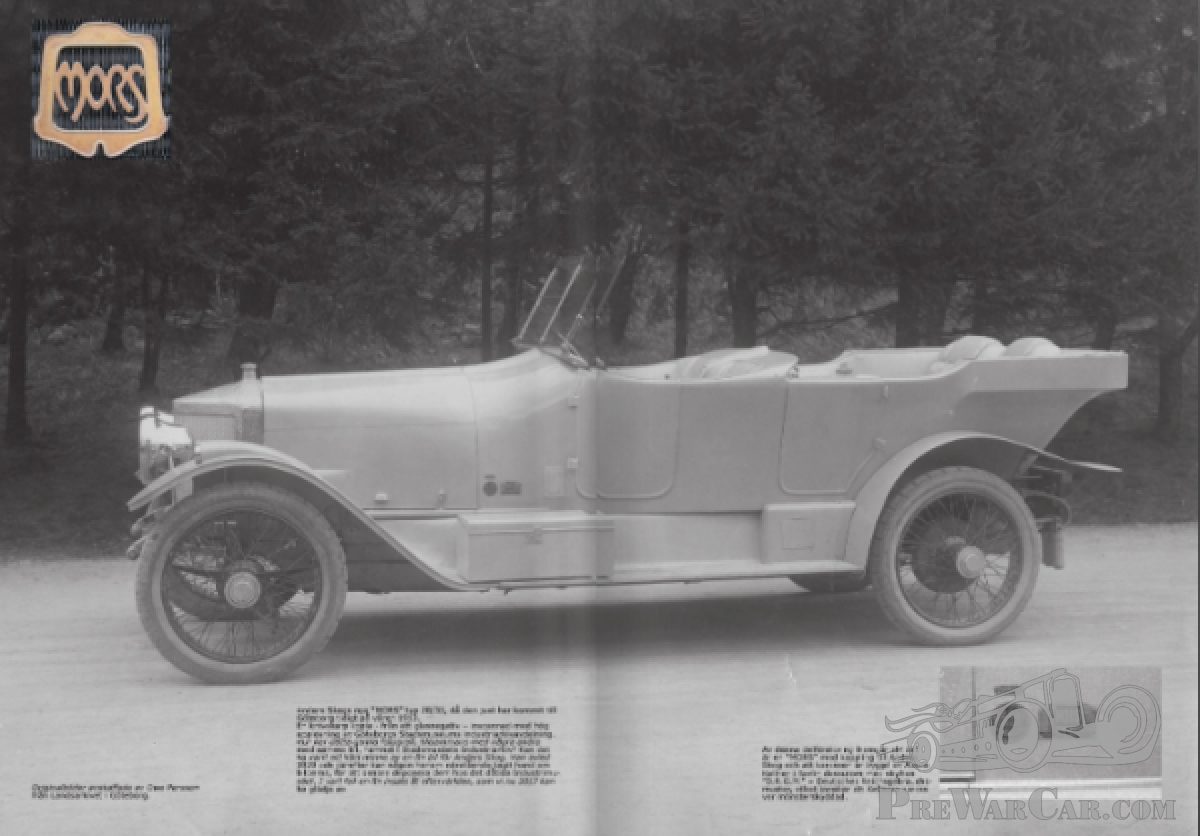
I also have photos of a French Mors car with this bodywork (photo 4 and 5).
Thank you Laurent Friry for your beautiful document.
Laurent Zoller