Le magazine et marché mondial pour les passionnés de voitures classiques, par des passionnés.
Le magazine et marché mondial pour les passionnés de voitures classiques, par des passionnés.


Filter
Faites votre choix:
- Voir les voitures
-
Marque >>
-
Année >>
-
-
Catégorie >>
- Voir les motos
- Voir les pièces et plus
-
Marque de la voiture >>
-
Constructeur >>
-
Catégorie >>
- Vélos
-
Année >>
-
Pays


Rares photographies de course Gobron-Brillié : une seule voiture ou deux ?
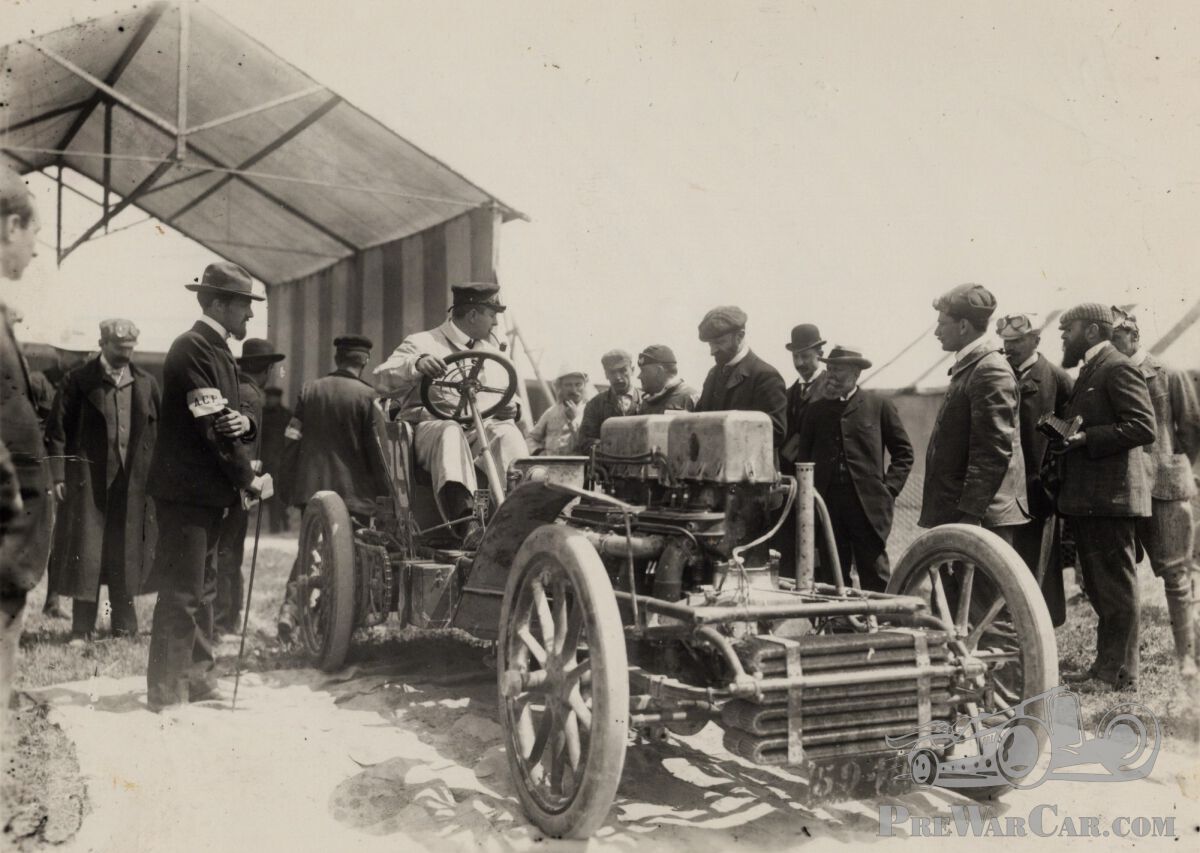
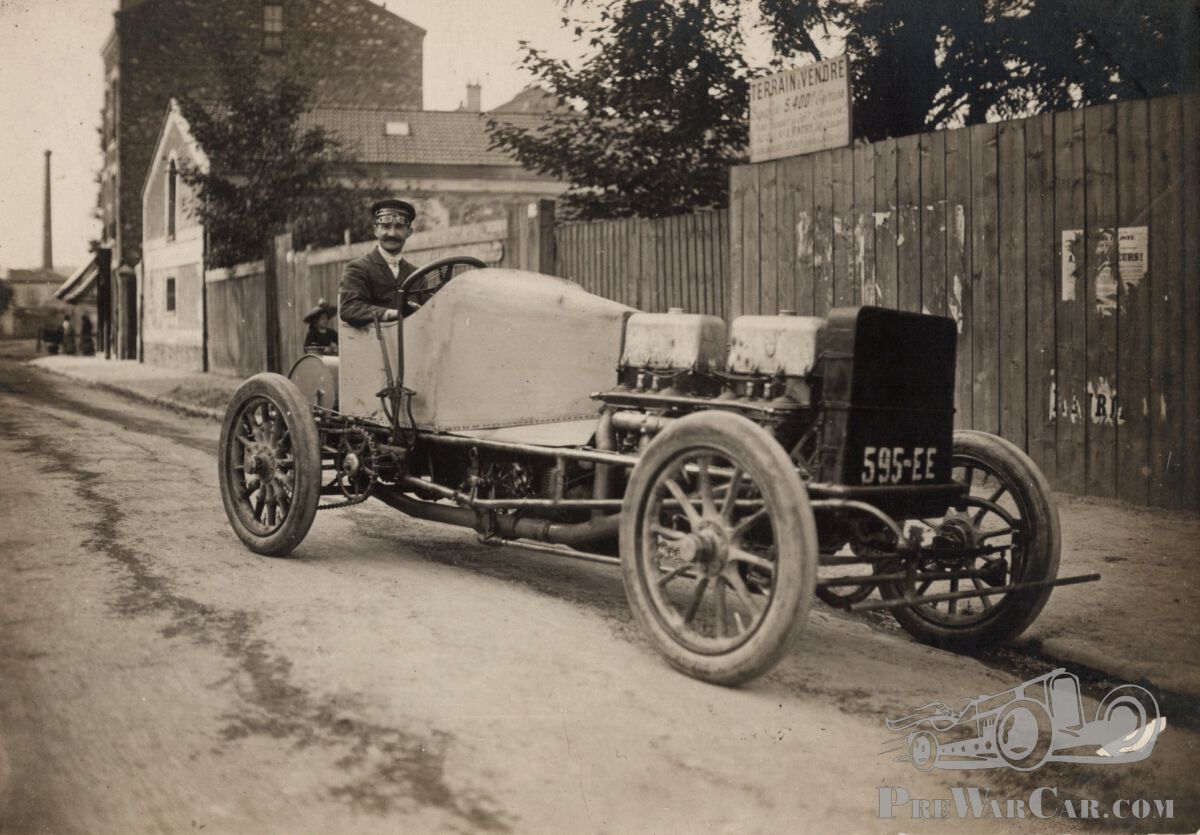


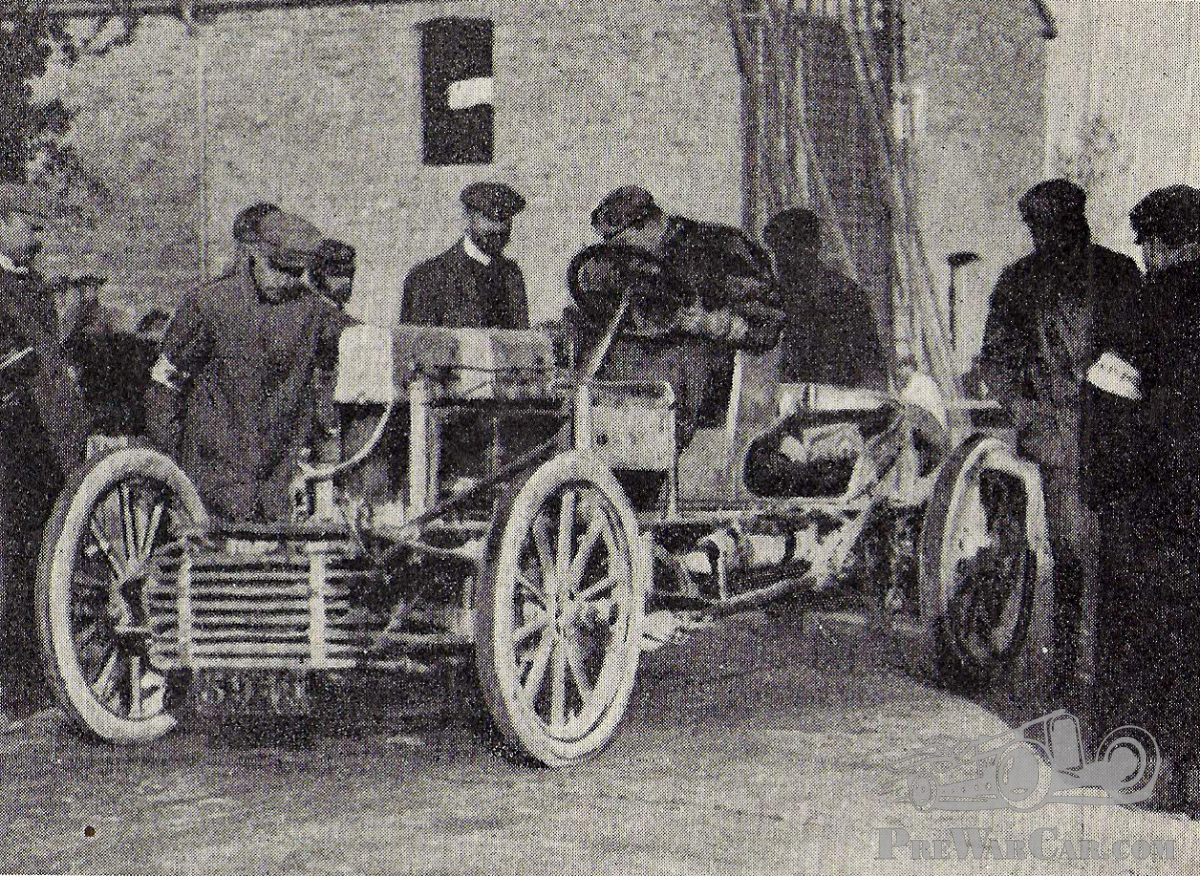
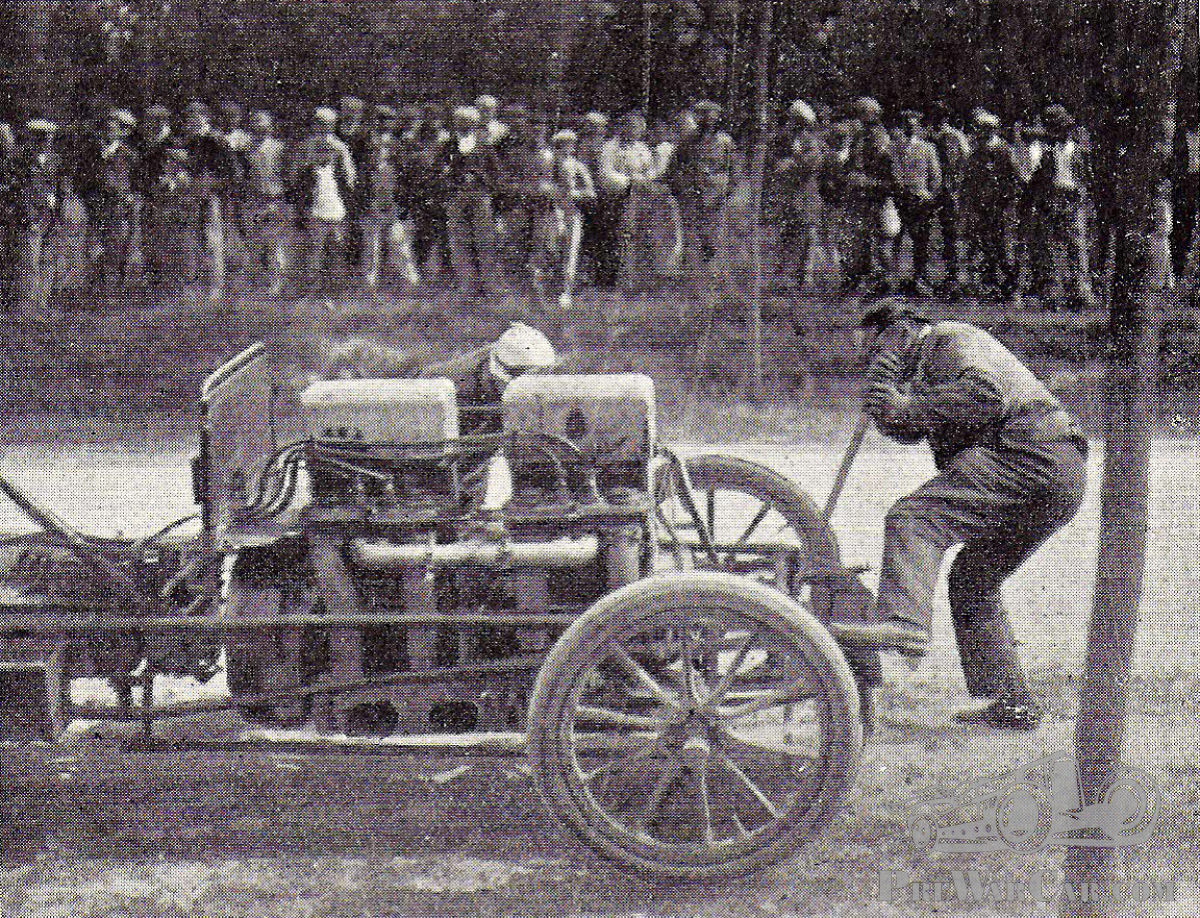
La marque Gobron-Brillié continue de nous passionner. Bien qu’elle soit aujourd’hui largement tombée dans l’oubli, elle fut un constructeur tout à fait remarquable. Après notre article précédent consacré à son moteur si particulier, nous avons reçu de la part du journaliste automobile Wim Oude Weernink ces magnifiques photographies d’une Gobron-Brillié en configuration de course. La qualité des clichés dépasse tout ce que nous avions vu jusqu’à présent concernant ce type de voiture de compétition, mais malheureusement, on en sait très peu à leur sujet. Nous voilà donc une nouvelle fois face à un véritable Monday Mystery.
Au départ, nous étions tellement fascinés par ce moteur aussi impressionnant qu’atypique que nous avons à peine regardé plus loin, supposant qu’il s’agissait de la même voiture à différentes étapes de son existence. Mais en examinant les images de plus près, un détail a retenu notre attention. Les plaques d’immatriculation semblent différentes : sur une photo, nous distinguons 595-EE, tandis que l’autre pourrait indiquer 594-EE.
Le châssis et le moteur paraissent très semblables, mais c’est peut-être là que s’arrêtent les ressemblances. Les photographies ont par ailleurs été prises à des endroits manifestement différents. Le cliché de rue montre une voiture qui semble avoir récemment reçu une nouvelle carrosserie et un nouveau radiateur, tandis que l’autre image paraît avoir été prise lors d’une compétition ou d’une réunion automobile. À côté de la voiture se tient un officiel portant les lettres A.C.P. sur son brassard. Que signifiait exactement cet acronyme ? Automobile Club de Paris, peut-être ?
Peut-être que l’un de nos lecteurs pourra nous en dire davantage sur les voitures, le lieu ou les personnes représentées. Avons-nous devant nous deux Gobron-Brillié différentes, ou une seule et même voiture à différents moments de son histoire ? À vous de jouer...
Texte : Laurens Klein, Photographies : Wim Oude Weernink
Publié:
lundi juin 29th, 2026
Facebook
LinkedIn
Twitter
WhatsApp
Email
Copy
Commentaires


Jean Paul JACQUES
05 Juillet, 11:52
At the 1904 qualifying race held on the Argonne circuit, the first-placed driver was Louis Rigolly, the second was Duray and the third was Burton. The Gobron-Brillié had a dry-cell battery ignition system. It was the only car to run on alcohol (rather than petrol) and to have eight pistons in its four-cylinder engine.
As the weight of the Gobron-Brillié far exceeded the 1,000 kg permitted under the race regulations, it was necessary to remove not only the engine cowling but also the upper radiator struts securing it to the chassis. A fatal mistake!! The radiators cracked during the race.
Louis Rigolly’s No. 9 car retired on the first lap, and on the second lap (out of five), Alexander Burton’s No. 29 and Arthur Duray’s No. 19 also retired. All of them had cracked radiators!
---
A la course éliminatoire de 1904 tenu sur le circuit de l'Argonne, le 1er pilote était Louis Rigolly, 2ème pilote Duray et 3ème pilote Burton. La Gobron-Brillié avait un allumage par batterie sèche Elle était la seule à employer l'alcool (et non l'essence) et à avoir 8 pistons pour un 4 cylindres.
Le poids des Gobron-Brillié , dépassant largement les 1000kg autorisés selon le réglement de la course, nécessita d'enlever le capot - moteur mais également les tirants supérieurs du radiateur eliant celui-ci au tabler . Fatale erreur !! Les radiateurs se fenderont durant la course..
La n° 9 de Louis Rigolly abandonna dans le 1er tour et dans le second tour (sur 5), la n° 29 d'Alexander Burton et la n°19 d'Arthur Duray. Toutes eurent leur radiateurfendu !
Lire la suite
As the weight of the Gobron-Brillié far exceeded the 1,000 kg permitted under the race regulations, it was necessary to remove not only the engine cowling but also the upper radiator struts securing it to the chassis. A fatal mistake!! The radiators cracked during the race.
Louis Rigolly’s No. 9 car retired on the first lap, and on the second lap (out of five), Alexander Burton’s No. 29 and Arthur Duray’s No. 19 also retired. All of them had cracked radiators!
---
A la course éliminatoire de 1904 tenu sur le circuit de l'Argonne, le 1er pilote était Louis Rigolly, 2ème pilote Duray et 3ème pilote Burton. La Gobron-Brillié avait un allumage par batterie sèche Elle était la seule à employer l'alcool (et non l'essence) et à avoir 8 pistons pour un 4 cylindres.
Le poids des Gobron-Brillié , dépassant largement les 1000kg autorisés selon le réglement de la course, nécessita d'enlever le capot - moteur mais également les tirants supérieurs du radiateur eliant celui-ci au tabler . Fatale erreur !! Les radiateurs se fenderont durant la course..
La n° 9 de Louis Rigolly abandonna dans le 1er tour et dans le second tour (sur 5), la n° 29 d'Alexander Burton et la n°19 d'Arthur Duray. Toutes eurent leur radiateurfendu !
Ariejan Bos
01 Juillet, 12:02
From the original photo it becomes clear, that Alexander Burton’s car carried the number 594-EE, making it a sister car of Rigolly’s 595-EE. Both numbers were issued in june 1903. A number for the third racer is unknown, I have no photos with visible registration of this car in my archive.
Lire la suite
Ariejan Bos
01 Juillet, 10:26
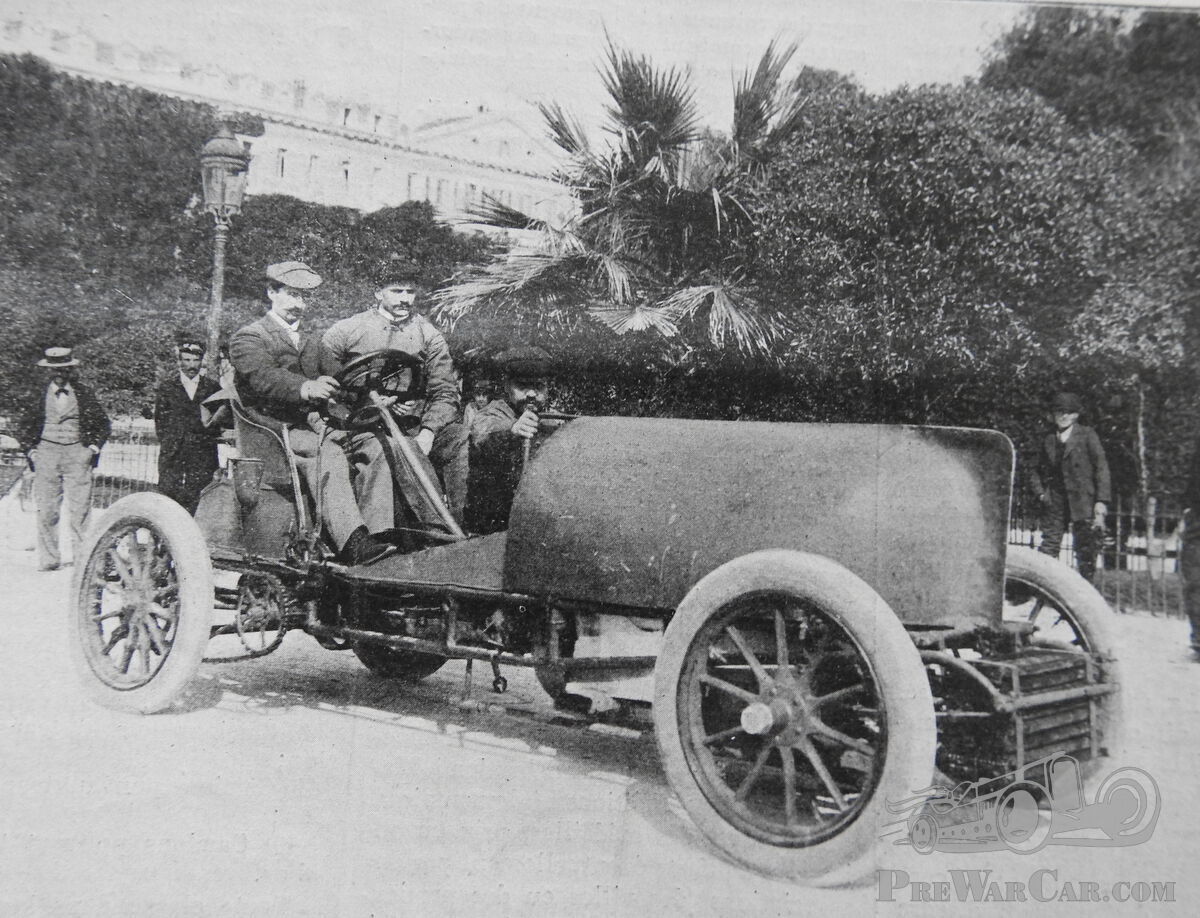
The cars on the photos are indeed two different cars, and besides photographed at two different events. The car with the license plate starting with 594 (unfortunately the last part is unreadable) was the Gobron-Brillié of Alexander Burton in the French eliminating trials for the 1904 Gordon Bennett race. The other car, with 595-EE, shows Rigolly’s car for the French Grand Prix of 1906.
The story of this impressive model started in 1903 with the week of Nice in april, where the Rigolly showed this new racer (see the Luc Ryckaert picture in his first post). It ended in 1907 with Rigolly being the only participant for Gobron-Brillié in the French Grand Prix. In between it participated in numerous events: hill climbs, speed events and record attempts in which it was often successful. In the great races the results were disappointing. In the 1903 Paris-Madrid race Rigolly ended highest at place 29, the other two (Duray and Koechlin) ended on place 64 and 75 respectively. In the 1904 eliminating trials for the Gordon Bennett there were three participants (Rigolly, Burton and Duray), but none of these made it to the finish. During the 1905 eliminating trials for the Gordon Bennett race only one Gobron-Brillié participated (Rigolly). He finished at 8th place, which was not sufficient for the main race. During both the 1906 and 1907 French Grand Prix Rigolly was the only participant for Gobron-Brillié and in both cases he failed to finish. The conclusion must be that this iconic car was unreliable but very fast. It broke the land speed record many times between 17 july 1903 and 21 july 1904, first at the hands of Duray, later at the hands of Rigolly passing eventually the 100 miles barrier at 103.56 miles an hour (166.66 km/hr).
Lire la suite
The story of this impressive model started in 1903 with the week of Nice in april, where the Rigolly showed this new racer (see the Luc Ryckaert picture in his first post). It ended in 1907 with Rigolly being the only participant for Gobron-Brillié in the French Grand Prix. In between it participated in numerous events: hill climbs, speed events and record attempts in which it was often successful. In the great races the results were disappointing. In the 1903 Paris-Madrid race Rigolly ended highest at place 29, the other two (Duray and Koechlin) ended on place 64 and 75 respectively. In the 1904 eliminating trials for the Gordon Bennett there were three participants (Rigolly, Burton and Duray), but none of these made it to the finish. During the 1905 eliminating trials for the Gordon Bennett race only one Gobron-Brillié participated (Rigolly). He finished at 8th place, which was not sufficient for the main race. During both the 1906 and 1907 French Grand Prix Rigolly was the only participant for Gobron-Brillié and in both cases he failed to finish. The conclusion must be that this iconic car was unreliable but very fast. It broke the land speed record many times between 17 july 1903 and 21 july 1904, first at the hands of Duray, later at the hands of Rigolly passing eventually the 100 miles barrier at 103.56 miles an hour (166.66 km/hr).
LUC RYCKAERT
30 Juin, 18:55
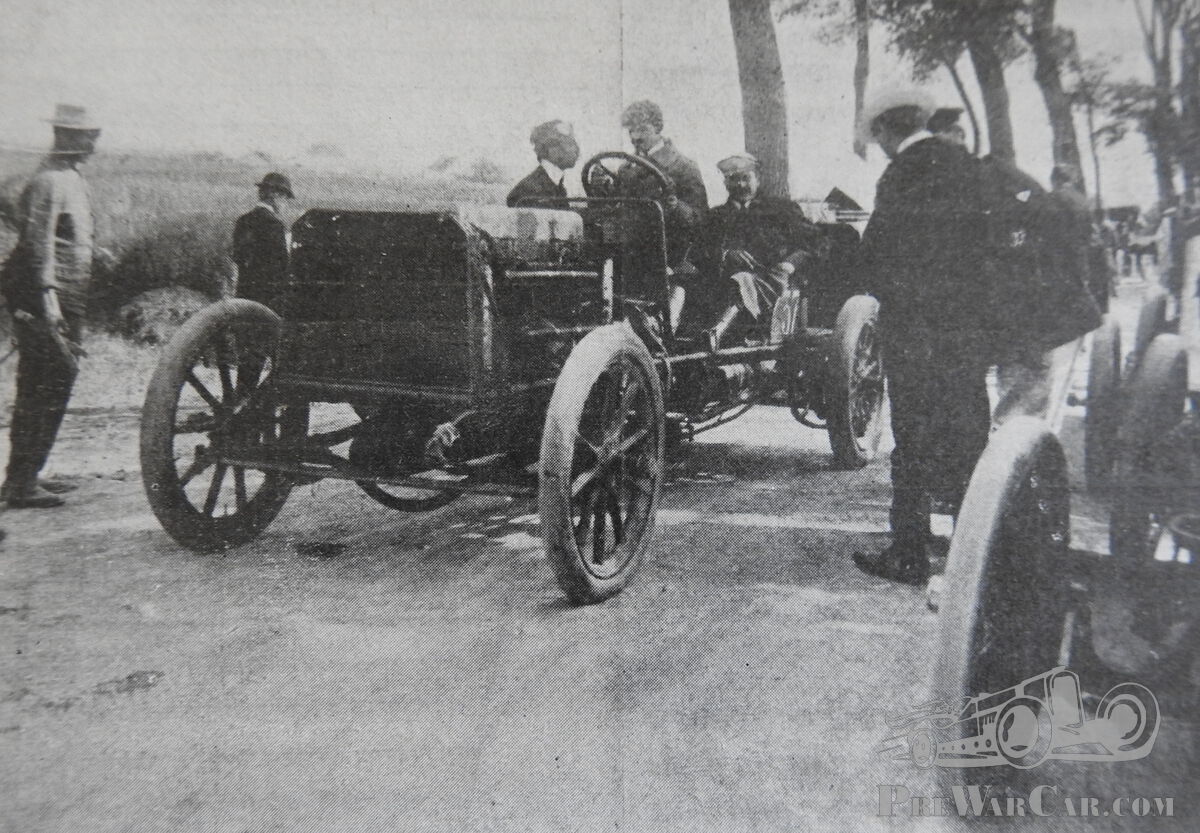
In the meantime, I found some more information in La France Automobile from 1903. Apparently, there were not 2 but 3 Gobron Brillié 100 hp cars in 1903, and these participated in the legendary Paris-Madrid race with Koechlin, Rigolly, and Duray as drivers. Later that year, Rigolly and Duray set the fastest times in the Ostend Flying Kilometer and the Course de Cote de Gaillon. The photo shows Rigolly, record holder in Ostend with a time of 26 seconds, averaging 134 km/h.
Lire la suite
francois melcion
29 Juin, 15:43
It is not ACP but ACF Automobile Club de France which is the oldest Automobile Club in the world.
Lire la suite
Peter Maguire
29 Juin, 15:39
Two different cars !
Numerous detail differences which can be discerned from the photographs.
For instance, the 'dumb irons on car '595' follow the line of the bottom tubular chassis member. Those on car 594 do not and are angled to sit horizontally. The front wheel hubs on '595' are also of a different pattern. Then there are the front springs (attachment to dumb irons, construction - front clamp!). I also suspect that the way in which the chain drive sprockets are attached may be different, but this is not easy as the photos are from different angles. So, could be wrong there. The steering wheel also appears to be different (larger, thicker rim!). Possible different rake to the column.
...............Forget the radiator.!!
Lire la suite
Numerous detail differences which can be discerned from the photographs.
For instance, the 'dumb irons on car '595' follow the line of the bottom tubular chassis member. Those on car 594 do not and are angled to sit horizontally. The front wheel hubs on '595' are also of a different pattern. Then there are the front springs (attachment to dumb irons, construction - front clamp!). I also suspect that the way in which the chain drive sprockets are attached may be different, but this is not easy as the photos are from different angles. So, could be wrong there. The steering wheel also appears to be different (larger, thicker rim!). Possible different rake to the column.
...............Forget the radiator.!!
fred veenschoten
29 Juin, 14:38
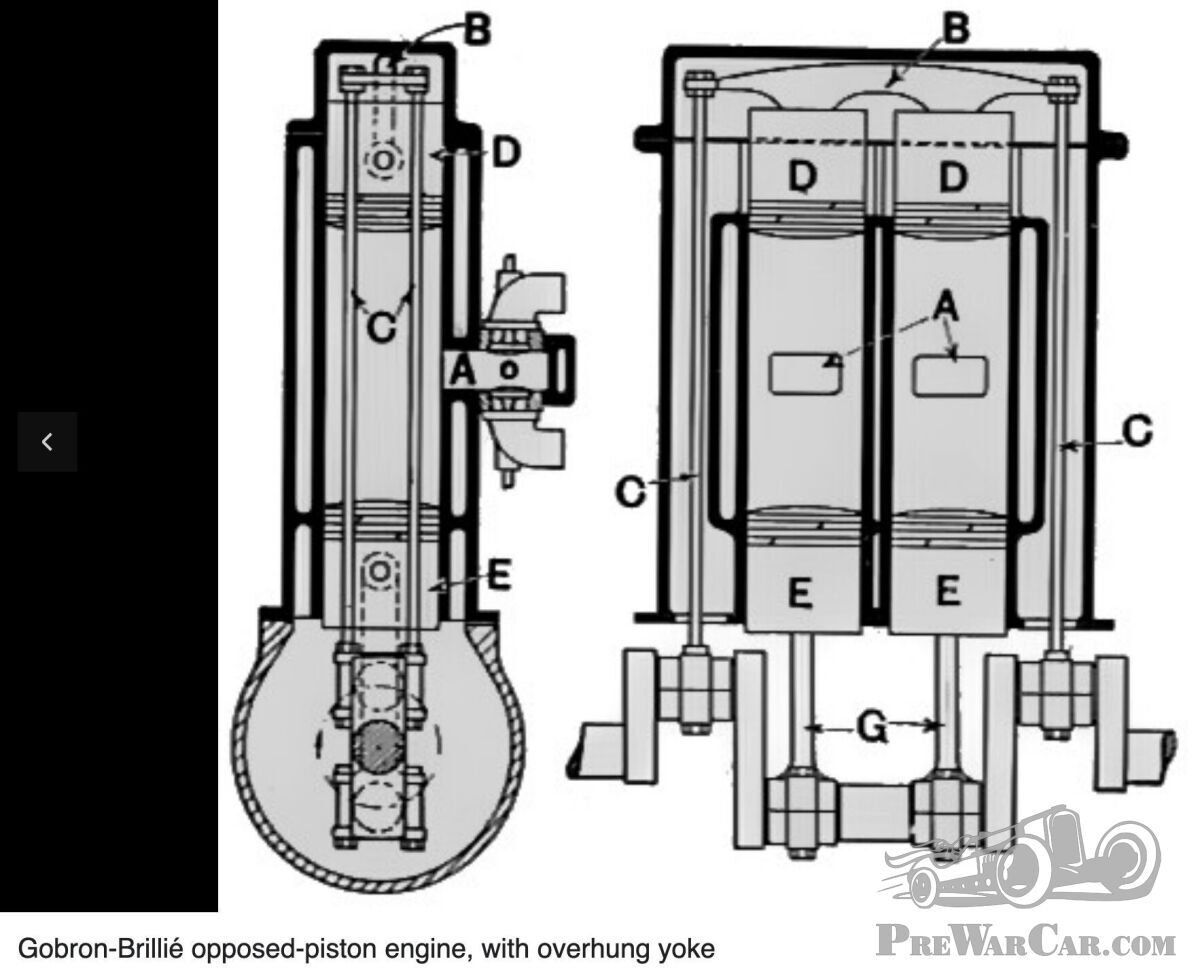
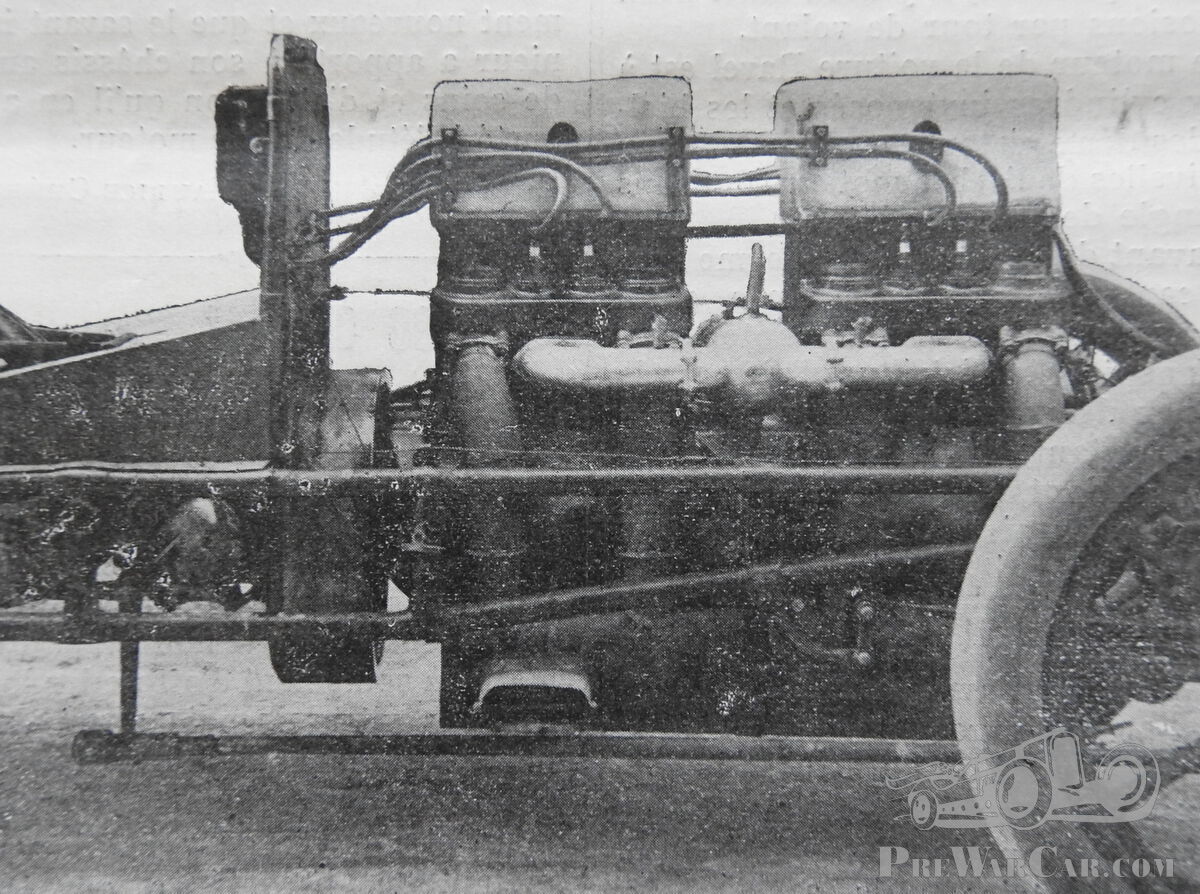
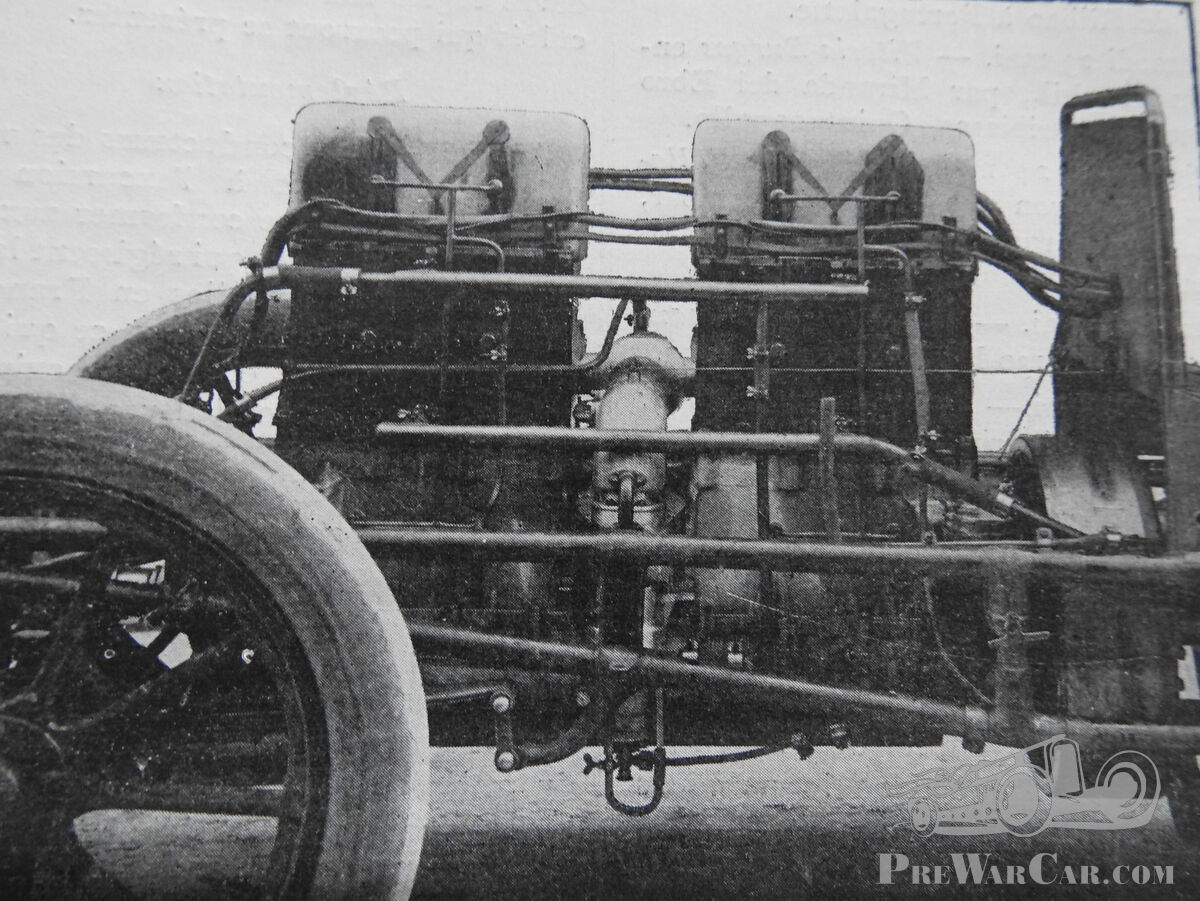
Here is a drawing of the engine and how it works. Thanks to Wikipedia.
Lire la suite


LUC RYCKAERT
29 Juin, 09:44
Hello,
In "La France Automobile" of April 18, 1903, I found a description of the 100 Chevaux Gobron-Brillié as depicted in one of the photos. Apparently, this was a very special engine with 4 cylinders and 8 pistons. The article explains " This engine is perfectly balanced by the arrangement of the pistons, which are paired and move in opposite directions when the explosion occurs in the space between them. As a result, the vehicle has no vibration." Enclosed are 2 pictures of the engine and another with Rigolly at the steering wheel.
Kind regards,
Luc Ryckaert
Lire la suite
In "La France Automobile" of April 18, 1903, I found a description of the 100 Chevaux Gobron-Brillié as depicted in one of the photos. Apparently, this was a very special engine with 4 cylinders and 8 pistons. The article explains " This engine is perfectly balanced by the arrangement of the pistons, which are paired and move in opposite directions when the explosion occurs in the space between them. As a result, the vehicle has no vibration." Enclosed are 2 pictures of the engine and another with Rigolly at the steering wheel.
Kind regards,
Luc Ryckaert
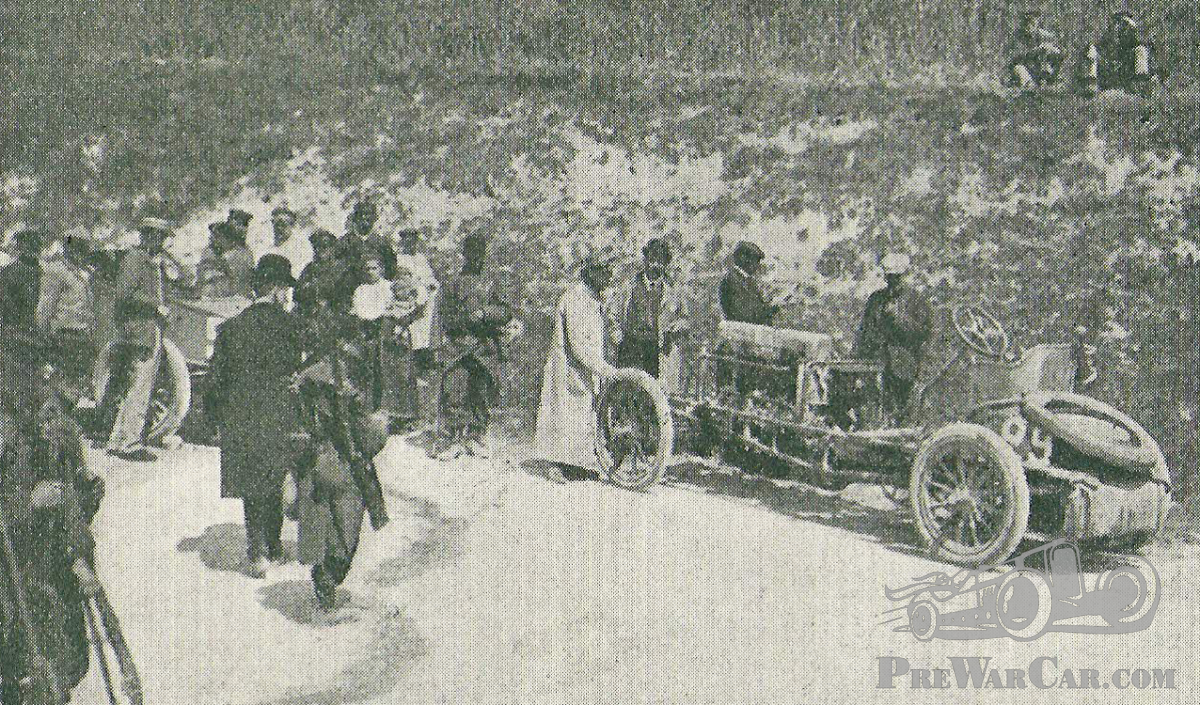
1. abandon de Rigolly et Burton
2. Burton
3. Au km 39, après une panne, Duray remet en marche sa Gobron-Brillié