Le magazine et marché mondial pour les passionnés de voitures classiques, par des passionnés.
Le magazine et marché mondial pour les passionnés de voitures classiques, par des passionnés.


Filter
Faites votre choix:
- Voir les voitures
-
Marque >>
-
Année >>
-
-
Catégorie >>
- Voir les motos
- Voir les pièces et plus
-
Marque de la voiture >>
-
Constructeur >>
-
Catégorie >>
- Vélos
-
Année >>
-
Pays



The mysterious owner in the second volume of ‘The Tricycle Book’
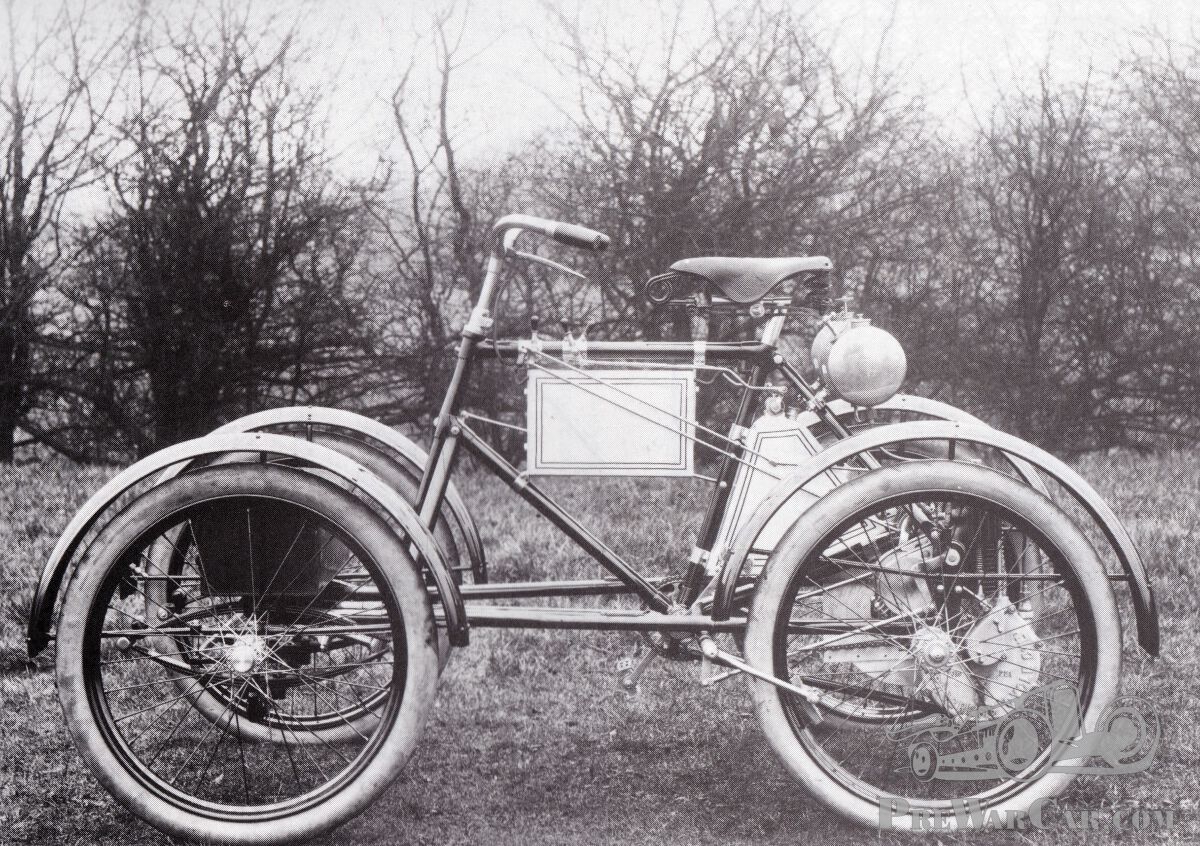

Michael Edwards is finalising work on the completion of the second volume of ‘The Tricycle Book’, which is due to be published in November this year. The last volume focused on the French tricycles and quadricycles, and this one will tell the story of the production of the machines in Great Britain, in the same period, 1895-1902. Due to to the restrictive legislation on the speed of motor vehicles on British roads, as well as the constraints imposed by Harry Lawson’s monopoly of the early production of motor vehicles, the manufacturing of tricycles and quadricycles was delayed. Quite soon after their introduction, the arrival of motor cars effectively halted the demand for these three-wheeled vehicles.
Companies like Beeston, Humber and Ariel were at the forefront of British manufacturing, quickly followed by Royal Enfield and then at the turn of the twentieth century, Riley, Dennis, Alldays, Swift and Progress, also briefly developed their own machines, generally with parts supplied by other more established companies in the sector. Very few of these latter vehicles survived: there is a single Riley in a British museum, two Dennis tricycles are in established collections and there are no known survivors from Alldays or Swift.
There is one surviving Progress quadricycle that was included in a history of the Progress motor vehicles, that was published in 1991 (photograph attached). At this point, it was in a South American collection, where it may still be. Michael would like to make contact with the owner of the quadricycle and wondered if any PreWarCar.com reader might be able to help identify the current owner. The reward is a complimentary copy of the book when it is published later this year.
Please comment below.
Publié:
lundi septembre 9th, 2019
Facebook
LinkedIn
Twitter
WhatsApp
Email
Copy
Commentaires
Bob Grundy
09 Octobre 2019, 00:51
Thank you
Bob Grundy
Ashton in Makerfield