Le magazine et marché mondial pour les passionnés de voitures classiques, par des passionnés.
Le magazine et marché mondial pour les passionnés de voitures classiques, par des passionnés.


Filter
Faites votre choix:
- Voir les voitures
-
Marque >>
-
Année >>
-
-
Catégorie >>
- Voir les motos
- Voir les pièces et plus
-
Marque de la voiture >>
-
Constructeur >>
-
Catégorie >>
- Vélos
-
Année >>
-
Pays



Une photographie rare d'un Fafnir... ou est-ce le cas?

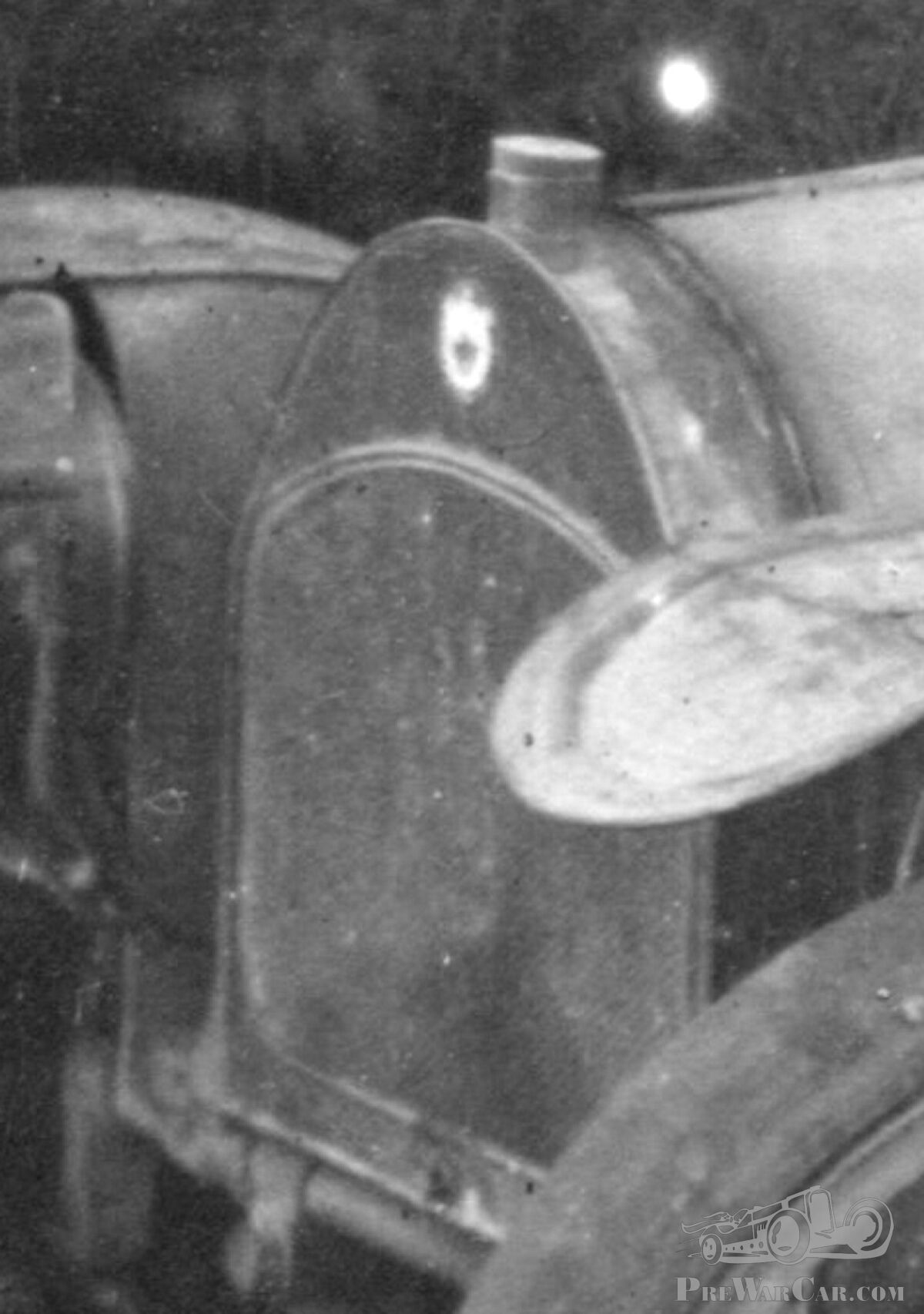


Il y a quelque temps, j'ai découvert cette photo intéressante chez l'une des célèbres maisons de vente aux enchères sur Internet. Malheureusement, le scan présenté dans l'annonce n'était pas très bon, mais la grille m'a donné l'espoir d'avoir trouvé l'une des photos plutôt rares d'un Fafnir d'Aix-la-Chapelle. L'offre était bon marché, les évaluations du vendeur étaient excellentes, alors j'ai cliqué sur le bouton "acheter maintenant" dans la bonne humeur.
Plein d'impatience, j'ai ouvert l'enveloppe que j'ai reçue très rapidement après avoir effectué l'achat et en effet : même sur la très bonne photo, la voiture ressemblait exactement à un dragon d'Aix-la-Chapelle... au début. Il suffit de regarder la grille de radiateur ! C'est définitivement Fafnir, n'est-ce pas ? Mais au deuxième coup d'oeil, des doutes ont apparu : Quel genre de construction de l'essieu avant est-ce là ? Il n'y avait rien de tel sur une Fafnir, qui était d'une qualité exceptionnelle mais construite de manière très conventionnelle. Et puis le bouchon de gaz entre le capot et le pare-brise ? Les Fafnir de la période correspondante avaient le réservoir sous les sièges, ou dans le cas de la demande spéciale rarement commandée "réservoir plus grand" à l'arrière entre les barres du châssis. Seul le Fafnir Type 472 (et le début du 476) avait un réservoir sur la cloison en 1914, mais ce Type est complètement différent et en plus le goulot de remplissage est situé sous le capot.
Alors que vous êtes presque sûr d'avoir mal identifié la voiture, vous remarquez une troisième différence avec la voiture que vous espériez : la poutre du châssis se rétrécit devant la roue arrière. Le châssis Fafnir n'avait pas ce coude. Enfin, vous devriez également voir le montage du ressort à lames arrière à l'extérieur du châssis. Entre-temps, on est TRÈS sûr que la joyeuse troupe n'a pas pris place dans une voiture d'Aix-la-Chapelle et on range la photo dans le classeur au dossier 'inconnu'. A un moment donné, on ressort la photo et on se demande de quel type de voiture il peut s'agir. Le radiateur ressemble beaucoup à celui de la première Fafnir, mais certaines sociétés avaient des radiateurs de forme similaire. Mais qu'en est-il de l'essieu avant ? J'estime que la voiture a été construite entre 1910 et 1915 et que la photo a probablement été prise en France. Peut-être que l'un de nos lecteurs en sait plus sur cette voiture à l'essieu avant étrange?
Texte et photo d'Hubertus Hansmann
Publié:
lundi février 6th, 2023
Facebook
LinkedIn
Twitter
WhatsApp
Email
Copy
Commentaires
Ariejan Bos
12 Février 2023, 10:10
Robert Hafner
11 Février 2023, 12:57
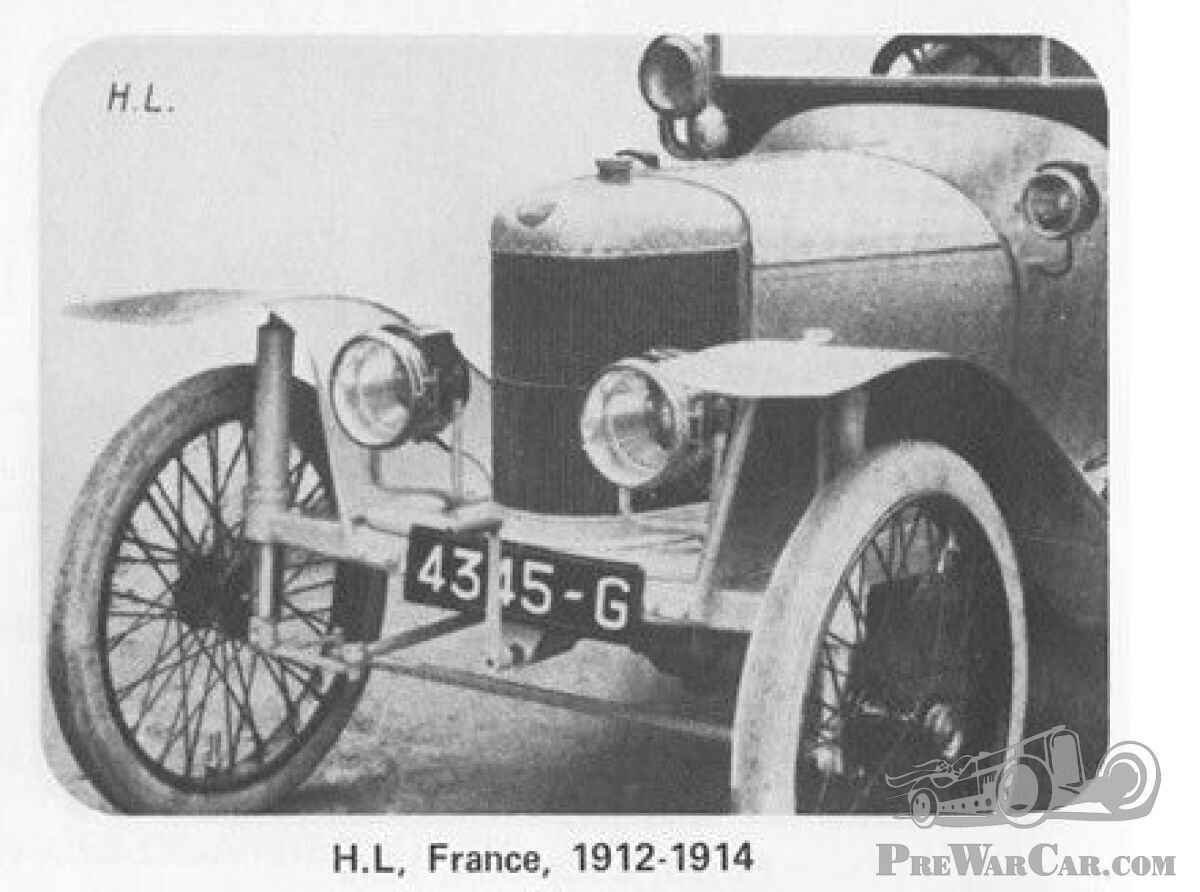
Most probably the car is an H.L. made by Hainsselin et Langlois of St. Cloud, Seine et Oise, France, around 1912.
There is a picture in G.N. Georgano’s Encyclopedia showing such a car. It has the same two-seater bodywork, even with the elevated back seat, but is a little bit less edged and with a rounded bullnose radiator. Seems to be a later model. And the most important point: it has no front axle, but an independent front suspension with enclosed coil springs. Such was used in some French cyclecars, but on a mid-size car it’s very rare (Beck prototype, or of course Lancia, but these look different). This explains the peculiar front view.
Either the earlier models had flat radiators, or the original radiator was exchanged for another one. Generally, the car in your photo is anything else but new. The left headlamp is missing, look at the gaps in bonnet and door, the clumsy hinges etc. So maybe also a different radiator was fitted later to replace a damaged one.
Georgano’s picture can be easily looked up.
Besides Georgano’s, there is only a small notice on Wikipedia under H.L.
In L’Automobiliste No. 52 from 1979 there is a series of front views of 1913 cars, among them one of the H.L. The front suspension and radiator can be seen here more clearly, but the paper is rare.
I can send a copy of this separately if desired.
Lire la suite
There is a picture in G.N. Georgano’s Encyclopedia showing such a car. It has the same two-seater bodywork, even with the elevated back seat, but is a little bit less edged and with a rounded bullnose radiator. Seems to be a later model. And the most important point: it has no front axle, but an independent front suspension with enclosed coil springs. Such was used in some French cyclecars, but on a mid-size car it’s very rare (Beck prototype, or of course Lancia, but these look different). This explains the peculiar front view.
Either the earlier models had flat radiators, or the original radiator was exchanged for another one. Generally, the car in your photo is anything else but new. The left headlamp is missing, look at the gaps in bonnet and door, the clumsy hinges etc. So maybe also a different radiator was fitted later to replace a damaged one.
Georgano’s picture can be easily looked up.
Besides Georgano’s, there is only a small notice on Wikipedia under H.L.
In L’Automobiliste No. 52 from 1979 there is a series of front views of 1913 cars, among them one of the H.L. The front suspension and radiator can be seen here more clearly, but the paper is rare.
I can send a copy of this separately if desired.
Michael Schlenger
07 Février 2023, 22:27
If even Ariejan Bos cannot solve the mystery, it must be really a difficult one. I believe I have seen that kind of chassis design before, but cannot remember where. I also considered Belgian manufacturers like Excelsior and Nagant who used similar (however not identical) radiators before WW1. Perhaps Claus Wulff from Berlin can help, since he has an outstanding knowledge of radiator badges from all across Europe (search for "radiatoremblems").
Lire la suite
Ariejan Bos
07 Février 2023, 10:16
Of course I had hoped that somebody came up with an answer, because I can't. I found that I had this photo filed as both a Buchet and not a Buchet. At first glance the car is indeed a bit like a Buchet, but at second glance the absence of dumbirons shows that this was a wrong conclusion. The quality of the photo however makes it difficult to get an idea of front axle, suspension and steering gear configuration. Also the logo is not Buchet, as this was just the Buchet name in an oval badge. It would be nice if the logo on the radiator could be made sharper, but this may very well not be possible.
The presence of the cowl filler tube makes it clear for me that we're dealing with a French make, but I'm afraid its identity will remain a mystery until more info will turn up.
Lire la suite
The presence of the cowl filler tube makes it clear for me that we're dealing with a French make, but I'm afraid its identity will remain a mystery until more info will turn up.
Let's not forget, that of the many hundreds of car makes at the time there are still many we haven't a clue of what they looked like. Not to mention all the experimental devices, which sometimes reached the columns of the magazines, but more often probably didn't.
For a long time I'm trying to fill in the gaps, but still I have in my files too many mystery cars without a name and too many names without a face. And a life certainly too short to get it all sorted ... In spite of all this I prefer no name above an incorrect name!