Le magazine et marché mondial pour les passionnés de voitures classiques, par des passionnés.
Le magazine et marché mondial pour les passionnés de voitures classiques, par des passionnés.


Filter
Faites votre choix:
- Voir les voitures
-
Marque >>
-
Année >>
-
-
Catégorie >>
- Voir les motos
- Voir les pièces et plus
-
Marque de la voiture >>
-
Constructeur >>
-
Catégorie >>
- Vélos
-
Année >>
-
Pays



Was Pipe’s show car a world first?
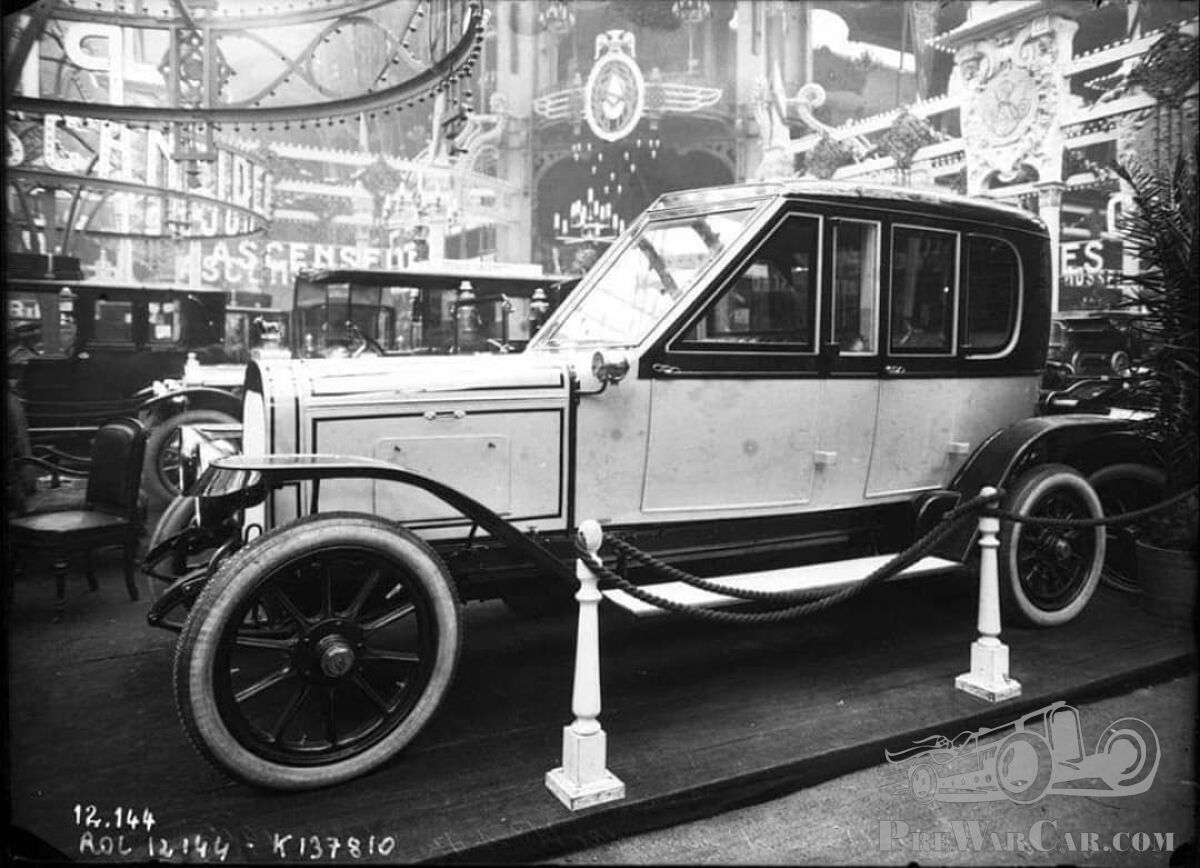

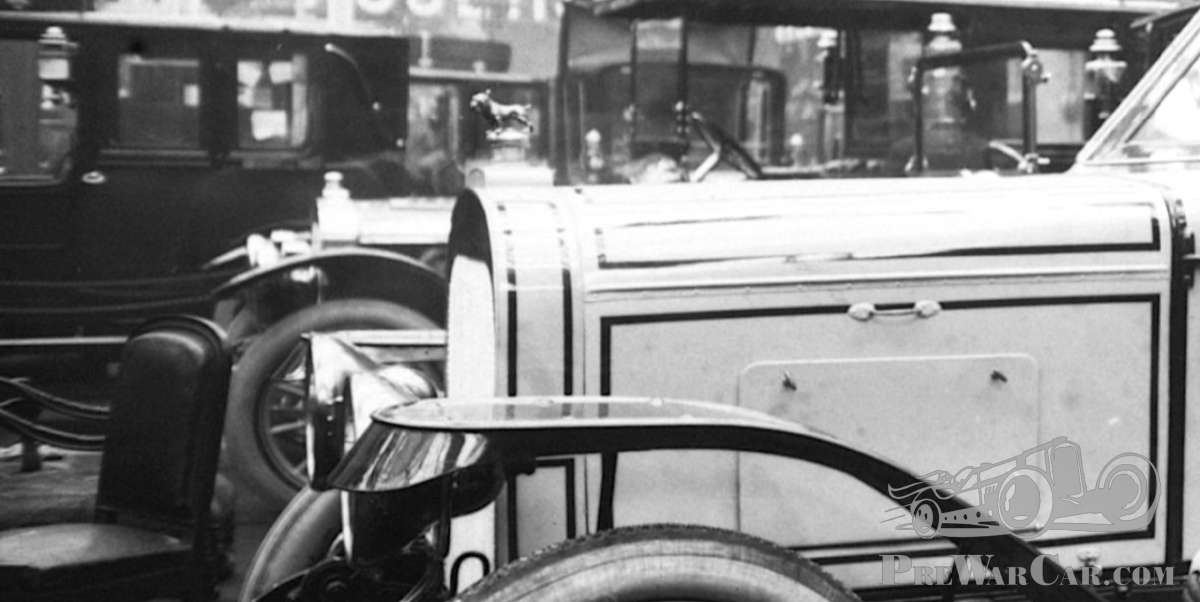


Well, well, what have we got here? This is a 1910 Pipe (pronounced ‘Peep’), made in Belgium, and with its raked and divided windscreen one that immediately catches the eye. Unfortunately, we do not know much more than just that. Pipe (Brussels, 1898-1922) is mentioned in a few sources but this specific car remains mostly shrouded in mystery. One source mentions it was bodied by Kellner of France and used a massive 80hp engine. Another source even mentions it being a 121hp. The only fact seems to be that it was on display at the Salon de l'Automobile in Paris in 1910. That’s it.
So let’s have a bit of a better look at the car itself then. The idea of raking the windscreen may well have been a first? Laurence Pomeroy’s Vauxhall C97 ‘Prince Henry’ is often credited as ‘world’s first sports car’ with its narrow v-shaped front and raked windscreen, but that was a later car and its screen certainly wasn’t raked in such dramatic fashion as the one on this Pipe.
By 1910 there were a few car designs which were far ahead in their slipperiness. There was something in the air – literally, perhaps, as motor car design was aided by the lessons learned from aviation. French engineer Gustave Eiffel – you’ll know his famous tower – started researching aerodynamics deeply in 1910 also, using another one of his towers for drop tests and even coming up with a wind tunnel. The term ‘résistance de l’air’ – air resistance – came from him.
Hang on - the first vehicle to break the 100 km/h barrier had of course been the all-electric and torpedo-shaped Jamais Contente and that even dated back to 1899 (when it was driven – ridden? - by Camille Jenatzy, another Belgian). But fast forward another 11 years by which time motor manufacturers were beginning to see that the future was in aerodynamics. Their pioneering vehicles were mostly racing cars though. There was the 1910 American Buick ‘Bug’, the 1910 German Benz ‘Prinz Heinrich’… These cars didn’t even have windscreens.
So… over to you. Did Pipe have a world first with this show car? And apart from that – what happened to it? We’d be delighted to hear from you.
Words by Jeroen Booij.
Publié:
mardi mars 17th, 2020
Facebook
LinkedIn
Twitter
WhatsApp
Email
Copy
Commentaires
Kieran White
19 Mars 2020, 09:26
As regards “streamlining” look at the 1903 Gordon Bennet, Paris Madrid Mors
Lire la suite

grobmotorix
18 Mars 2020, 08:19
Up to now I think, this car was the first closed car to show this radically tilted windscreen.
Many others did follow - it set a new exclusive trend for few other exclusive cars.
I just want to show two Austrian ones here.
Many royals and the European upper class visited Spa in Belgium before WW1.
Maybe they saw a Pipe car and liked it - and maybe they even ordered a chassis at Pipe and a new body style from Armbruster (a 1914 version in the upper photo) or Lohner (a 1917 version in the bottom photo) or another Austrian(?) coachbuilder?
On the other hand such a fact would have been mentioned in the many car show photos that were released after 1910 like your three.
So I guess it is still not clear who built this radically new styled bodywork...
Lire la suite
Many others did follow - it set a new exclusive trend for few other exclusive cars.
I just want to show two Austrian ones here.
Many royals and the European upper class visited Spa in Belgium before WW1.
Maybe they saw a Pipe car and liked it - and maybe they even ordered a chassis at Pipe and a new body style from Armbruster (a 1914 version in the upper photo) or Lohner (a 1917 version in the bottom photo) or another Austrian(?) coachbuilder?
On the other hand such a fact would have been mentioned in the many car show photos that were released after 1910 like your three.
So I guess it is still not clear who built this radically new styled bodywork...
Jeroen Booij
20 Mars 2020, 09:22
Thank you very much for your further researches grob!
Lire la suite

grobmotorix
18 Mars 2020, 08:06
I search for more details of this particular car for quite a time.
So I am quite delighted to find this website here.
I want to share with you are those two photos, where I discovered the Pipe show car.
Both photos were taken in Austria, the upper one at a military practise drive in 1912 and the lower in 1914 at an unknown event,
maybe also an exercise drive before or after the start.
Proportions, windows and details do fit in my eyes.
If only I knew who built the bodywork.
Lire la suite
So I am quite delighted to find this website here.
I want to share with you are those two photos, where I discovered the Pipe show car.
Both photos were taken in Austria, the upper one at a military practise drive in 1912 and the lower in 1914 at an unknown event,
maybe also an exercise drive before or after the start.
Proportions, windows and details do fit in my eyes.
If only I knew who built the bodywork.

guazzoni
08 Février 2020, 20:37
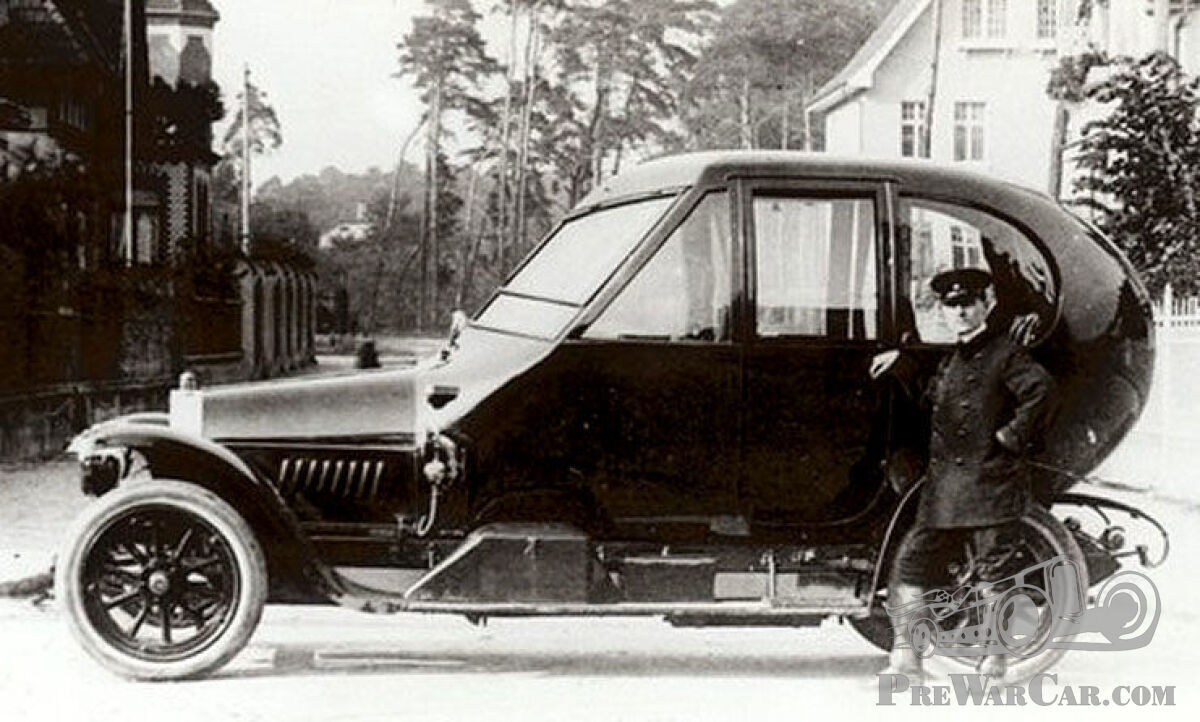
According to the interwebs the Opel was made later (1912) and a certain Max Lochner was involved
https://de.wikipedia.org/wiki/Max_Lochner
If it really storms tomorrow I have an excuse to dive into my library...
Lire la suite
https://de.wikipedia.org/wiki/Max_Lochner
If it really storms tomorrow I have an excuse to dive into my library...
Ariejan Bos
08 Février 2020, 18:17
It is an interesting question. The Pipe was certainly a crowd puller, but despite the fact that the car was shown in many car magazines the descriptions are mostly very brief. It is my guess that the car was too extreme at the time. Indeed it seems to be the first of its kind, but The Autocar commented that the angle of the 'front lights' would be too flat causing light reflection problems for the driver, and besides that in case of rain it would be difficult to drive as the windows could not be opened. I couldn't find out if the Pipe body was commissioned or that it was just an experimental show car. It fits the torpedo fashion of the time and this could have been a new statement by Kellner. The design did have some follow-up (with improvements, like the possibility to open the front windows), and similar bodies can be found in the years to follow, e.g. by Armbruster and by Schafranek. The latter called his design a Carrosserie Parisienne!
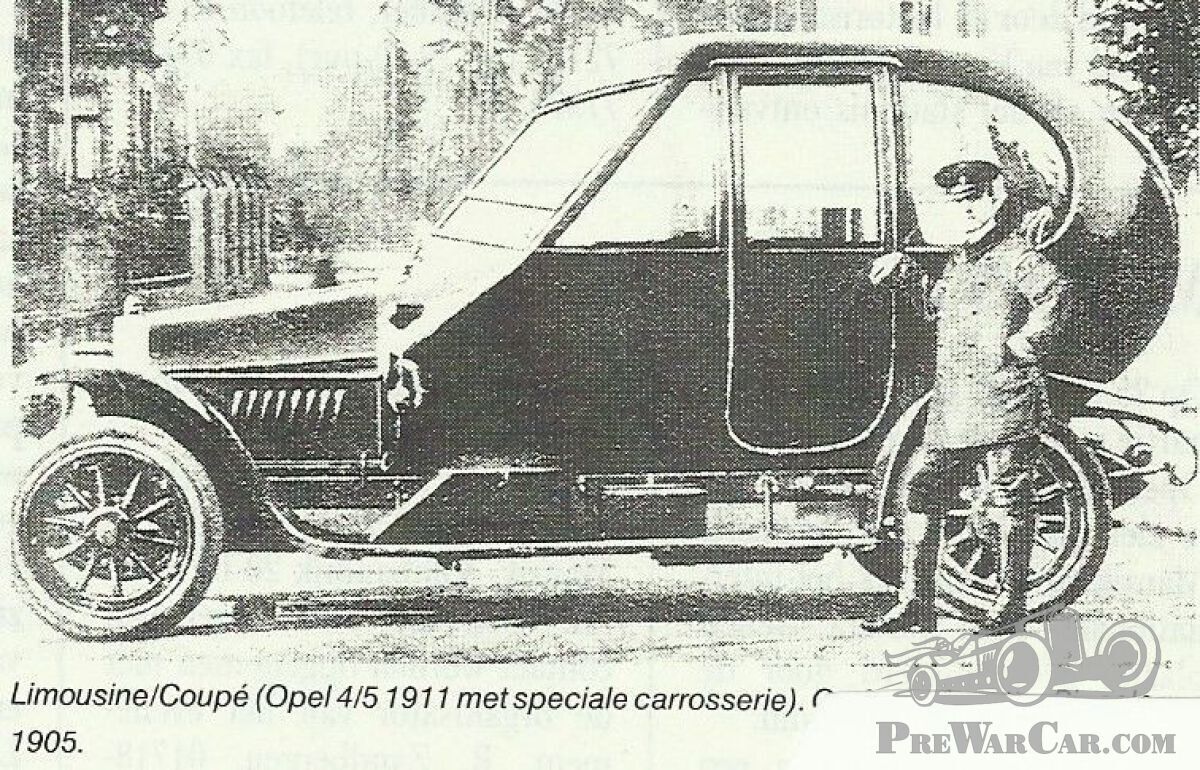
The Opel shown by Herman Oldeneel doesn't date from 1905, but according to the book by Bartels and Manthey on Opel (Fahrzeug-Chronik Band 1, 1899-1951) it was built on a 1912 13-30hp chassis. This fits better in the development of the design, of course. It was named the 'Ei' (meaning egg) of Max Lochner, the man who had commisioned the body. I do not know the name of the coachbuilder.
If the Pipe is still in existence seems doubtful. I am not aware of it neither of the survival of similar designs.
Lire la suite
The Opel shown by Herman Oldeneel doesn't date from 1905, but according to the book by Bartels and Manthey on Opel (Fahrzeug-Chronik Band 1, 1899-1951) it was built on a 1912 13-30hp chassis. This fits better in the development of the design, of course. It was named the 'Ei' (meaning egg) of Max Lochner, the man who had commisioned the body. I do not know the name of the coachbuilder.
If the Pipe is still in existence seems doubtful. I am not aware of it neither of the survival of similar designs.
herman van oldeneel
08 Février 2020, 08:26
This Opel with special coachwork is earlier: 1905
Lire la suite